
Share Buyback: A Historical Guide for Investors
Corporate capital allocation decisions have shaped market dynamics throughout financial history, and few mechanisms have generated as much debate as the share buyback. When a company repurchases its own outstanding stock from the marketplace, it sets in motion a series of financial and governance consequences that ripple through markets and affect shareholder value in complex ways. Understanding this corporate action through a historical lens reveals patterns in management behavior, regulatory evolution, and market cycles that continue to influence investment decisions today. By examining past buyback programs and their outcomes, investors can better evaluate current repurchase announcements and anticipate their potential impact on portfolio returns.
The Mechanics and Purpose of Share Repurchase Programs
A share buyback occurs when a publicly traded company uses its cash reserves or borrowed funds to purchase its own shares from existing stockholders. This transaction reduces the number of shares outstanding in the market, theoretically increasing the ownership stake and earnings per share for remaining investors.
Primary Motivations Behind Buyback Decisions
Companies pursue share repurchase programs for several strategic reasons. Returning excess cash to shareholders represents the most straightforward motivation, particularly when management believes reinvesting in the business would generate lower returns than current market conditions warrant.
Signaling confidence in the company's future prospects stands as another common driver. When executives authorize a buyback program, they communicate to the market that they view the stock as undervalued at current prices. This signal carries particular weight when insider ownership is high and management compensation aligns with long-term shareholder interests.
- Improving financial ratios by reducing share count
- Offsetting dilution from employee stock option programs
- Deploying capital when acquisition opportunities are limited
- Taking advantage of temporary market dislocations
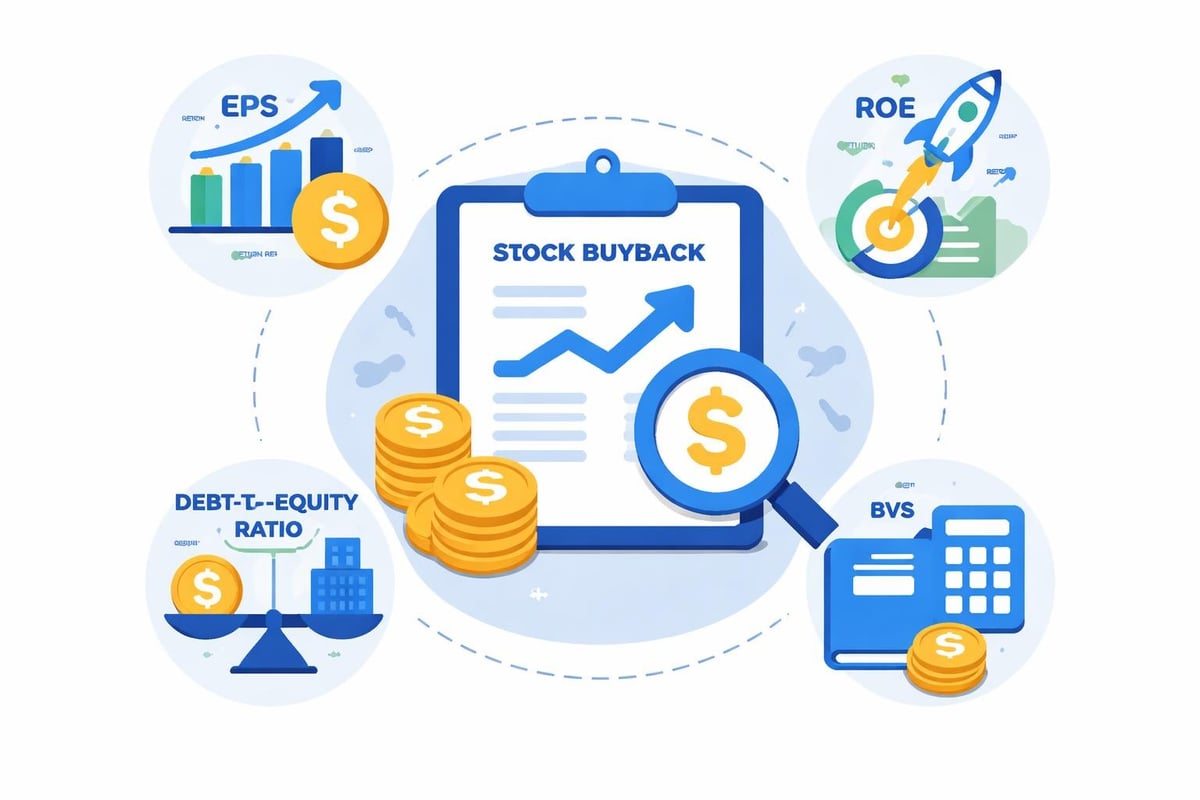
The impact on metrics like EBIT per share and operating margin can be substantial. Historical analysis reveals that buybacks executed during market downturns generally produced better long-term results than those conducted near market peaks, highlighting the importance of timing in capital allocation decisions.
Historical Evolution of Buyback Regulation
The regulatory landscape governing share repurchases has transformed dramatically over the past century. Prior to 1982, companies faced significant legal uncertainty about whether buybacks constituted market manipulation under securities law.
Rule 10b-18 and the Modern Buyback Era
The Securities and Exchange Commission's adoption of Rule 10b-18 in 1982 created a safe harbor for companies conducting share buybacks. This regulatory framework established conditions under which repurchase activity would not be deemed manipulative, including limits on daily purchase volumes, pricing restrictions, and timing requirements.
The rule transformed corporate capital allocation strategies across American markets. Companies gained confidence to execute larger programs, leading to exponential growth in total buyback volumes. According to research on implementation of share buybacks and their impact on corporate governance, this regulatory clarity enabled the practice to become a primary method of returning capital to shareholders.
| Regulatory Period | Key Characteristics | Market Impact |
|---|---|---|
| Pre-1982 | Legal uncertainty, minimal activity | Limited use, perceived manipulation risk |
| 1982-2000 | Rule 10b-18 adoption, growing acceptance | Steady increase in programs |
| 2000-2023 | Mainstream capital allocation tool | Buybacks often exceed dividends |
| 2023-Present | Enhanced disclosure requirements | Greater transparency, continued scrutiny |
Recent Disclosure Requirements
The regulatory environment continues to evolve. In 2023, the SEC implemented new rules requiring companies to provide more detailed disclosure of their buyback activities, including daily transaction logs and explanations of their rationales. These requirements aim to give investors better information about how management executes repurchase programs and whether execution aligns with stated objectives.
Analyzing Historical Buyback Patterns Across Market Cycles
Examining share buyback trends across different economic environments reveals important patterns that investors can use to inform current decision-making. The relationship between buyback announcements and subsequent stock performance varies significantly based on broader market conditions and company-specific factors.
Bull Market Buyback Behavior
During extended bull markets, companies often announce aggressive buyback programs at elevated valuations. Historical data shows that purchases made near market peaks frequently destroyed shareholder value rather than enhanced it. The late 1990s technology boom and the 2006-2007 period preceding the financial crisis both featured record buyback activity at prices that proved unsustainable.
Value destruction occurred when companies repurchased shares at premium valuations using borrowed funds. This increased their debt-to-equity ratio while acquiring shares that subsequently declined in value. The opportunity cost of deploying capital into overvalued stock rather than maintaining financial flexibility became apparent during subsequent downturns.
Recession and Recovery Patterns
- Initial suspension: Companies typically suspend buyback programs at the onset of recessions to preserve cash
- Bargain hunting: Astute management teams restart purchases during maximum pessimism when valuations are depressed
- Gradual expansion: As recovery takes hold, buyback activity accelerates alongside improving fundamentals
- Peak enthusiasm: Programs reach maximum size late in the cycle when shares are most expensive
The most successful historical buyback programs shared common characteristics: patient accumulation during periods of uncertainty, focus on maintaining operational strength, and willingness to pause repurchases when valuations became stretched or business conditions deteriorated.
Corporate Governance Considerations and Agency Problems
The relationship between executive compensation structures and share buyback decisions deserves careful scrutiny from a historical perspective. Research examining executive compensation and buyback announcement credibility demonstrates that compensation tied to per-share metrics can create incentives for buybacks even when alternative capital allocation strategies might better serve long-term shareholder interests.
Alignment of Interests
When management compensation depends heavily on earnings per share growth, executives face strong incentives to pursue buybacks regardless of valuation or strategic fit. This agency problem became particularly pronounced during periods when stock option grants represented a large portion of total compensation.
- Stock options benefit from reduced share count improving EPS
- Performance bonuses tied to per-share metrics favor buybacks
- Short-term stock price support helps executives sell vested equity
- Alternative investments in research or capacity expansion show longer payback periods
The historical record contains numerous examples of companies that prioritized buybacks over necessary capital expenditure, ultimately weakening competitive position. Distinguishing between shareholder-friendly buybacks and those serving management interests requires examining broader strategic context and long-term operational trends.
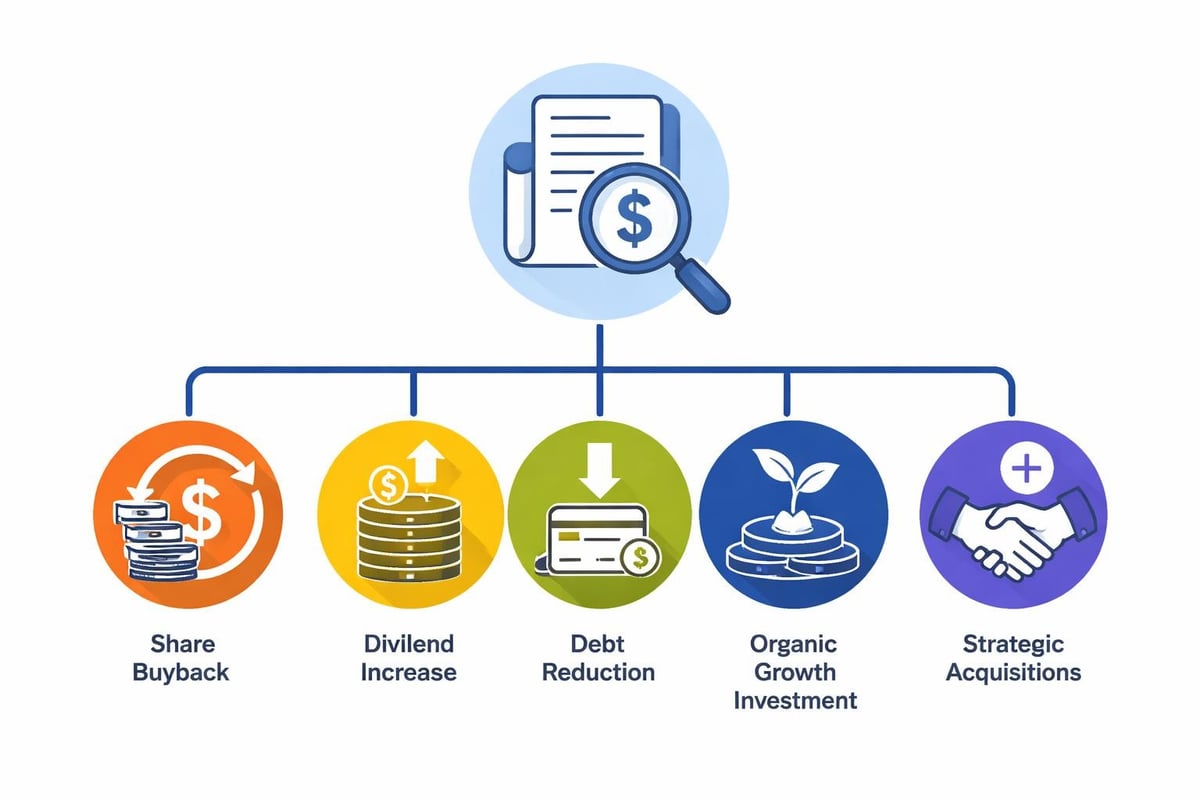
Fiduciary Responsibility Standards
Directors authorizing buyback programs must balance competing stakeholder interests while fulfilling fiduciary duties. Historical analysis of corporate governance failures reveals that rubber-stamp board approval of management buyback proposals without rigorous independent analysis contributed to value destruction at numerous companies.
Effective governance requires directors to evaluate whether repurchases represent the highest-value use of capital compared to alternatives like reducing leverage, funding innovation, or pursuing strategic acquisitions. The framework for making these determinations has evolved considerably as institutional investors have demanded greater accountability.
Buybacks Versus Dividends in Capital Allocation Strategy
Understanding the historical trade-offs between share repurchases and dividend payments helps investors evaluate company-specific capital allocation philosophies. Each approach offers distinct advantages and limitations that vary based on tax treatment, investor preferences, and market conditions.
Comparative Advantages of Buybacks
Share buyback programs provide flexibility that fixed dividend commitments cannot match. Companies can adjust or suspend repurchases without sending negative signals to markets, whereas dividend cuts typically trigger severe stock price reactions. This flexibility proved particularly valuable during the 2008 financial crisis and the 2020 pandemic disruption, when companies that had relied primarily on buybacks could quickly preserve cash without breaking implicit contracts with shareholders.
Tax efficiency represents another historical advantage. In jurisdictions where capital gains receive preferential treatment relative to dividend income, buybacks allow shareholders to defer and potentially reduce tax liability. This consideration has driven capital allocation decisions at many growth-oriented companies.
| Factor | Share Buybacks | Dividends |
|---|---|---|
| Flexibility | High - easily adjusted | Low - cuts send negative signals |
| Tax treatment | Capital gains for sellers | Ordinary income for recipients |
| Shareholder choice | Optional participation | Automatic receipt |
| Market signal | May indicate undervaluation | Demonstrates sustainable earnings |
| Financial leverage | Can increase debt ratios | Usually paid from existing cash |
When Dividends Prove Superior
Dividend payments demonstrate management confidence in sustainable cash generation and provide income-oriented investors with regular distributions. Historical analysis shows that companies maintaining consistent dividend policies through various market cycles generally attract different investor bases than buyback-focused firms.
The combination approach has gained prominence in recent decades. Many mature companies now employ both dividends to provide baseline returns and buybacks to deploy excess capital opportunistically. This hybrid strategy attempts to capture advantages of both methods while maintaining financial flexibility.
Societal and Economic Implications Beyond Shareholder Returns
The broader economic consequences of widespread share buyback activity extend beyond individual company performance and shareholder returns. Researchers have explored connections between repurchase trends and economic inequality and public health outcomes, arguing that massive capital allocation toward buybacks rather than wages, employment, or community investment may contribute to societal challenges.
Resource Allocation Debates
Critics argue that companies prioritizing buybacks over employee compensation or business reinvestment may generate short-term shareholder gains at the expense of long-term economic vitality. Historical periods of peak buyback activity often coincided with wage stagnation and reduced corporate investment in research and development.
Proponents counter that efficient capital markets should direct resources to their highest-value uses. If a company lacks profitable reinvestment opportunities, returning capital to shareholders allows those funds to flow to more promising ventures through the investment ecosystem. This perspective aligns with efficient market hypothesis principles that have guided financial theory.
The debate intensified following the 2017 Tax Cuts and Jobs Act, which reduced corporate tax rates and preceded record buyback announcements. Analysis of how companies deployed tax savings revealed that repurchases significantly outpaced increases in capital investment or employee wages, fueling political and academic scrutiny.
Execution Strategies and Market Impact
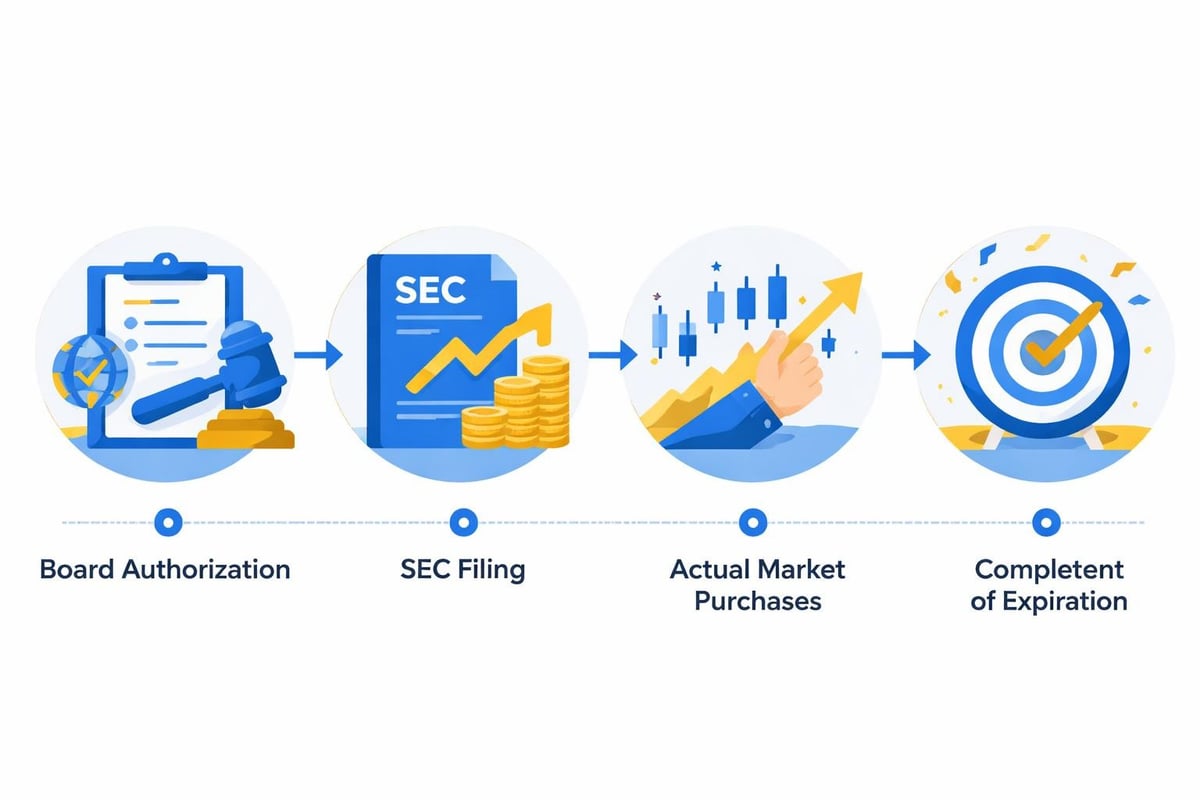
The mechanics of how companies actually implement share buyback programs significantly affects outcomes. Research on execution strategies and their challenges highlights the complexity of translating board authorizations into completed purchases without disrupting markets or overpaying for shares.
Open Market Purchases
Most buyback programs utilize open market purchases, where the company gradually acquires shares through regular trading channels. This approach provides flexibility but requires careful execution to avoid driving up prices through the company's own buying pressure.
- Establish volume limits as percentage of daily trading
- Employ multiple brokers to disguise purchase patterns
- Concentrate buying during periods of temporary weakness
- Monitor market conditions and adjust pace accordingly
- Maintain documentation to demonstrate regulatory compliance
Accelerated share repurchase agreements represent an alternative where companies contract with investment banks to immediately receive a large share block. This approach provides certainty about volume and timing but typically involves paying a premium to current market prices.
Measuring Success and Accountability
Evaluating historical buyback effectiveness requires comparing actual execution prices to subsequent stock performance and alternative capital deployment opportunities. The comprehensive literature review by the CFA Institute examines methodologies for assessing whether companies created or destroyed value through their repurchase programs.
Metrics for evaluation include average purchase price relative to subsequent trading ranges, total shares retired as percentage of authorization amounts, and long-term total returns compared to peer companies that pursued different capital allocation strategies. Companies that announced large programs but completed only small portions faced criticism for using buyback announcements primarily as marketing tools rather than genuine capital allocation decisions.
Learning From Notable Historical Buyback Programs
Examining specific historical examples illuminates both successful and failed approaches to share repurchases. The experiences of companies across different eras provide practical lessons for evaluating current buyback announcements.
Technology Sector Case Studies
Apple's massive buyback program, initiated in 2012 after years of accumulating cash, represented a fundamental shift in capital allocation philosophy. The company combined buybacks with dividend initiations, deploying hundreds of billions while maintaining robust free cash flow generation. This program succeeded because Apple repurchased shares across various valuations while simultaneously investing heavily in product development.
Contrast this with technology companies that bought back stock aggressively in the late 1990s near market peaks, then faced cash constraints during the subsequent downturn. These firms would have better served shareholders by maintaining financial flexibility rather than repurchasing overvalued shares.
Financial Services Examples
Banks face unique considerations around buybacks due to regulatory capital requirements and cyclical business models. Historical analysis shows that financial institutions conducting large buybacks during economic expansions often needed to raise dilutive capital during subsequent crises, as regulatory requirements for risk-weighted assets tightened during periods of stress.
The lessons learned inform current regulatory frameworks that restrict bank buybacks during economic uncertainty and require stress testing before approving capital return programs. These safeguards emerged from historical experiences where aggressive buybacks weakened financial system resilience.
Buybacks and Long-Term Value Creation
Research on share buybacks and shareholder value examines whether repurchase programs genuinely create lasting value or merely engineer temporary stock price support. The historical evidence presents a nuanced picture that depends heavily on execution quality, valuation discipline, and broader strategic context.
Factors Distinguishing Successful Programs
Companies that generated superior long-term returns through buyback programs shared several characteristics. They maintained valuation discipline, refusing to chase their own stock prices higher. They balanced repurchases with continued investment in core business capabilities. They demonstrated patience, accumulating shares gradually rather than rushing to complete authorizations.
- Consistent execution through market cycles rather than opportunistic announcements
- Management with significant personal ownership stakes aligned with long-term shareholders
- Strong underlying business fundamentals supporting cash generation
- Reasonable leverage levels providing financial flexibility
- Clear communication about buyback philosophy and objectives
Warning Signs of Problematic Buybacks
Certain patterns historically preceded value-destructive buyback programs. Large authorizations announced shortly before disappointing earnings reports suggested management attempts to support stock prices rather than genuine value assessments. Buybacks funded primarily through debt issuance at companies with deteriorating interest coverage ratios foreshadowed financial distress.
Companies that suspended dividends while continuing buybacks revealed questionable priorities, as did firms that eliminated employees while repurchasing shares aggressively. These red flags helped discerning investors identify situations where buybacks served management interests over shareholder welfare.
Integrating Buyback Analysis Into Investment Research
For investors and analysts studying historical market patterns, share buyback data provides valuable insights into management quality, capital allocation discipline, and company lifecycle stages. Incorporating this information into comprehensive research frameworks enhances understanding of potential investment opportunities and risks.
Data Sources and Research Approaches
Understanding historical buyback trends requires accessing reliable data on announced authorizations, actual purchase volumes, and execution prices. Company filings, regulatory databases, and financial data services provide this information, though quality and completeness vary across time periods and jurisdictions.
Analytical approaches should examine buyback activity relative to cash flow generation, comparing capital returned to shareholders against reinvestment in business growth. Companies consistently returning more than 100% of free cash flow through buybacks and dividends may be depleting future growth potential unless they operate in mature industries with limited expansion opportunities.
Contextual Factors in Evaluation
Industry dynamics significantly influence whether buybacks represent sound strategy. Mature businesses with stable market positions and limited growth prospects legitimately prioritize capital returns over reinvestment. Growth companies in rapidly evolving industries may damage long-term competitiveness by prioritizing buybacks over research, talent acquisition, or market expansion.
The price-to-earnings ratio at which companies execute buybacks provides important context. Historical analysis shows that repurchases at P/E ratios below 15 generally created value, while those above 25 frequently destroyed it, though specific circumstances and growth rates affect these thresholds.
Share buyback programs represent complex capital allocation decisions that have evolved significantly throughout financial market history, with outcomes depending critically on execution quality, valuation discipline, and strategic context. Understanding historical patterns in buyback activity helps investors evaluate current corporate announcements and anticipate their potential impact on long-term shareholder returns. Historic Financial News provides the tools and context to analyze these patterns through interactive historical data, helping investors learn from past corporate decisions and identify parallels in current market conditions. Explore our platform to discover how share buyback trends have shaped market cycles and informed successful investment strategies across decades.