
Value at Risk Guide: Essential Insights for 2025
Unpredictable global markets are making risk measurement more critical than ever as 2025 approaches. Financial professionals face mounting uncertainty, demanding sharper tools to protect portfolios and guide decisions.
This guide delivers a comprehensive look at value at risk, equipping you with the insights needed to navigate volatility. You will explore key concepts, calculation methods, practical applications, regulatory changes, and the latest industry trends.
Master the essentials now to safeguard your assets and make smarter risk management choices in 2025.
Understanding Value at Risk: Core Concepts and Definitions
Value at risk has become a cornerstone of modern risk management, especially as financial markets become more unpredictable. To navigate uncertainty in 2025, understanding value at risk is critical for any professional seeking to measure and control exposure effectively.
What is Value at Risk (VaR)?
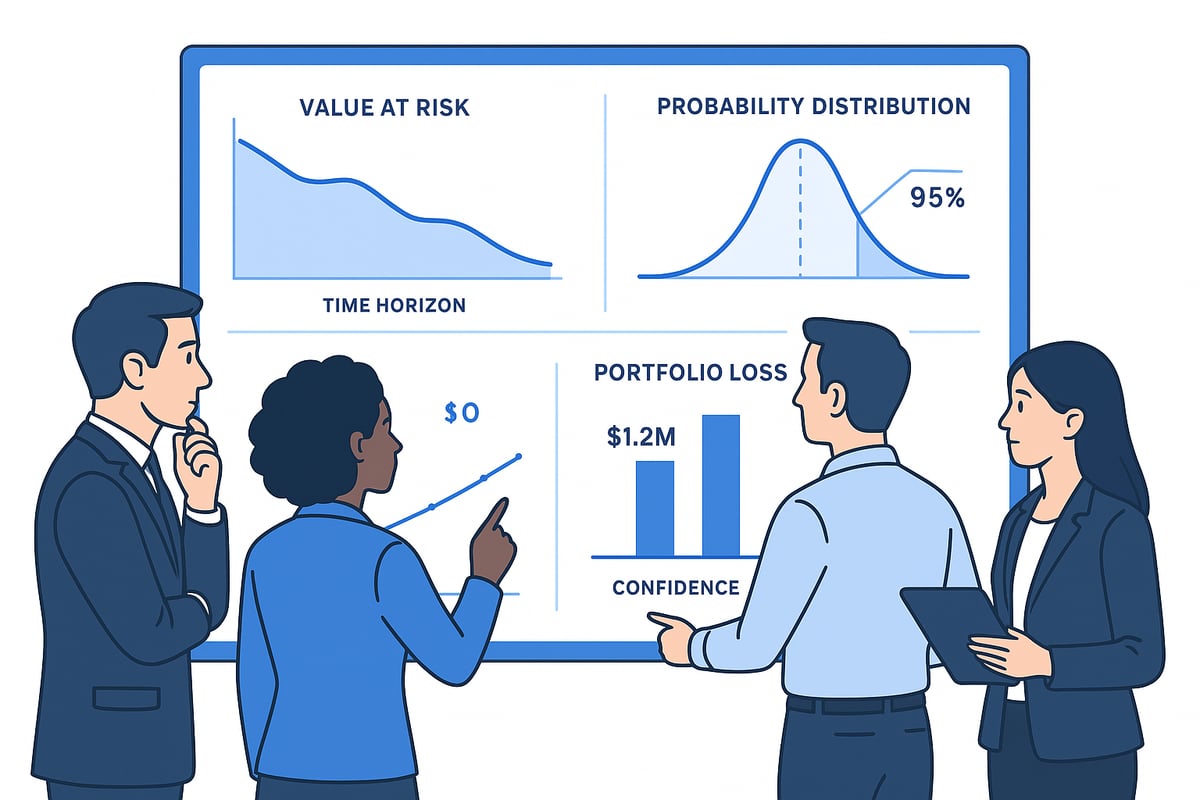
Value at risk is a statistical measure used to estimate the maximum potential loss a portfolio could experience over a specific time period, given a certain confidence level. It answers the question: “What is the worst loss I can expect with X% confidence over Y time?”
Three core components define value at risk:
| Component | Description | Example |
|---|---|---|
| Amount of Loss | The dollar value at risk | $100 million |
| Confidence Level | Probability that actual loss will not exceed VaR | 95% or 99% |
| Time Horizon | Period over which risk is assessed | 1 day, 1 month |
For example, a 5% one-month value at risk of $100 million means there is a 5% chance the portfolio will lose more than $100 million in a month.
Unlike volatility, which measures price swings in both directions, value at risk focuses on downside risk. It is not the absolute maximum loss but rather the “maximum probable loss” under normal market conditions. The concept emerged in the late 20th century as banks and investment firms sought standardized ways to communicate risk.
A common misconception is that value at risk represents the worst-case scenario. In reality, extreme losses beyond the VaR threshold can and do occur, particularly during market turmoil. This distinction is essential for risk professionals to grasp, as relying solely on value at risk may underestimate exposure during crises. Recent research, such as the Value-at-Risk Effectiveness Study, highlights how model effectiveness can vary, especially in volatile environments.
Why VaR Matters in Modern Finance
Value at risk plays a central role in risk management, financial control, and regulatory compliance. Banks, investment firms, and asset managers use value at risk to set trading limits, allocate capital, and report risk to stakeholders. Regulators require firms to calculate and disclose value at risk to determine minimum capital requirements and promote transparency.
The influence of value at risk extends beyond finance. Insurance companies, energy traders, and even corporate treasuries apply value at risk to manage risks in their operations. The widespread use of 1% and 5% value at risk thresholds, with daily or biweekly horizons, reflects its adaptability across industries.
However, value at risk has limitations. It does not quantify losses that exceed the VaR threshold, known as “tail risk.” This means rare but severe events may fall outside its scope. In practice, value at risk marks the boundary between normal and extreme market events, helping organizations distinguish routine fluctuations from true crises. This boundary is crucial for setting effective risk limits and responding promptly when markets behave unpredictably.
Methods of Calculating Value at Risk
Understanding the different methods for calculating value at risk is essential for effective risk management. Each approach offers unique advantages and limitations, catering to various portfolio types and regulatory requirements.
Analytical (Variance-Covariance) Method
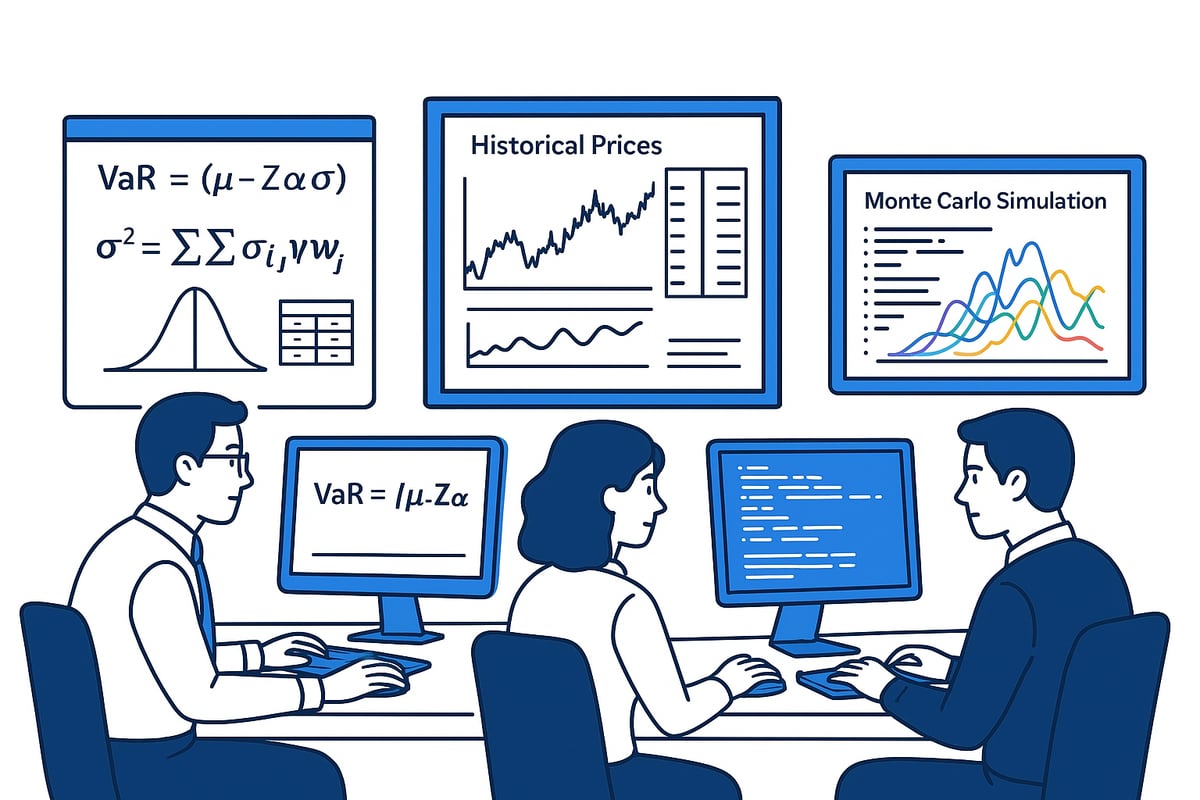
The analytical method, also known as the variance-covariance approach, is one of the most widely used techniques for calculating value at risk. It assumes that asset returns are normally distributed, which allows for straightforward mathematical modeling.
To calculate value at risk using this method, follow these steps:
- Estimate the mean and standard deviation of portfolio returns.
- Determine the confidence level (such as 95% or 99%) and corresponding z-score.
- Compute value at risk as:
VaR = (Portfolio Value) * (z-score) * (Standard Deviation of Returns)
This method is popular for its simplicity and speed. It works especially well for portfolios composed mainly of linear instruments like stocks and bonds.
However, it also has limitations. The normal distribution assumption may underestimate the probability of extreme losses, especially during volatile markets. It is less suitable for portfolios with significant options or non-linear exposures.
For a simple example, consider a $10 million portfolio with a daily standard deviation of 1% and a 99% confidence level (z-score ≈ 2.33). The one-day value at risk is:
VaR = 10,000,000 * 2.33 * 0.01 = $233,000
Historical Simulation Method
The historical simulation approach takes a different route by using actual market data to estimate potential losses. Instead of relying on distributional assumptions, it replays real historical returns over a chosen time frame.
Here is how to apply the historical simulation method for value at risk:
- Collect historical price or return data for all assets in the portfolio.
- Calculate daily portfolio returns over the historical period.
- Sort these returns from worst to best.
- Identify the value at risk at the desired percentile (e.g., the fifth-worst loss for a 5% VaR).
This method's main advantage is its realism. It captures actual market events, including periods of stress, making it especially useful for portfolios with complex or non-linear instruments.
However, its accuracy depends heavily on the quality and length of historical data used. If the chosen period does not include severe market shocks, the calculated value at risk may be misleading. Additionally, unprecedented future events will not be reflected in past data.
Monte Carlo Simulation Method
Monte Carlo simulation is a flexible and powerful method for calculating value at risk, especially for portfolios with complex derivatives or non-linear exposures. This approach generates thousands of possible future market scenarios using random sampling based on specified statistical models.
To conduct a Monte Carlo value at risk analysis:
- Define the portfolio's risk factors and their statistical properties (such as mean, volatility, and correlations).
- Simulate a large number of possible future price paths for each asset.
- Revalue the portfolio under each scenario.
- Sort the simulated portfolio returns and determine the value at risk at the chosen confidence level.
The Monte Carlo method excels at handling complex portfolios and can accommodate non-normal distributions. Its flexibility allows for customization and stress testing under various market conditions.
On the downside, this approach is computationally intensive and requires advanced modeling skills. The results are only as good as the assumptions and models used to generate scenarios. For a multi-asset portfolio with options, Monte Carlo simulation can provide a more realistic estimate of value at risk compared to simpler methods.
Comparing Methods and Choosing the Right Approach
Each value at risk calculation method has distinct strengths and weaknesses. The choice depends on portfolio complexity, available data, and regulatory requirements.
Here is a comparative overview:
| Method | Best For | Pros | Cons |
|---|---|---|---|
| Analytical | Linear portfolios | Fast, simple | Assumes normality |
| Historical Simulation | Non-linear, real market | No distribution needed | Relies on past data |
| Monte Carlo Simulation | Complex derivatives | Highly flexible | Resource intensive |
Financial institutions may combine methods for greater accuracy, such as hybrid approaches that blend historical and simulated data.
When selecting a method, consider the following checklist:
- Portfolio composition: Are there options or non-linear assets?
- Data availability: Is sufficient historical data present?
- Regulatory standards: Are there specific requirements for value at risk calculation?
- Computational resources: Can the system handle intensive simulations?
Recent research, such as the Comparison of VaR Multivariate Forecast Models, provides valuable insights into the accuracy and applicability of each method across different market environments. Staying informed of such studies helps ensure your value at risk calculations remain robust and relevant.
Advanced VaR Metrics and Applications
Advanced metrics are transforming how organizations use value at risk to understand, manage, and report financial uncertainty. As portfolios become more complex, risk professionals rely on specialized VaR techniques to capture nuances traditional methods may miss. Let us explore these sophisticated metrics and their practical impact.
Marginal, Incremental, and Component VaR
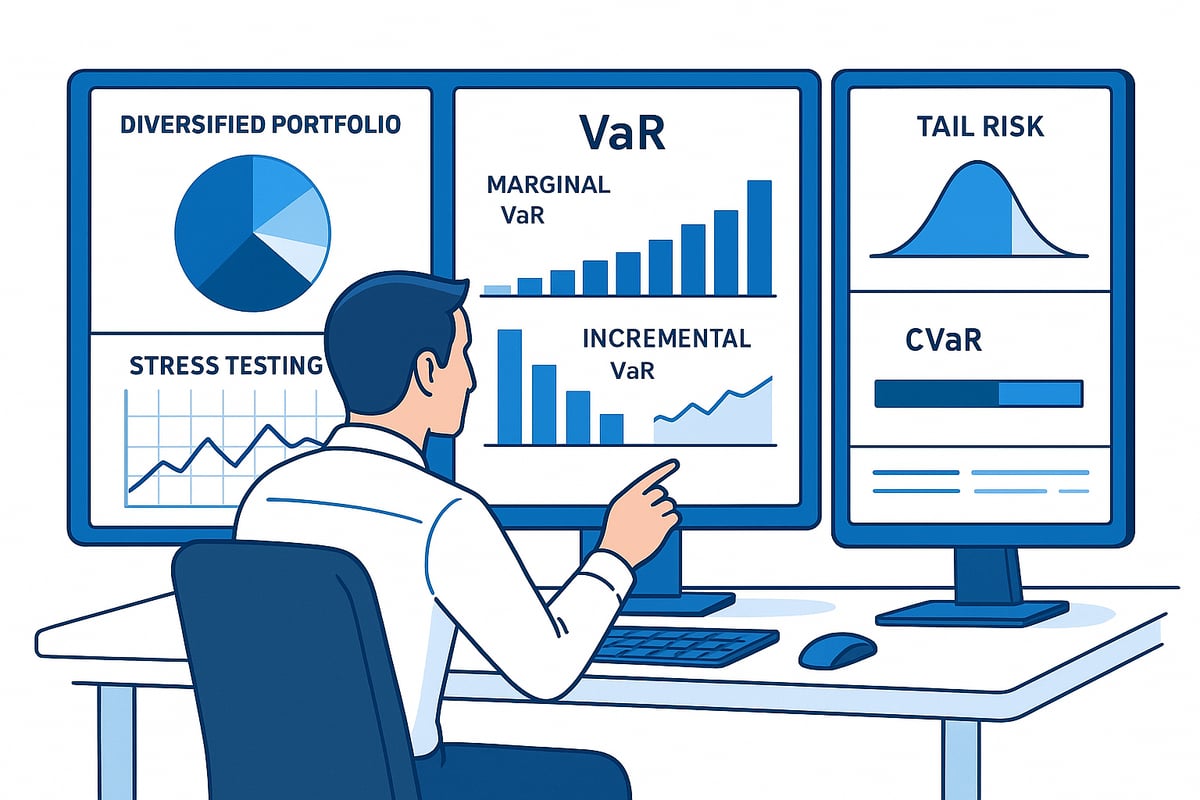
Understanding the building blocks of value at risk is essential for effective risk management. Marginal VaR measures the additional risk a new position brings to a portfolio. Incremental VaR captures the change in total value at risk when an asset is added or removed. Component VaR quantifies how much each position contributes to the overall portfolio risk.
Consider a portfolio with two assets that are negatively correlated. Adding a second asset with low or negative correlation can reduce the total value at risk, even if the individual VaR of each asset is high. This demonstrates why correlation is a key factor in portfolio construction.
Practical uses of these advanced metrics include:
- Portfolio optimization and risk budgeting
- Capital allocation based on risk contribution
- Identifying positions that disproportionately impact total risk
Asset managers often use marginal VaR to decide whether increasing a specific holding will elevate portfolio risk beyond acceptable levels. By focusing on incremental and component VaR, firms can fine-tune their strategies and allocate capital more efficiently.
Conditional VaR (CVaR) and Tail Risk
While value at risk sets a threshold for expected losses, it does not account for the severity of losses beyond that point. Conditional VaR, also known as Expected Shortfall, addresses this limitation by measuring the average loss that occurs in the worst-case scenarios exceeding the VaR threshold.
CVaR is gaining traction in both regulatory frameworks and industry practice. Basel III and IV have highlighted the importance of CVaR for capturing tail risk, especially in portfolios exposed to rare but severe events. For portfolios with "fat tails," CVaR provides a more accurate reflection of risk than value at risk alone.
Hybrid VaR models, which blend historical and Monte Carlo simulations, are emerging as robust tools for tail risk assessment. Visual analytics platforms now help risk professionals monitor CVaR and other advanced metrics in real time. For a deeper dive into methodologies and recent developments, explore this collection of Value-at-Risk Technical Papers.
Real-World Applications of VaR
Value at risk metrics are deeply embedded in daily financial operations. Trading desks and asset managers use VaR for daily risk reporting, setting limits, and managing capital reserves. Regulatory compliance often requires stress testing and documentation of VaR methodologies.
Beyond finance, value at risk is applied in:
- Corporate treasury for managing currency and interest rate risk
- Energy trading to quantify price exposure in volatile markets
- Insurance underwriting for assessing catastrophic event risk
Risk-adjusted performance measures, such as RAROC, depend on accurate VaR calculations. Non-financial firms also leverage value at risk to inform strategic decisions and protect against unexpected shocks. As risk environments evolve, the practical scope of VaR continues to expand.
Regulatory Landscape and Value at Risk in 2025
As the financial sector navigates mounting uncertainty, regulatory frameworks governing value at risk are evolving to meet new challenges. Institutions face increasing scrutiny from global authorities, each with their own approach to risk measurement and capital adequacy. As we approach 2025, understanding the regulatory environment surrounding value at risk is essential for maintaining compliance and safeguarding financial stability.

Evolving Regulatory Requirements
Global regulators have placed value at risk at the core of risk management for banks, investment firms, and asset managers. Frameworks such as Basel III and IV, Solvency II, SEC, and ESMA set out clear expectations for how institutions must calculate and report risk exposures. These rules require firms to use value at risk to determine minimum capital requirements, ensuring they hold sufficient buffers to absorb potential losses.
A notable trend is the shift toward more conservative risk measures. Some jurisdictions are moving from value at risk to Conditional Value at Risk (CVaR), also known as Expected Shortfall, to better address rare but severe losses. This transition reflects a broader regulatory focus on tail risk and systemic stability.
Transparency in risk reporting is now paramount. Authorities demand not only accurate value at risk figures but also clear explanations of methodologies, assumptions, and limitations. Regular audits and documentation are standard, and models must be robust enough to withstand regulatory scrutiny.
To meet these requirements, institutions must integrate value at risk into their capital planning and reporting processes. The concept of risk-weighted assets is closely linked, as it determines how much capital must be held against different types of exposures. This connection emphasizes why value at risk remains a foundational metric in regulatory compliance.
Backtesting and Model Validation
Regulators require institutions to backtest their value at risk models regularly. Backtesting involves comparing predicted loss estimates with actual outcomes over time. If actual losses exceed the value at risk threshold too often, it signals that the model may be underestimating risk.
The frequency and accuracy of backtesting are strictly monitored. Regulatory guidelines specify how often backtests should occur and how to handle breaches. If a value at risk model fails backtesting, institutions may face higher capital charges, model recalibration, or even enforcement actions.
Effective model validation goes beyond backtesting. It includes ensuring statistical independence of data samples and accounting for potential sampling errors. Institutions must document their validation processes, maintain clear audit trails, and update models as market conditions evolve.
For example, when a backtest reveals a model’s shortcomings, the firm must promptly investigate, report the breach, and take corrective action. This disciplined approach helps maintain trust in the value at risk framework and supports ongoing regulatory compliance.
Criticisms and Limitations of VaR in Regulation
Despite its prominence, value at risk has limitations when used for regulatory purposes. One major criticism is its inability to capture extreme tail events, which can lead to significant underestimation of potential losses during market crises. Regulators have responded by requiring additional stress testing and scenario analysis alongside value at risk calculations.
Recent case studies highlight the consequences of inadequate value at risk implementation. Regulatory fines and institutional failures have occurred when firms relied solely on value at risk without considering its blind spots. This has fueled debate about whether value at risk is still fit for purpose in 2025 or if metrics like CVaR and ESG risk should take precedence.
Trends indicate a growing regulatory preference for advanced risk metrics and integrated approaches. As institutions adapt to new requirements, combining value at risk with other tools is becoming standard practice. This shift aims to provide a more comprehensive picture of risk, supporting financial system resilience in an unpredictable world.
Implementing and Interpreting VaR in Practice
Navigating the implementation of value at risk in real-world settings requires both technical rigor and clear communication. In this section, you will find a practical framework for deploying value at risk, interpreting results, leveraging technology, and avoiding common mistakes. By following these strategies, organizations can ensure robust risk measurement and informed decision-making.
Step-by-Step Guide to VaR Implementation
A systematic approach is essential when implementing value at risk for any portfolio. Begin by defining the scope: identify the assets, positions, and exposures you want to measure. Next, select the most suitable value at risk calculation method, such as analytical, historical simulation, or Monte Carlo, based on your portfolio’s complexity and regulatory needs.
Gather high-quality input data. This includes accurate prices, volatilities, and correlations. Validate this data to eliminate errors, as even small inaccuracies can distort results. Set your confidence level (commonly 95 percent or 99 percent) and establish the time horizon for the analysis, such as daily or monthly.
Run the calculations using your chosen methodology. Interpret the value at risk outcomes in the context of your organization’s risk appetite and regulatory requirements. Establish clear risk limits, and design reporting procedures that keep stakeholders informed. Regularly backtest and recalibrate your models to maintain accuracy, especially as market conditions evolve.
Here is a concise checklist for implementation:
| Step | Description |
|---|---|
| Define Scope | Specify assets and exposures |
| Select Method | Analytical, Historical, or Monte Carlo |
| Gather & Validate Data | Ensure data integrity |
| Set Parameters | Confidence level and time horizon |
| Calculate VaR | Run and review results |
| Report & Monitor | Communicate findings, set limits |
| Backtest & Recalibrate | Adjust models as needed |
Interpreting VaR Results for Decision-Making
Understanding the implications of value at risk figures is crucial for effective risk management. Remember, value at risk provides a statistical boundary: it estimates the maximum expected loss at a certain confidence level, but does not predict the worst-case scenario. Use value at risk as a guide for setting risk limits, planning hedges, and allocating capital.
When interpreting results, always consider the context. For example, a one-day 99 percent value at risk of $5 million means that, on 99 out of 100 days, losses should not exceed $5 million. However, outlier events can result in larger losses, so supplement value at risk analysis with stress testing and scenario analysis. Transparent communication of value at risk results is vital—tailor reports for different audiences, from trading desks to executive boards, using concise summaries and clear visuals.
Backtesting is a critical validation step. By comparing historical value at risk predictions to actual losses, you can assess the reliability of your models. The challenges of accurate backtesting were highlighted during the COVID-19 market turmoil, as explored in VaR Estimation and Backtesting During COVID-19. This underscores the importance of continuous model review, especially in volatile environments.
Tools and Technology for VaR Analysis
Modern risk management relies on advanced tools to support value at risk analysis. Leading platforms offer cloud-based or hosted solutions, enabling scalable computations and real-time reporting. These systems integrate with portfolio management and accounting tools, streamlining workflows and enhancing transparency.
Artificial intelligence and machine learning are increasingly used to refine value at risk models. These technologies help identify patterns in large datasets, improve scenario analysis, and adapt to changing market conditions. Data visualization is equally important, as dashboards and interactive analytics make complex value at risk results accessible to diverse stakeholders.
Selecting the right technology depends on your organization’s needs, portfolio complexity, and regulatory obligations. Evaluate solutions for their computational power, integration capabilities, and support for regulatory compliance. Platforms that allow custom modeling and frequent backtesting can provide a competitive edge.
Common Pitfalls and Best Practices
Implementing value at risk is not without challenges. Data quality issues, such as missing or outdated information, can compromise accuracy. Over-reliance on historical data or rigid model assumptions may result in underestimating risk, especially during unprecedented events. Regular scenario analysis and stress testing can help address these blind spots.
Best practices for robust value at risk implementation include:
- Validating data sources and cleansing inputs
- Regularly backtesting models and updating parameters
- Supplementing value at risk with other risk metrics
- Communicating results clearly to all stakeholders
- Ensuring compliance with evolving regulatory standards
It is also valuable to understand the underlying assumptions of value at risk methodologies, such as those related to market efficiency. For more on how market assumptions can affect risk models, see this efficient market hypothesis overview.
By adhering to these principles, organizations can enhance the reliability and relevance of their value at risk frameworks, supporting informed, proactive risk management.
Future Trends: Value at Risk and Risk Management in 2025
As we approach 2025, the landscape for value at risk is rapidly evolving. Global markets are facing new types of uncertainty, and risk managers must adapt to stay ahead. Understanding how value at risk is changing will be essential for organizations seeking to protect their assets and thrive in a dynamic environment.
Emerging Risks and Market Dynamics
The future of value at risk will be shaped by shifting market forces. New sources of volatility, such as geopolitical tensions, climate-related events, and the rise of digital assets, are testing traditional risk models. Financial institutions are also seeing the influence of artificial intelligence and algorithmic trading, which can amplify both market opportunities and systemic risk.
Environmental, Social, and Governance (ESG) risks are increasingly integrated into value at risk frameworks. As investors demand greater accountability, risk models must adapt to consider climate impacts and social responsibility. Additionally, alternative data sources and real-time analytics are pushing value at risk calculations toward more dynamic and responsive approaches.
Leverage remains a critical factor in portfolio risk. Understanding metrics like the debt-to-equity ratio is vital, as it directly influences the sensitivity of value at risk to market shifts. Firms that proactively monitor these variables are better positioned to manage tomorrow’s risks.
Innovations in VaR Methodologies
Methodologies for calculating value at risk are advancing quickly. Machine learning is being used to enhance Monte Carlo simulations, enabling more accurate modeling of complex portfolios. Hybrid VaR models, which combine historical and analytical techniques, are gaining popularity for their ability to adapt to shifting market regimes.
Real-time value at risk calculations are becoming feasible with advances in cloud computing and big data. This allows organizations to monitor risk intraday, rather than relying solely on end-of-day reports. Open-source risk analytics platforms are also on the rise, offering customizable solutions for firms that require robust yet flexible risk management tools.
These innovations are not just technical improvements. They represent a shift toward proactive risk management, where value at risk is used to anticipate and respond to emerging threats, rather than simply measuring past exposures.
Regulatory and Industry Shifts
Regulatory frameworks around value at risk are tightening globally. Basel III and IV, Solvency II, and updates from the SEC and ESMA are raising the bar for transparency, model validation, and capital adequacy. There is a growing trend toward replacing traditional value at risk with Conditional VaR (CVaR) in some jurisdictions, reflecting a desire to better capture tail risk.
Increased regulatory scrutiny means that firms must invest in backtesting, model validation, and documentation. Regulators are also demanding more frequent and detailed reporting, making robust value at risk systems a necessity for compliance. Industry-wide, there is a move toward harmonizing risk standards, which could make cross-border risk management more consistent and reliable.
Staying informed about these changes will be crucial for financial institutions aiming to maintain a competitive edge and avoid costly compliance issues.
Practical Strategies for Staying Ahead
To stay ahead in 2025, risk professionals must adopt a proactive approach to value at risk management. Continuous education and upskilling are essential, as new technologies and methodologies become standard. Leveraging automated risk monitoring tools can help organizations manage exposures in real time and respond quickly to unexpected events.
Building organizational resilience requires embedding a strong risk culture at every level. This means fostering open communication, encouraging collaboration between risk and business teams, and integrating value at risk into strategic decision-making. Partnering with fintech and regtech providers can also offer access to the latest innovations and industry best practices.
Organizations that prioritize flexibility and adaptability in their value at risk processes will be best positioned to navigate future uncertainties.
Case Studies and Real-World Examples
Leading firms are already adapting their value at risk practices to meet new challenges. For example, some asset managers have integrated ESG factors and real-time analytics to enhance risk visibility. Others have responded to recent market shocks by updating their models to account for extreme tail events and by increasing the frequency of stress testing.
Data trends show that breaches of value at risk limits often occur during periods of rapid market change. In these cases, firms that had robust scenario analysis and clear escalation procedures in place were able to respond more effectively. Incorporating leverage metrics, such as the debt-to-equity ratio, into daily risk assessments has also helped organizations better understand and manage their true risk exposures.
These real-world lessons underscore the importance of evolving value at risk frameworks to keep pace with market realities.
Key Takeaways for 2025 Risk Management
Looking ahead, value at risk will remain a cornerstone of modern risk management, but its application will continue to evolve. Risk professionals should focus on:
- Embracing new methodologies, including hybrid and machine learning-enhanced models
- Integrating ESG and alternative data into value at risk calculations
- Strengthening regulatory compliance through robust validation and reporting
- Building a risk-aware culture that supports strategic agility
For a comprehensive view of financial health and risk context in value at risk applications, understanding metrics like operating margin and risk is also recommended.
By following these strategies, organizations can prepare for the next wave of risk management challenges and ensure that value at risk remains a reliable guide in an unpredictable world.
As you look ahead to 2025 and consider how Value at Risk can shape your approach to financial uncertainty, it's clear that understanding the story behind every market shift is more important than ever. We believe that learning from the past empowers you to make smarter, more resilient decisions for the future. With Historic Financial News, you can explore interactive charts, AI-powered summaries, and in depth news coverage to see how history informs today's risk management strategies. If you're ready to deepen your perspective and stay ahead by learning from yesterday's markets, Stay ahead by looking back.