
Systematic Risk: Historical Lessons for Modern Investors
Financial markets have experienced countless upheavals throughout history, from the Great Depression to the 2008 financial crisis, each teaching investors critical lessons about market-wide vulnerabilities. Understanding systematic risk-the inherent uncertainty that affects entire markets or asset classes simultaneously-provides essential context for interpreting these historical patterns. By examining past market behavior through this lens, investors gain perspective on how macroeconomic forces, policy decisions, and global events create undiversifiable risks that shape portfolio performance across generations.
The Nature of Market-Wide Risk
Systematic risk represents the portion of investment uncertainty that cannot be eliminated through diversification. Unlike company-specific risks that affect individual securities, this form of risk impacts broad market segments or entire economies simultaneously. Historical analysis reveals that systematic risk in banking systems often serves as a bellwether for broader economic instability.
The fundamental characteristic distinguishing systematic risk from other investment hazards lies in its pervasive nature. When interest rates rise, inflation accelerates, or geopolitical tensions escalate, these forces ripple through markets indiscriminately. No amount of portfolio diversification can shield investors from these market-wide movements.
Sources and Drivers Throughout History
Economic cycles have consistently demonstrated how various factors contribute to systematic risk exposure. Interest rate fluctuations represent one of the most powerful drivers, as witnessed during the Volcker era of the early 1980s when aggressive monetary tightening sent shockwaves through equity and bond markets alike.
Key sources of systematic risk include:
- Monetary policy changes that alter borrowing costs and liquidity conditions
- Inflation dynamics affecting purchasing power and asset valuations
- Economic growth patterns driving corporate earnings and employment
- Political instability creating regulatory and operational uncertainties
- Currency fluctuations impacting international trade and investments
- Global health crises disrupting supply chains and consumer behavior
The 1973 oil embargo exemplifies how geopolitical events generate systematic risk. OPEC's oil restrictions triggered inflation, recession, and market declines that affected virtually all asset classes. Diversification across different stocks provided little protection when the entire economy contracted.

Historical Market Events and Systematic Risk
The Great Depression stands as perhaps history's most dramatic illustration of systematic risk materializing. Between 1929 and 1932, the Dow Jones Industrial Average lost approximately 89% of its value, while unemployment soared above 25%. This catastrophic period demonstrated how financial system vulnerabilities, monetary policy mistakes, and economic contagion create correlated losses across all market segments.
Black Monday in October 1987 offers another compelling case study. Global stock markets crashed simultaneously, with the Dow falling 22.6% in a single day. The incident highlighted how technological changes, portfolio insurance strategies, and interconnected markets amplified systematic risk beyond individual security selection.
The 2008 Financial Crisis
The 2008 financial crisis provides modern investors with crucial lessons about systematic risk evolution. What began as problems in the U.S. subprime mortgage market cascaded into a global banking crisis, demonstrating how financial system interconnectedness magnifies market-wide vulnerabilities. Understanding how to manage risk rather than fear it became paramount for investors navigating this environment.
The crisis revealed several systematic risk mechanisms:
- Credit market freezes affecting borrowing across all sectors
- Counterparty risk contagion spreading through financial institutions
- Asset correlation increases during stress periods
- Liquidity evaporation impacting even high-quality securities
- Global transmission through trade and financial linkages
Historical analysis shows that during the 2008 crisis, correlations between traditionally uncorrelated assets approached unity, effectively eliminating diversification benefits when investors needed them most. Even traditionally safe investments experienced unprecedented volatility as systematic risk overwhelmed market participants' risk management frameworks.
Measurement and Quantification
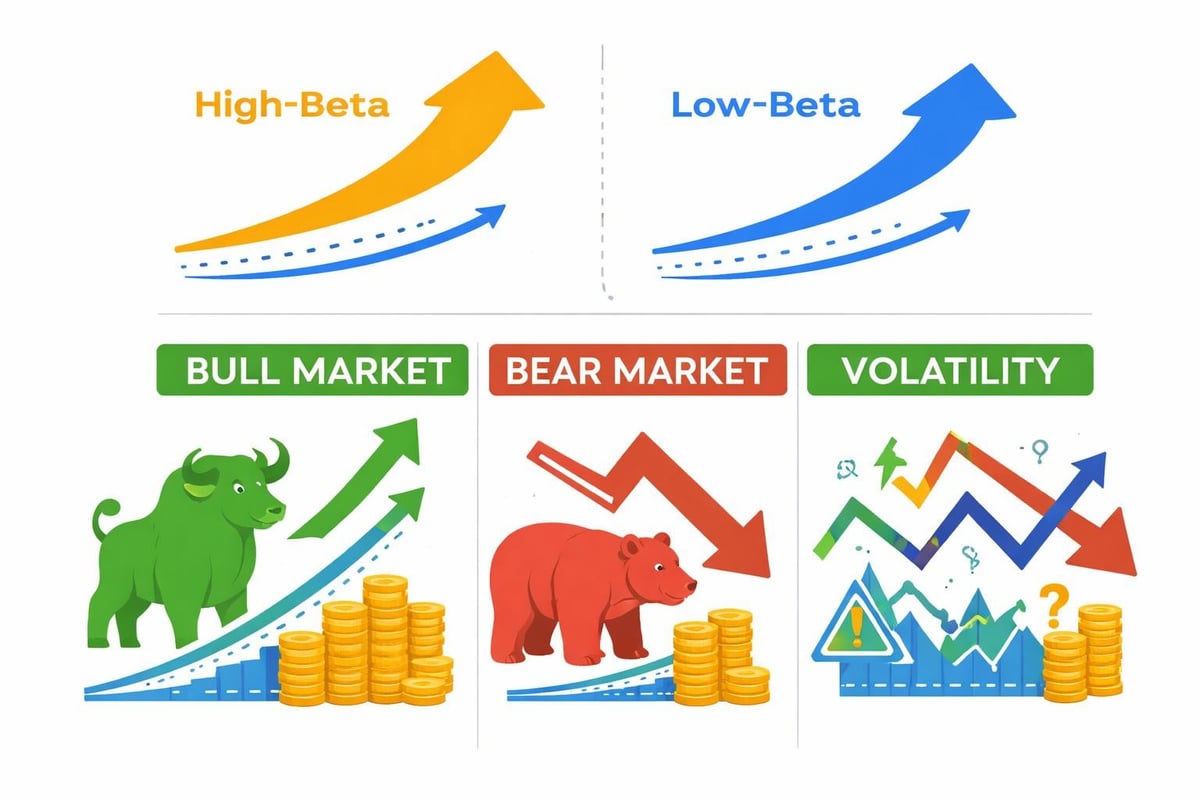
Measuring systematic risk requires sophisticated analytical frameworks that have evolved considerably over decades. Beta, introduced in the 1960s through capital asset pricing model (CAPM) development, remains the most widely recognized metric. This coefficient measures an asset's sensitivity to market movements, with a beta of 1.0 indicating movements matching the broader market.
| Beta Value | Interpretation | Historical Examples |
|---|---|---|
| < 0.5 | Low systematic risk | Utility stocks during stable periods |
| 0.5 - 1.0 | Moderate systematic risk | Consumer staples, healthcare |
| 1.0 - 1.5 | Average to high systematic risk | Industrial stocks, financials |
| > 1.5 | Very high systematic risk | Technology stocks, emerging markets |
Historical data reveals that beta calculations vary significantly across different time periods and market conditions. Technology stocks that exhibited betas above 1.5 during the dot-com bubble showed different characteristics during subsequent market cycles, illustrating how systematic risk profiles evolve with economic structures.
Advanced Measurement Approaches
Beyond beta, financial researchers have developed numerous methodologies to quantify market-wide risk. Value at Risk (VaR) models estimate potential losses under normal market conditions, while stress testing examines portfolio behavior during extreme scenarios modeled on historical crises. Research on systematic financial risk has expanded significantly over the past decade, incorporating machine learning and network analysis techniques.
Factor models decompose systematic risk into specific economic drivers. The Fama-French three-factor model, for instance, identifies size and value factors alongside market risk. These frameworks help investors understand which systematic risk sources drive their portfolio returns across different historical periods.
Portfolio Implications Across Market Cycles
Historical portfolio analysis demonstrates that systematic risk fundamentally influences long-term investment returns. During the 1970s stagflation period, traditional stock-bond portfolios struggled as both asset classes faced headwinds from inflation and economic stagnation. This environment challenged conventional wisdom about diversification's protective benefits.
The relationship between risk and return, a cornerstone of modern portfolio theory, manifests clearly through historical data. Assets bearing higher systematic risk exposure have historically delivered superior long-term returns, compensating investors for accepting undiversifiable uncertainty. Small-cap stocks, for example, have outperformed large-caps over extended periods, partially reflecting their higher systematic risk profiles.
Asset Allocation Strategies
Understanding systematic risk through historical context informs strategic asset allocation decisions. Investors who studied the 1987 crash recognized that while diversification failed to prevent losses during the acute crisis, portfolios recovered based on their underlying systematic risk exposures and economic fundamentals.
Effective approaches include:
- Strategic rebalancing to maintain targeted risk exposures through market cycles
- Factor diversification across different systematic risk sources beyond simple market beta
- Geographic diversification reducing exposure to single-country systematic risks
- Asset class mixing balancing growth and defensive systematic risk characteristics
- Duration management in fixed income to control interest rate systematic risk
The efficient market hypothesis suggests that systematic risk represents the only compensated risk in efficient markets, as company-specific risks can be diversified away. Historical evidence provides mixed support for this theory, with various market anomalies and inefficiencies identified across different periods.
Systematic Risk in Different Asset Classes
Equity markets exhibit systematic risk through their sensitivity to economic growth, corporate profitability, and investor sentiment. The 2000-2002 bear market saw the Nasdaq Composite decline by approximately 78%, reflecting how systematic risks related to valuation multiples, interest rate expectations, and economic slowdown affected technology stocks broadly.
Fixed income securities face distinct systematic risk factors, primarily interest rate movements and credit spread changes. The 1994 bond market crash, triggered by Federal Reserve rate hikes, demonstrated how duration risk creates systematic exposure. When the Fed raised rates by 300 basis points over twelve months, bond portfolios experienced widespread losses regardless of individual security selection.
Alternative Investments and Commodities
Real estate investment trusts (REITs) and commodities present different systematic risk profiles informed by their unique economic drivers. REITs carry systematic risks related to interest rates, property market cycles, and economic activity. Historical REIT performance shows high correlation with broader equity markets during crisis periods, despite their distinct fundamental characteristics.
Commodities like gold have historically exhibited lower correlation with traditional financial assets, potentially offering systematic risk diversification benefits. During the 2008 financial crisis, gold prices initially declined alongside other assets before rallying as investors sought safe-haven protection from currency debasement risks.
| Asset Class | Primary Systematic Risk Factors | Historical Correlation to S&P 500 |
|---|---|---|
| Large-Cap Stocks | Economic growth, earnings, rates | 1.00 (by definition) |
| Corporate Bonds | Interest rates, credit spreads | 0.40 - 0.60 |
| REITs | Property values, rates, economy | 0.50 - 0.70 |
| Commodities | Inflation, supply/demand, USD | 0.20 - 0.40 |
| International Equities | Global growth, currency, rates | 0.70 - 0.90 |
Understanding how risk-weighted assets function in banking regulation provides additional perspective on systematic risk measurement across different security types and credit qualities.
Global Market Integration and Contagion
Financial globalization has fundamentally altered systematic risk dynamics over recent decades. The 1997 Asian Financial Crisis illustrated how localized problems could trigger global systematic risk events through trade linkages, capital flows, and investor sentiment contagion. What began as Thailand's currency devaluation cascaded through Southeast Asia, affecting markets worldwide.
The interconnected nature of modern financial systems means that systematic risk increasingly transcends national boundaries. Systematic risk in global markets requires understanding cross-border transmission mechanisms and correlated policy responses. During the European sovereign debt crisis of 2010-2012, concerns about Greek government bonds ultimately threatened the entire eurozone financial system.

Emerging Market Dynamics
Emerging markets present distinctive systematic risk characteristics shaped by less developed institutional frameworks, higher political uncertainty, and greater vulnerability to capital flow reversals. The "taper tantrum" of 2013 demonstrated how U.S. monetary policy changes create systematic risk for emerging market assets through capital flight and currency depreciation.
Historical patterns show that emerging market systematic risk tends to spike during global risk-off episodes, regardless of individual country fundamentals. This correlation with developed market stress creates challenges for investors seeking diversification through geographic expansion.
Policy Responses and Risk Mitigation
Central bank actions throughout history have profoundly influenced systematic risk levels. The Federal Reserve's response to the 2008 crisis, including unprecedented quantitative easing and near-zero interest rates, exemplified how monetary authorities attempt to reduce systematic risk through liquidity provision and confidence restoration.
Regulatory frameworks have evolved to address systematic risk following major crises. The Glass-Steagall Act emerged from Great Depression lessons, while Dodd-Frank regulations responded to 2008's financial system vulnerabilities. These policy interventions aim to reduce systematic risk by limiting leverage, improving transparency, and enhancing financial institution resilience.
Individual Investor Strategies
While systematic risk cannot be eliminated, investors can employ strategies to manage exposure based on historical precedents. Understanding economic cycle positioning helps adjust portfolio systematic risk profiles appropriately. During late-cycle expansions, reducing equity exposure and increasing defensive positions may moderate systematic risk.
Historical analysis supports several risk management approaches:
- Maintain adequate liquidity to avoid forced selling during systematic risk events
- Use hedging instruments like options or inverse positions during elevated risk periods
- Implement stop-loss disciplines to limit drawdowns when systematic risks materialize
- Adjust position sizing based on systematic risk assessments and market volatility
- Consider tactical allocation shifts in response to changing economic conditions
The concept of going concern becomes particularly relevant during systematic risk events, as broad market stress can threaten even fundamentally sound businesses' operations and valuations.
Learning from Historical Patterns
Studying systematic risk through historical market data reveals recurring patterns and unique characteristics of different crisis periods. The 1929 crash, 1987's Black Monday, the 2000 dot-com bust, and 2008's financial crisis each manifested systematic risk differently, reflecting distinct economic conditions and market structures.
Pattern recognition provides valuable context without guaranteeing future outcomes. The adage that history doesn't repeat but rhymes applies particularly to systematic risk analysis. While specific circumstances vary, underlying mechanisms-excessive leverage, valuation extremes, policy mistakes-recur across different eras.
Understanding systematic risk fundamentals through multiple historical examples builds intuition for identifying potential systematic risk buildups in current market environments. The rapid credit expansion preceding both 1929 and 2008 illustrates how similar dynamics can emerge in vastly different technological and regulatory contexts.
Behavioral Dimensions
Investor psychology amplifies systematic risk during market extremes. The panic selling that characterized October 1987 and September 2008 demonstrates how fear-driven behavior creates self-reinforcing downward spirals. Conversely, excessive optimism during bubble periods like the late 1990s reduces perceived systematic risk below prudent levels.
Historical analysis of the distinction between systematic and unsystematic risk helps investors maintain perspective during emotionally charged market environments. Recognizing that some risks affect all investments while others remain company-specific enables more rational decision-making under stress.
Modern Developments and Future Considerations
The financial landscape continues evolving, introducing new systematic risk dimensions. Algorithmic trading and high-frequency strategies have altered market microstructure, potentially creating flash crash vulnerabilities as witnessed in May 2010. These technological changes represent emerging systematic risk factors absent from earlier historical periods.
Climate change introduces systematic risks that may dwarf previous economic disruptions. Physical risks from extreme weather and transition risks from decarbonization policies could create correlated asset losses across sectors and geographies. Historical analysis provides limited precedent for systematic risks of this magnitude and timeframe.
Cryptocurrency markets and digital assets represent another frontier for systematic risk analysis. The high correlations observed during crypto market crashes, despite blockchain technology's decentralized nature, suggest that systematic risk principles apply to these new asset classes, though specific drivers differ from traditional markets.
Integration of Technology
Artificial intelligence and machine learning enable more sophisticated systematic risk analysis, processing vast historical datasets to identify patterns and relationships. However, these technologies also introduce new systematic risks through model dependencies, algorithmic correlations, and potential technological failures affecting multiple market participants simultaneously.
The COVID-19 pandemic beginning in early 2020 demonstrated how unprecedented global health crises create systematic risk through simultaneous supply and demand shocks. While historical pandemics like the 1918 Spanish Flu offer some context, modern economic integration and just-in-time supply chains magnified systematic risk transmission.
Understanding systematic risk through historical market analysis equips investors with essential perspective for navigating future uncertainties and recognizing patterns that shape portfolio outcomes across economic cycles. By examining how major events like the Great Depression, 2008 financial crisis, and other market disruptions affected investors, we gain valuable insights into the undiversifiable risks inherent in market participation. Historic Financial News provides the tools and context needed to explore these historical patterns through interactive charts and AI-powered analysis, helping you understand how systematic risk has shaped markets over time and apply those lessons to your investment decisions today.