
Spread Guide: Meaning, Uses, and Insights for 2026
Discover how the term spread influences choices in finance, betting, and daily life. This guide will demystify what spread means, why it matters, and how you can use it to your advantage in 2026.
We will define spread in several real-world contexts, reveal its role in financial markets and betting, explore emerging trends, break down calculation methods, and share expert strategies for making the most of spreads in the years ahead.
Ready to master the art of spread? Let’s unlock its secrets and help you make smarter decisions for the future.
What Is a Spread? Definitions and Core Concepts
Understanding the meaning of spread is crucial for anyone navigating modern finance, betting, or business. The term has deep roots in language and has evolved to capture core ideas about difference and distribution in many fields.

The Etymology and Evolution of "Spread"
The word spread comes from Old English, meaning to stretch out or extend. Over time, spread became a versatile term, entering the vocabularies of finance, betting, and other industries. In English, spread functions as both a verb (to distribute, to extend) and a noun (the extent or range of something).
According to the Cambridge Dictionary, spread as a noun refers to the difference between two amounts or the range covered by something. As a verb, it means to cover a surface or to move across an area. These definitions highlight key characteristics: spread involves coverage, difference, and distribution.
In everyday language, spread might describe the act of spreading butter on bread or spreading news among friends. In technical contexts, it takes on more precise meanings. For instance, in risk management, spread refers to distributing risk across different assets. In epidemiology, spread represents how a disease moves through a population.
Whether discussing a financial spread or the spread of information, the term always implies some form of extension or difference. This versatility allows spread to bridge simple daily actions and complex technical concepts.
Types of Spreads in Modern Usage
Spread appears in many professional and casual settings. In finance, a spread is the difference between the bid and ask prices of an asset, a concept central to trading. You can learn more about this in the Bid-Ask Spread in Trading resource, which explains how order books work in financial markets.
In betting, the point spread levels the playing field between teams, while odds spread adjusts payouts. Statistical spread refers to measures like range and variance, describing how data points are distributed. In business, spread can mean profit margins or cost differentials. Epidemiology uses spread to track disease transmission, and technology uses the term to describe the adoption of innovations.
Here is a table summarizing types of spread:
| Type | Example | Field |
|---|---|---|
| Bid-Ask Spread | Stock trading | Finance |
| Point Spread | NFL games | Betting |
| Data Spread | Variance in test scores | Statistics |
| Profit Margin | Revenue minus costs | Business |
| Disease Spread | Transmission rates | Epidemiology |
Across all these examples, spread always signals a difference or distribution over a range. Recognizing this pattern helps you interpret the term accurately in any context.
Spread in Finance: Applications and Significance for 2026
Understanding the spread in finance is crucial for both seasoned investors and newcomers. As markets evolve, the spread remains a central concept influencing trading costs, risk management, and profitability.
Financial Spreads Explained
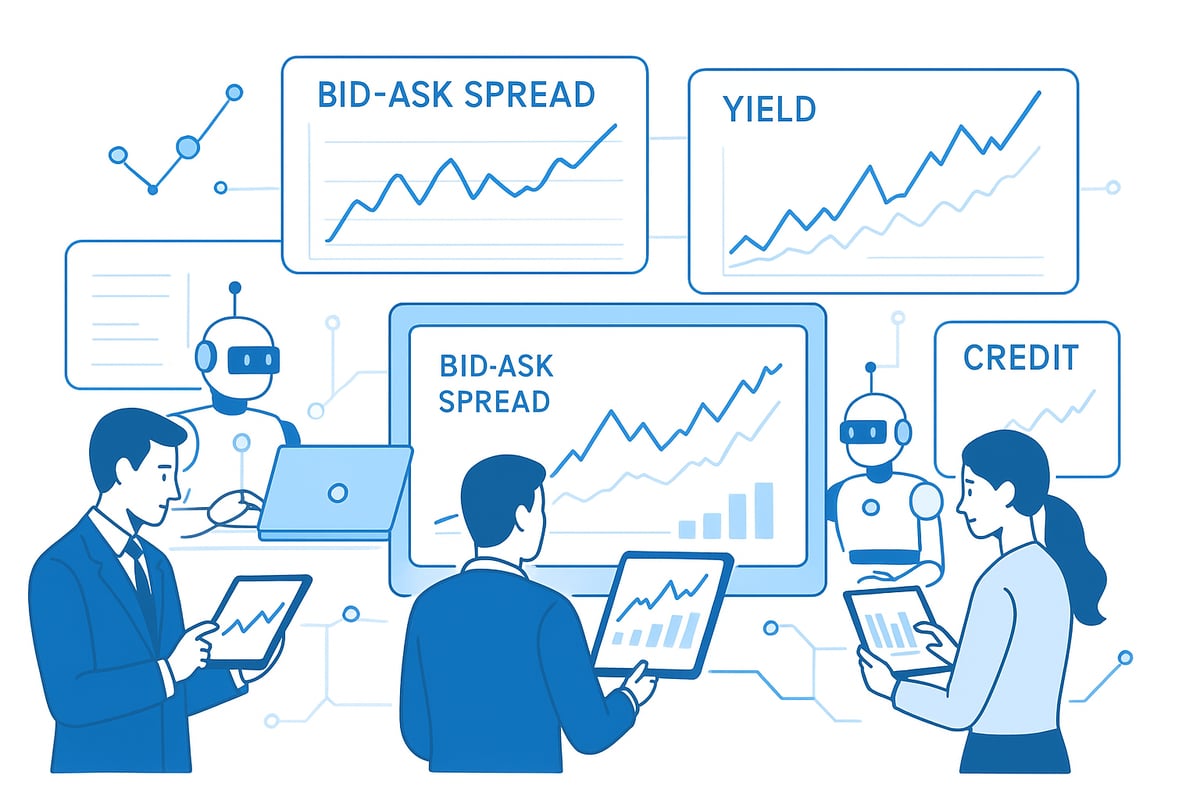
A spread in finance represents the difference between two prices, rates, or yields. The most common is the bid-ask spread, which is the gap between what buyers are willing to pay and what sellers are asking for a security. This spread is essential for understanding transaction costs and market liquidity.
Yield spreads compare the returns on different debt instruments, such as government and corporate bonds. For a detailed look at these concepts, see Fixed Income Yield Spreads. Credit spreads assess the risk associated with different issuers, reflecting the extra yield investors demand for taking on additional credit risk.
Spread trading strategies, like pairs trading or calendar spreads, use price differences between related assets to seek profit. Each spread type plays a distinct role in shaping investment decisions and managing risk.
| Type of Spread | Definition | Example Use Case |
|---|---|---|
| Bid-Ask Spread | Difference between buy and sell prices | Stock and forex trading |
| Yield Spread | Difference in yields between bonds | Bond risk assessment |
| Credit Spread | Yield gap between credit ratings | Corporate debt pricing |
The spread is not just a cost factor, it also signals market sentiment and liquidity.
Trends and Innovations Shaping Financial Spreads by 2026
Several trends are transforming how the spread is calculated and interpreted. In highly liquid markets, spreads have narrowed significantly between 2020 and 2025, largely due to the rise of algorithmic and high-frequency trading. These technologies increase efficiency, reduce human error, and keep spreads tight even during volatile periods.
Regulatory changes are enhancing spread transparency, making it easier for investors to compare costs across platforms. The growth of decentralized finance (DeFi) introduces new models for determining spreads, often relying on automated market makers and smart contracts.
Artificial intelligence and machine learning now play a key role in predicting and optimizing the spread. For example, ETFs have seen their spreads shrink as trading volumes and technological sophistication increase.
Key trends shaping spreads for 2026:
- Continued narrowing in liquid markets
- Greater use of automation and AI
- Enhanced transparency due to regulatory reforms
- Expansion of DeFi platforms
- Increased investor awareness of spread costs
These developments mean that understanding the spread is more important than ever for managing costs and seizing new opportunities.
Case Studies and Data Points
Looking back, major events like the 2008 financial crisis and the COVID-19 market volatility caused spreads to widen sharply, reflecting uncertainty and reduced liquidity. In recent years, average bid-ask spreads in major asset classes have tightened, especially in stocks, forex, and crypto.
According to market analysts, the spread remains a sensitive indicator of risk and liquidity. For example, during periods of economic stress, credit spreads can widen rapidly, signaling higher perceived risk. In contrast, stable conditions often see spreads contract as confidence returns.
Investors can leverage spread data to make smarter decisions. By monitoring spread trends, they can identify market inefficiencies or anticipate shifts in sentiment. This approach allows for more informed trading and risk management strategies.
The spread will continue to serve as a critical metric in 2026, helping investors navigate evolving markets and adapt to new technologies.
Spread in Betting: Understanding the Odds and Strategies
Betting has evolved far beyond simple win or lose wagers. At the heart of modern wagering is the concept of spread, a tool that levels the playing field and shapes betting strategies. Whether you are a seasoned sports bettor or just starting, understanding spread is essential for making smart decisions in 2026.

The Meaning of Spread in Sports and Casino Betting
The spread in sports betting refers to the point difference set by bookmakers to balance the perceived strengths of competing teams. Instead of simply picking a winner, bettors must decide if a team will win by more than the spread or lose by less. This approach encourages balanced betting activity, regardless of team dominance.
In spread betting, the underdog receives a points advantage, while the favorite faces a handicap. For example, if the New England Patriots are favored by 7 points against the Miami Dolphins, the spread is set at 7. You win by betting on the Patriots only if they triumph by more than 7 points. If you choose the Dolphins, you win if they lose by less than 7 or win outright.
Spread betting differs from fixed-odds betting, where you wager on a straight outcome. Here is a quick comparison:
| Feature | Spread Betting | Fixed-Odds Betting |
|---|---|---|
| Outcome | Margin matters | Win/Loss only |
| Risk/Reward | Variable | Fixed |
| Strategy | Beat the spread | Pick the winner |
Bookmakers adjust spreads based on team news, injuries, and betting volume to ensure balanced risk. The spread is a dynamic figure, constantly adapting to market sentiment and information flow.
Calculating and Interpreting Betting Spreads
To read a spread, check the point value attached to each team. The favorite has a negative spread, while the underdog is positive. For example, "Team A -5.5" means Team A must win by 6 or more points to cover the spread. If you bet on "Team B +5.5," they can lose by up to 5 points, and your bet still wins.
Calculating potential payouts involves multiplying your stake by the odds, typically close to even money for standard spreads. For instance, a $100 bet at -110 odds yields about $90.91 in profit if your pick covers the spread.
Margins of victory and spread accuracy are tracked closely in major sports. In the NFL, spreads are remarkably accurate, with outcomes falling within a point or two of the spread over 45% of the time, according to recent league data.
Psychology plays a big role in betting on the spread. Many bettors are influenced by team reputation, recent performance, or public sentiment, which can skew perception. Common mistakes include overestimating favorites, ignoring key injuries, or misunderstanding line movement. To avoid errors, always analyze the context and historical outcomes before placing a spread bet.
Spread Betting Trends and Insights for 2026
The spread landscape is rapidly changing as technology and regulations evolve. Online and in-play spread betting have exploded in popularity, allowing bettors to adjust wagers in real time as games unfold. This flexibility attracts both casual and professional bettors seeking new opportunities.
Regulatory changes are making spread betting safer and more transparent. Many jurisdictions now require clearer disclosures and fairer odds, protecting bettors from hidden disadvantages. AI-powered odds making is also gaining traction, with algorithms analyzing massive datasets to set and update spreads with greater precision.
Emerging sports and eSports are expanding the reach of spread betting. Sportsbooks now offer spreads on everything from video game tournaments to niche athletic events, broadening the market for new audiences. For a deeper look at recent statistics and trends shaping the spread betting market, refer to the 2025 Sports Betting and Gambling Survey.
Staying informed about these trends will help you adapt your spread strategies and stay ahead in the evolving betting landscape.
Spread Analysis: Calculation Methods and Practical Examples
Understanding how to analyze and calculate a spread is essential for anyone navigating finance, betting, or business in 2026. Accurate spread analysis allows you to compare opportunities, manage risk, and maximize returns. Whether you are trading stocks, betting on sports, or evaluating business margins, mastering spread calculation is a foundational skill.

Core Spread Calculation Techniques
The first step in spread analysis is understanding core calculation methods. The most basic technique is manual calculation. For a financial spread, subtract the bid price from the ask price. For example, if a stock's bid is $50 and ask is $51, the spread is $1.
In yield spread analysis, subtract the yield of one bond from another. For betting spreads, determine the difference between the favored and underdog points. In all cases, the spread represents a difference or distribution.
Online calculators and trading platforms have streamlined spread calculations. Many now automatically adjust for commissions, fees, or hidden costs, giving a more accurate picture. When considering banking and finance, it is helpful to explore specific margin calculation approaches, such as those detailed in Margin Calculation Methods, for a deeper understanding of spread formulas and applications.
Manual spread calculation remains valuable for transparency and learning. Still, using technology ensures efficiency and reduces errors. Always confirm if your platform accounts for extra costs, as these can impact your final spread result.
Practical Examples Across Industries
Let us apply spread calculation to real-world scenarios. In stock trading, suppose you buy at the ask price of $100 and sell at the bid price of $99.50. The spread is $0.50 per share, affecting your transaction cost.
In sports betting, if a bookmaker sets a point spread of 7.5 points in a basketball game, you win the bet if your selected team exceeds this margin. Accurate calculation of the spread determines your payout and risk.
For currency exchange, the forex spread is the difference between the buy and sell rates. If the EUR/USD pair has a buy rate of 1.1050 and a sell rate of 1.1045, the spread is 0.0005, or 5 pips, which is crucial in forex trading.
In business, calculating the profit margin involves subtracting costs from revenue and dividing by revenue. This reflects the spread between total income and expenses. Using a table can help summarize:
| Scenario | Calculation | Spread Result |
|---|---|---|
| Stock Trade | $100 - $99.50 | $0.50 per share |
| Sports Bet | 110 - 102.5 | 7.5 points |
| Forex | 1.1050 - 1.1045 | 0.0005 (5 pips) |
| Profit Margin | ($200-$150)/$200 | 25% margin |
By practicing these examples, you build confidence in spread analysis and can better evaluate opportunities.
Tools and Resources for Spread Analysis in 2026
Modern spread analysis relies on robust tools and platforms. Online calculators are widely available for financial, betting, and business spreads. Trading platforms often display real-time spread data, helping users react quickly to market changes.
Artificial intelligence and data analytics are transforming spread analysis. AI platforms can predict spread movements, optimize trading strategies, and even automate spread calculation. These tools integrate historical data, current trends, and real-time market information to deliver actionable insights.
When selecting a spread analysis tool, assess its accuracy, speed, and ability to account for hidden costs. Look for platforms that offer customization for different spread types. As technology evolves, staying updated on new analytics resources will help you maintain a competitive edge in 2026.
Key Factors Influencing Spreads in 2026
Understanding what shapes a spread in 2026 requires a look at multiple forces. From shifting market dynamics to technological breakthroughs, regulatory frameworks, and human psychology, each element plays a distinct yet interconnected role. Let us break down the critical factors that will define spread behavior in the coming year.
Market Dynamics and Liquidity
Market dynamics, specifically supply and demand, have a direct effect on spread levels. When a market is highly liquid, with many buyers and sellers, spreads tend to narrow. This is because competition lowers the difference between the bid and ask prices. During periods of low liquidity, spreads can widen, reflecting the risk and uncertainty present in the market.
Events like elections or economic shocks can create sudden volatility. For example, during the early days of the COVID-19 pandemic, spreads in equities and foreign exchange surged as participants sought safety. High trading volume can sometimes compress spreads, but extreme uncertainty often has the opposite effect, making the spread a real-time indicator of market sentiment.
Technological Advancements and Automation
The rapid adoption of advanced trading algorithms and robo-advisors is transforming how spreads are set and maintained. Automated systems can process large volumes of trades at lightning speed, reducing inefficiencies and narrowing spreads in many asset classes. AI-driven tools are now capable of analyzing vast datasets to predict spread movements and manage risk more effectively.
Machine learning models continually refine their approach, learning from historical data to forecast optimal spread settings. As a result, traders and investors are seeing more competitive spreads and faster execution. The increased use of automated spread analysis tools, especially between 2020 and 2025, has contributed to a more efficient market environment.
Regulatory and Economic Developments
Regulations play a key role in shaping spread transparency and fairness. Policies such as MiFID II in Europe have required greater disclosure of trading costs, including spreads, leading to more informed decision-making by market participants. Globalization has also increased the complexity of cross-border spreads, as investors navigate multiple regulatory regimes.
Economic developments, such as shifts in interest rates or fiscal policy, can impact spread levels across markets. For an in-depth perspective on how global financial stability and regulatory changes are influencing spreads, consult the Global Financial Stability Report, April 2025. Understanding these macro-level factors is essential for anyone looking to manage risk and capitalize on spread opportunities in 2026.
Behavioral and Psychological Factors
Human behavior remains a powerful influence on spread dynamics. Factors like herd mentality can lead to crowding in specific trades, compressing spreads temporarily. Emotional trading, driven by fear or greed, often results in abrupt spread widening, especially during market stress.
Bookmakers and market makers must account for these psychological elements when setting spreads to avoid being caught off guard by sudden shifts in sentiment. Recognizing and mitigating these biases can help both investors and bettors make more rational decisions. Ultimately, the interplay between data-driven analysis and human psychology ensures that the spread will always reflect more than just numbers.
Expert Tips and Best Practices for Navigating Spreads in 2026
Gaining an edge in the market or at the betting table requires more than just understanding the definition of spread. It demands a methodical approach, careful analysis, and a commitment to continuous learning. Here are expert tips and proven best practices for navigating the evolving landscape of spread in 2026.
Mastering Spread Analysis for Investors and Bettors
To maximize your advantage, always compare spread values across multiple platforms. Even a slight difference in the spread can significantly impact your returns or payouts. For instance, when evaluating business opportunities, understanding the distinction between spread and profit margin can clarify where true value lies.
Set clear personal thresholds for acceptable spread levels. This helps manage risk and prevents impulsive decisions. Use historical data to identify patterns or anomalies in spread movement, especially in markets prone to volatility.
- Compare spreads regularly for the best value
- Establish risk management rules before trading or betting
- Reference past trends to inform your 2026 strategies
By taking these steps, you build a disciplined approach that adapts to shifting market or betting environments. Remember, spread analysis is not a one-time task but an ongoing process.
Avoiding Common Spread-Related Pitfalls
Many investors and bettors overlook hidden costs embedded within the spread. These can include commissions, exchange fees, or even taxes that erode your anticipated gains. Always factor in these elements when calculating your true return.
Overtrading or overbetting in response to narrow spreads often leads to diminished gains or increased losses. It is essential to balance frequency with quality decisions. Additionally, recognize the limitations of spread analysis. No model can predict market or game outcomes with absolute certainty.
- Identify and include all hidden costs in your calculations
- Avoid excessive trading or betting driven by tight spreads
- Accept that spread analysis has inherent limitations
A cautious, well-informed approach will help you sidestep these common mistakes and preserve your capital.
Future-Proofing Your Spread Strategies
The spread landscape is rapidly evolving. Stay updated on regulatory changes, new trading platforms, and technological innovations that may influence how spreads are set and traded. Subscribe to industry news, join professional networks, and participate in webinars or courses to sharpen your skills.
Adaptability is key. As new tools and analytics platforms emerge, test them to see if they enhance your spread analysis. Building a habit of ongoing learning ensures that your strategies remain relevant and competitive.
- Monitor updates in regulations and technology
- Test new spread analysis tools as they appear
- Invest in continuous education through trusted resources
By future-proofing your approach, you position yourself to capitalize on opportunities and navigate the challenges of 2026 with confidence.
The Language of Spread: Broader Meanings and Everyday Usage
Spread is not just a technical term in finance and betting. The concept of spread extends into many areas of daily life, culture, and language. Its versatility makes it crucial to understand, especially as we move into a future shaped by rapid information flow and global connections.
Spread Beyond Finance and Betting
In everyday life, spread often refers to the way something moves or is distributed across a space or group. For example, in public health, the spread of a virus describes how an illness travels from person to person, often leading to widespread impacts on communities. Technology uses the term to discuss how innovations or viral content spread quickly across social media platforms, sometimes reaching millions in a short time.
Culinary contexts also use spread, referring to foods like butter or hummus that are spread across bread or crackers. This meaning emphasizes coverage and distribution, much like the financial spread covers the gap between prices. Even in business, spread can mean the distribution of resources or the reach of a company’s products across markets.
The common thread in each example is the movement or difference across a range. Whether describing the spread of information, innovations, or flavors, the spread concept highlights how things expand and influence broader areas.
Linguistic and Cultural Perspectives
The word spread is rich with metaphorical and idiomatic uses across languages and cultures. In English, phrases like "spread the word" or "spread your wings" use the keyword to convey sharing knowledge or expanding opportunities. Literature and media often use spread to symbolize growth, influence, or even danger, depending on the context.
Different cultures may have unique expressions involving spread, such as references to the spread of traditions, beliefs, or even culinary practices. These idioms show how deeply the spread concept is woven into communication, reflecting both tangible and intangible forms of distribution.
In art and storytelling, spread can describe how themes, styles, or movements gain traction and inspire new creations. The versatility of spread as a word makes it a powerful linguistic tool for expressing movement and influence.
Why Understanding Spread Matters in 2026 and Beyond
Grasping the multiple meanings of spread is increasingly important in a connected world. The spread of ideas, diseases, or technologies can shape societies, economies, and even personal choices. Recognizing patterns in the spread of information or trends can help individuals and organizations make better decisions.
In 2026, the ability to analyze and respond to different types of spread will be a valuable skill. Whether managing risk, communicating effectively, or adapting to new innovations, understanding spread empowers people to navigate complexity. By thinking in terms of spread, you can anticipate changes, spot emerging opportunities, and respond proactively to challenges.
Ultimately, the enduring relevance of spread lies in its capacity to bridge disciplines. From health to technology and culture, mastering the concept of spread enhances both critical thinking and practical decision-making.
After exploring how the concept of spread shapes everything from financial markets to betting strategies, you can see just how valuable context and historical insight are for making smarter decisions in 2026. If you’re eager to deepen your understanding and get hands-on with the latest tools for analyzing spreads, there’s a unique opportunity to help shape the future of financial learning. Let’s connect the dots between past trends and your next move.
Join our beta and help us bring history to life
and be among the first to experience this innovative, interactive platform.