
Junk Bond Guide: Navigating High-Risk Investments in 2026
In 2026, the junk bond market is dominating financial headlines, capturing the attention of investors with both its promise of high returns and its notorious risks. As the appetite for yield intensifies, many are left questioning whether these investments represent a golden opportunity or a potential pitfall.
This comprehensive guide aims to demystify the junk bond landscape, offering clear explanations of their structure, associated risks, and potential rewards. Whether you are new to high-yield investing or looking to refine your strategy, this article will equip you with practical knowledge for navigating the complexities of junk bonds in today’s dynamic environment.
We will cover fundamental definitions, analyze current market trends, assess risk factors, outline actionable investment strategies, and examine the regulatory and economic forces shaping junk bonds in 2026. Ready to make informed decisions? Read on to unlock expert insights and proven approaches for managing high-risk investments.
What Are Junk Bonds? Understanding the Basics
Junk bonds are often at the center of high-yield investment discussions, especially as their popularity surges in 2026. These corporate bonds offer the potential for substantial returns, but investors must navigate significant risks to capture those rewards. Understanding the basics of a junk bond is essential for anyone considering these assets.

Defining Junk Bonds and High-Yield Debt
A junk bond is a corporate bond with a credit rating below investment grade, signifying higher risk and higher potential yield. Credit agencies like Moody’s and S&P assign these ratings, with junk bond status typically given to bonds rated Ba or below (Moody’s) or BB or below (S&P/Fitch).
| Rating Agency | Investment Grade | Junk Bond (High-Yield) |
|---|---|---|
| Moody's | Baa3 or above | Ba1 or below |
| S&P/Fitch | BBB- or above | BB+ or below |
Unlike investment-grade bonds, junk bonds offer yields that are usually 2-6% higher than government treasuries, compensating for their increased risk. Historically, the junk bond market has played a critical role in funding companies that lack access to cheaper, traditional financing. Notably, the 2025–2026 period saw a surge in junk bond issuance as persistently low interest rates drove investor appetite for higher returns.
Common issuers of junk bonds include:
- Startups seeking rapid growth
- Companies in financial distress
- Firms with weaker credit profiles
For investors, understanding the Role of credit ratings is vital, as these ratings directly impact risk assessment and expected yield.
Types of Junk Bonds and Their Characteristics
There are two main categories of junk bond: fallen angels and original-issue junk bonds. Fallen angels are bonds initially rated as investment grade but later downgraded due to deteriorating financials. In contrast, original-issue junk bonds are issued with lower ratings from the start, often reflecting the issuing company’s riskier profile.
Junk bonds generally have maturities ranging from five to ten years and frequently incorporate callable features, allowing issuers to redeem them early. Coupon structures are typically fixed, but some may offer variable rates. Sectors most associated with junk bond issuance in 2026 include energy, technology startups, and retail. For example, high-yield energy bonds have become especially prominent as oil prices fluctuate, creating both opportunities and risks for investors.
Why Do Companies Issue Junk Bonds?
Companies turn to junk bond markets when traditional financing is out of reach or too costly. Issuing a junk bond allows firms to raise capital for a variety of needs, such as funding growth initiatives, pursuing acquisitions, or restructuring existing debt.
For instance, a technology firm in 2026 might issue junk bonds to finance expansion into new markets when bank loans are unavailable due to a weak credit history. These bonds provide access to vital funds, though at a higher cost, and appeal to investors seeking elevated yields. By tapping into the junk bond market, such companies can execute ambitious plans that might otherwise be unattainable.
The State of the Junk Bond Market in 2026
The junk bond landscape in 2026 is dynamic, marked by both remarkable growth and heightened caution. Investors are closely watching the market as record issuance volumes and shifting economic conditions redefine the high-yield debt environment. Understanding the current state of the junk bond market is essential for anyone seeking to balance opportunity with risk.
Market Trends and Performance
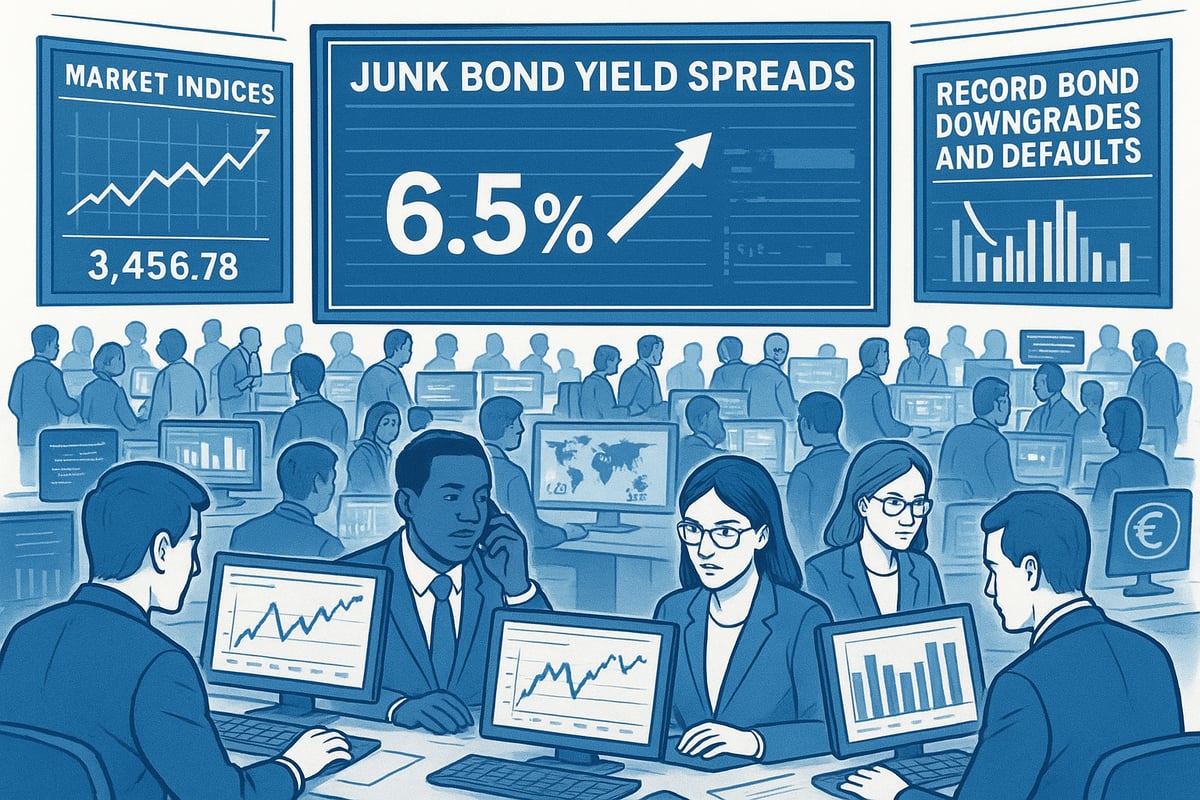
The junk bond market has seen unprecedented activity in 2026. Issuance volumes reached historic highs as companies took advantage of persistent low interest rates, despite economic headwinds. According to industry data, the total size of the U.S. junk bond market surpassed $2 trillion, with the S&P U.S. High Yield Corporate Bond Index posting moderate gains.
Yield spreads, a key measure of risk, have widened compared to previous years. In 2026, average spreads hovered around 450 basis points above comparable Treasuries, up from the long-term average of 350 basis points. This reflects growing investor concern about default risk as macroeconomic pressures mount. Recent data show junk bond default rates climbed to 3.2% in 2026, exceeding the historical average of 2.1%.
One of the most notable developments is the surge in corporate bonds downgraded to junk status, signaling stress in the broader debt market. For a deeper look at this trend, see the US corporate-bond market is raising real alarm bells, which examines the implications for junk bond investors.
Noteworthy events in 2026 include several high-profile defaults, particularly in the retail and technology sectors. However, some success stories have also emerged, with select companies using junk bond financing to fuel growth and outperform market expectations.
Investor Demand and Sentiment
Investor interest in the junk bond market remains robust, despite volatility and rising defaults. Institutional investors, such as pension funds and insurance companies, continue to allocate capital to high-yield debt, attracted by the potential for elevated returns. Retail investors are increasingly participating through mutual funds and ETFs, which offer diversification and liquidity.
The search for yield in a low-rate environment has driven significant inflows into high-yield bond ETFs. For example, the HYG ETF recorded record asset growth in early 2026, reflecting broad-based demand. Many investors are using junk bond exposure to balance risk and return, especially given the uncertain outlook for equities and government bonds.
Sentiment, however, is mixed. While some see the current environment as an opportunity to capture attractive yields, others remain wary of rising credit risk and potential liquidity challenges. The junk bond market's response to macroeconomic shifts, such as inflation data and central bank policy announcements, is being closely monitored by both institutional and individual investors.
Sector and Regional Hotspots
Certain sectors stand out in the 2026 junk bond market. The energy sector has seen a surge in high-yield issuance as oil price volatility prompts companies to seek alternative financing. Tech startups and retail firms are also prominent issuers, reflecting both growth ambitions and financial pressures.
Regionally, the U.S. continues to dominate junk bond activity, but global markets are gaining traction. European high-yield bonds have attracted attention due to favorable regulatory changes and evolving investor preferences. These markets present both new opportunities and unique risks for junk bond investors.
Emerging market issuers are entering the high-yield arena as well, offering diversification but often with increased default risk. Investors are advised to carefully assess sector and regional dynamics when constructing a junk bond portfolio.
Risks and Rewards: Assessing Junk Bond Investments
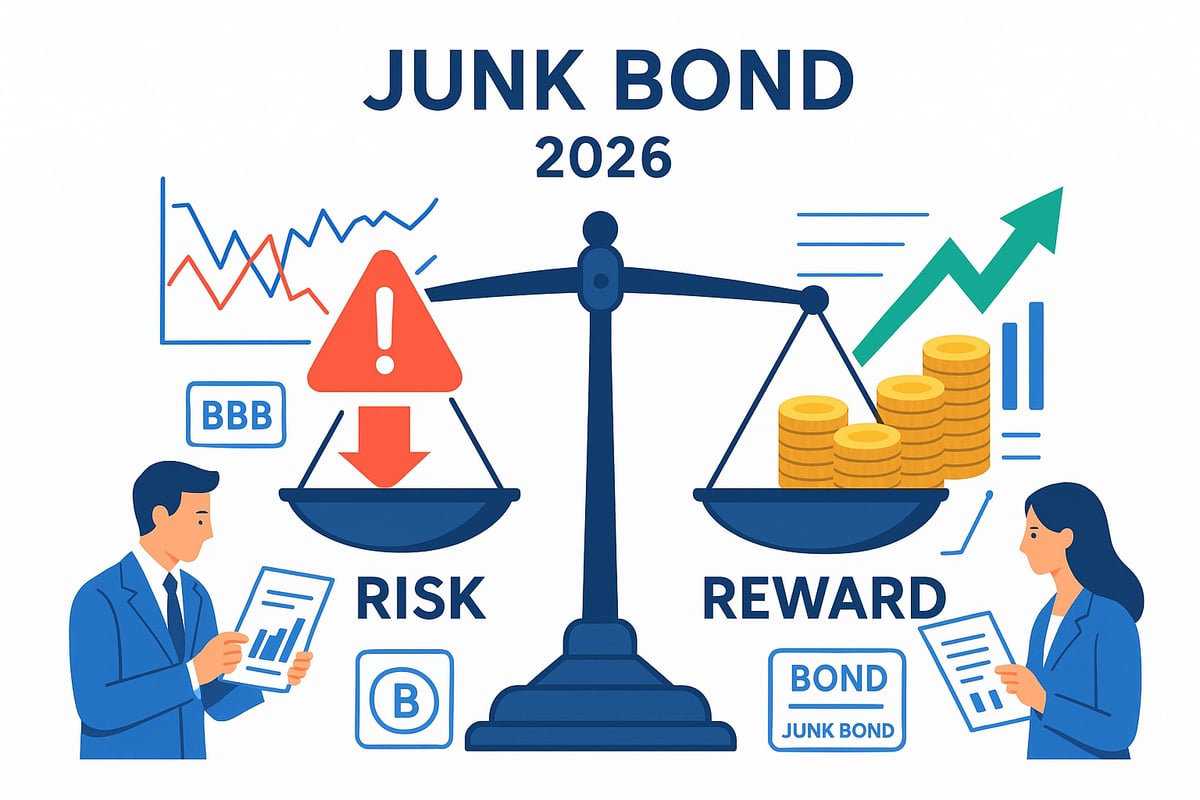
Understanding the risks and rewards of a junk bond investment is crucial for any investor in 2026. The potential for high returns is balanced by significant exposure to financial setbacks. Knowing where the opportunities and pitfalls lie helps you navigate the complex world of junk bonds with confidence.
The Risks of Junk Bonds
Junk bond investments come with a unique set of risks that can impact both principal and returns. The most prominent is default risk, where the issuing company fails to make interest or principal payments. In 2025–2026, default rates rose to 3.2 percent, higher than the long-term average of 2.1 percent. This increase is closely tied to persistent high interest rates and economic headwinds. For more insight into these trends, see this Reuters analysis on rising US corporate defaults.
Credit risk is another concern. Junk bond issuers often face downgrades if their financial health worsens, leading to price drops and potential losses for investors. Liquidity risk may also pose challenges, particularly during periods of market stress when buyers are scarce and prices can fall sharply.
Interest rate risk cannot be ignored. As rates climb, junk bond prices typically decline, making timing a key consideration. Market volatility adds another layer of complexity. Junk bonds often serve as early warning signals for broader financial stress, as seen in the rapid spread widening after a major bankruptcy in early 2026.
- Default risk: Higher likelihood of issuer failure
- Credit risk: Downgrades reduce bond value
- Liquidity risk: Harder to sell during turmoil
- Interest rate risk: Rising rates lower prices
- Volatility: Sensitive to market turbulence
Potential Rewards and Returns
Despite the risks, junk bond investments continue to attract investors seeking enhanced returns. The high yields are a primary draw. In 2025–2026, average coupon rates on junk bonds were 2–6 percent higher than comparable government securities, offering substantial income potential.
Capital appreciation is another reward. Investors who purchase junk bonds at deep discounts during periods of distress can benefit from price rebounds if the issuer recovers. This was evident when several high-yield bonds outperformed during bouts of equity market volatility in 2025–2026.
Junk bond investments also provide diversification benefits. They tend to have a low correlation with traditional stock and government bond markets, which can help stabilize portfolio returns during uncertain times.
Rewards at a glance:
| Potential Reward | Description | Example (2025–2026) |
|---|---|---|
| High yields | Above-average coupon rates | 2–6% higher than Treasuries |
| Capital appreciation | Buy at discount, sell at recovery | Distressed retail bonds rebounding |
| Diversification | Non-correlated asset class | Junk bonds outperforming equities |
Balancing Risk and Return
Smart junk bond investing means finding the right balance between risk and reward. Investors often use risk-adjusted metrics, such as the Sharpe ratio, to compare junk bond performance to other asset classes. Historical data shows that, while junk bonds can outperform during certain periods, they also carry higher volatility.
In a diversified portfolio, junk bond allocations should be sized according to your risk tolerance. Combining junk bonds with other assets can improve overall returns without taking on excessive risk. For example, a portfolio with a 10–15 percent allocation to junk bonds may offer attractive returns while limiting downside exposure.
Regularly reviewing your investment mix and monitoring market signals is vital. Junk bond performance in 2026 has shown that shifts in macroeconomic conditions can quickly change the risk-reward equation. By staying informed and flexible, you can better manage both the opportunities and challenges that junk bonds present.
How to Invest in Junk Bonds: Strategies and Steps
Navigating the world of junk bond investments requires a disciplined approach and a clear understanding of the process. Whether you are new to high-yield debt or looking to refine your strategy for 2026, following a structured set of steps can help you manage risks and capitalize on opportunities. Below is a step-by-step guide to investing in junk bond assets with confidence.
Step 1: Determine Your Risk Tolerance
Before making any junk bond investment, it is crucial to evaluate your personal risk tolerance. High-yield bonds can offer attractive returns, but they come with significant risks compared to investment-grade options.
Start by considering your financial goals, investment horizon, and ability to withstand losses. Use risk assessment questionnaires or online tools to get a clear picture of your comfort level with volatility. For example, retirees may prefer less exposure to junk bond holdings, while younger investors with longer time horizons can often absorb more risk.
Regularly reassess your risk profile, as both market conditions and personal circumstances can change. Matching your junk bond allocation to your risk tolerance is the foundation of a sound investment plan.
Step 2: Research and Select Individual Bonds or Funds
Thorough research is essential when selecting a junk bond or related fund. Begin by reviewing credit ratings from agencies like Moody’s or S&P, focusing on issuers rated Ba or below. Dive into issuer financials, sector trends, and recent news that may impact the company’s ability to meet its obligations.
Consider whether you prefer to buy individual bonds or invest through high-yield mutual funds or ETFs. Individual junk bond purchases require more due diligence, while funds offer built-in diversification and professional management. For example, analyzing a 2026 high-yield offering from a retail firm involves scrutinizing balance sheets, industry outlooks, and management track records.
Always compare options and use reliable data sources, such as SEC filings and credit agency reports, to inform your junk bond choices.
Step 3: Portfolio Construction and Diversification
Building a resilient portfolio means spreading your junk bond exposure across issuers, sectors, and maturities. Avoid concentrating your investments in a single high-risk company or industry. Instead, aim for a blend that reflects your risk profile and investment goals.
Position sizing is key—limit each junk bond holding to a manageable percentage of your overall portfolio. Diversification helps reduce the impact of a single default or sector downturn. Incorporating concepts like risk-weighted assets can further inform your allocation decisions, ensuring you balance return potential with risk management.
A sample allocation might include a mix of energy, technology, and retail sector bonds, along with a portion in high-yield ETFs for added stability.
Step 4: Monitor and Manage Your Investments
Active monitoring is vital for junk bond investors. Stay alert to signs of deteriorating credit quality, such as negative news, earnings declines, or rating downgrades. Set clear exit strategies, including stop-loss orders, to protect your portfolio from sudden drops.
Liquidity is another consideration—some junk bond issues trade less frequently, making it harder to sell quickly during market stress. Regularly review your holdings and be prepared to make adjustments as market conditions evolve.
By staying proactive, you can respond swiftly to changes and minimize potential losses in your junk bond portfolio.
Step 5: Tax and Fee Considerations
Understanding the tax implications and fees associated with junk bond investments is essential for maximizing after-tax returns. Interest payments are typically taxed as ordinary income, which can impact your net yield.
High-yield bond funds and ETFs may also charge management fees or expenses that reduce your overall return. Calculate the after-tax yield on your junk bond holdings, and compare fee structures across funds to identify the most cost-effective options.
Consulting a tax advisor or using investment calculators can help you estimate the actual income you will receive from your junk bond strategy.
Step 6: Using Professional Advice and Tools
Leveraging professional advice and digital tools can give you an edge in the complex junk bond market. Financial advisors can help tailor strategies to your unique needs, while robo-advisors offer automated portfolio management at lower costs.
Many platforms provide analytics, credit monitoring, and performance tracking specifically for junk bond investments. Comparing advisor-managed portfolios to do-it-yourself approaches can clarify which path best suits your objectives.
Staying informed and utilizing expert resources will strengthen your ability to navigate the evolving junk bond landscape with confidence.
Regulatory, Economic, and Market Factors Shaping Junk Bonds in 2026
Understanding the landscape surrounding the junk bond market in 2026 is crucial for investors aiming to navigate this high-yield, high-risk space. Shifts in regulations, economic drivers, and market signals can all impact junk bond performance and risk profiles. Let us break down the factors shaping the environment this year.
Regulatory Landscape and Recent Changes
The regulatory environment for the junk bond market has evolved significantly in 2026. Agencies like the SEC and FINRA have introduced new disclosure requirements, aiming to enhance transparency for high-yield debt investors. These rules now mandate more detailed risk warnings and issuer financial health reports before a junk bond is offered to the public.
In 2025 and early 2026, global regulators also updated cross-border issuance standards. This move was designed to harmonize risk disclosures and reporting, especially for multinational corporations issuing junk bonds across different markets.
One notable example is the revised SEC rule that compels issuers to provide real-time updates on material credit events. This change empowers investors to react quickly to emerging risks in the junk bond space. These regulatory shifts have generally increased investor confidence but also raised the compliance burden for issuers.
Economic Drivers and Risks
Macroeconomic trends play a defining role in the junk bond market’s outlook. In 2026, global GDP growth remains steady, but persistent inflation and shifting monetary policy present both opportunities and risks for junk bond investors. Central banks have signaled caution, keeping interest rates relatively stable, yet a surprise hike could quickly shift the risk-reward balance.
Default cycles are carefully monitored. While the junk bond default rate in 2026 is slightly above the long-term average, it remains manageable. However, recession risk lingers, with some analysts pointing to leading indicators of economic slowdown.
For example, the junk bond market reacted sharply to a surprise rate hike in early 2026. Spreads widened, and risk premiums increased, reflecting heightened investor anxiety. Staying attuned to these economic cues is vital for anyone allocating capital to junk bonds.
Market Signals and Indicators
Junk bonds often act as early warning signals for broader market health. In 2026, the correlation between junk bond spreads and major equity indices like the S&P 500 has tightened. When spreads widen, it can signal rising risk aversion and potential equity volatility.
Data from leading indices show that junk bond spreads reached multi-year highs during periods of market uncertainty. According to a recent report, junk bond spreads surged in response to global trade tensions, highlighting how macroeconomic factors directly impact high-yield debt.
For investors, monitoring these signals helps anticipate market shifts. Junk bond performance can serve as a valuable barometer for broader economic stress, making it an essential indicator in any risk management toolkit.
Expert Insights and Future Outlook for Junk Bonds
Navigating the junk bond market in 2026 requires not only a grasp of current data, but also a forward-thinking mindset. As we look ahead, expert perspectives and emerging trends are shaping how investors approach high-yield debt in an evolving landscape.
Analyst and Institutional Perspectives
Market analysts and institutional investors are closely watching the junk bond space in 2026. Many see opportunities for attractive returns, but caution prevails as macroeconomic uncertainty and shifting interest rates add complexity.
Some experts remain bullish, highlighting robust demand and improving fundamentals among select issuers. They point to the resilience of certain sectors, such as technology and healthcare, which have weathered recent volatility better than others. On the other hand, bearish voices warn of rising default risks, especially among companies with weaker balance sheets or those exposed to cyclical industries.
Institutions like pension funds and insurance companies continue to allocate capital, but they are increasingly selective. In 2026, risk assessment tools and scenario analysis are more sophisticated, helping investors differentiate between potential winners and those at risk of default. For many, the key to junk bond investing is rigorous due diligence and a clear understanding of each issuer’s credit profile.
Key Trends to Watch
The junk bond market is undergoing rapid transformation, driven by technology and evolving investor priorities. Artificial intelligence and machine learning now play a significant role in analyzing credit risk, pricing anomalies, and market sentiment. These tools help investors process vast amounts of data, identifying opportunities and red flags more efficiently than ever.
Environmental, social, and governance (ESG) considerations are also reshaping the high-yield landscape. The rise of ESG-compliant junk bond offerings reflects growing demand for investments that align with ethical and sustainability goals. Financial products are emerging to meet this need, attracting a new generation of investors.
Additionally, the search for yield continues to drive innovation. New instruments and strategies are being developed, with many investors seeking guidance from resources like BlackRock’s New year, new approach to fixed income investments, which explores how to adapt to changing market conditions. As the market evolves, flexibility and adaptability are essential traits for success.
Practical Tips for Investors in 2026
For those exploring the junk bond market, staying informed is more important than ever. Regularly reviewing market data, analyst reports, and regulatory updates can help investors anticipate shifts and avoid surprises.
Building resilience into your portfolio is critical. Diversify across sectors and issuers, and consider the role of ESG factors and technological tools in your decision-making process. Use scenario analysis to test your portfolio under different economic conditions, and learn from past market cycles to avoid repeating common mistakes.
Recommended resources include industry publications, financial news platforms, and professional advisory services. Ongoing education, combined with a disciplined approach, will position investors to navigate the complexities of the junk bond landscape and capitalize on opportunities as they arise.
Frequently Asked Questions About Junk Bonds
Curious about junk bond investing in 2026? Below, we answer the most common questions from investors considering these high-yield, high-risk assets. Each response is designed to help you make more informed decisions as you navigate the evolving junk bond market.
What makes a bond “junk” and how risky are they really?
A junk bond is a corporate bond rated below investment grade, typically Ba or lower by Moody’s or BB or lower by S&P and Fitch. These bonds carry higher risk of default due to the issuer’s weaker financial stability.
The risk is real: in 2025–2026, default rates for junk bonds reached 3.2 percent, above the long-term average. Investors demand higher yields as compensation for this risk, but the possibility of losing your principal is higher than with investment-grade bonds. Carefully assess each junk bond’s structure, including its maturity date, before investing.
How do junk bond ETFs work and what are their risks?
Junk bond ETFs pool together dozens or hundreds of high-yield bonds, giving investors broad exposure without having to pick individual securities. These funds trade on stock exchanges like regular stocks.
Key risks include market volatility, liquidity constraints, and tracking error during periods of stress. In early 2026, some junk bond ETFs saw sharp price swings after several high-profile defaults. Diversification helps reduce risk, but junk bond ETFs are still vulnerable to sector downturns and sudden spread widening.
Can junk bonds be suitable for retirement portfolios?
Junk bonds can play a role in retirement portfolios for investors seeking higher income. However, the added risk means they are generally best as a small allocation rather than a core holding.
Retirees with low risk tolerance should be cautious. Junk bond values can drop quickly during market shocks, potentially impacting retirement income. Younger investors with longer horizons might weather these swings better. Always match junk bond exposure to your broader risk profile and income needs.
What happens to junk bonds during recessions or market crashes?
During recessions or sudden market downturns, junk bond prices often fall sharply. Default rates tend to rise as financially weaker issuers struggle to meet their obligations.
In 2025, junk bond values dropped significantly when economic data signaled slowing growth. However, some investors found opportunities by buying distressed bonds at deep discounts. Recovery can be uneven, so timing and careful selection are crucial when holding junk bonds through volatile periods.
How do I evaluate the creditworthiness of a junk bond issuer?
Evaluating a junk bond issuer starts with reviewing credit ratings from agencies like Moody’s or S&P. Dig deeper by analyzing financial statements, debt levels, and cash flow.
Look for recent downgrades, negative outlooks, or sector-specific risks. Issuers with stable or improving fundamentals are generally less likely to default. Compare the issuer’s business model and sector outlook to market trends in 2026 to identify potential red flags.
What are the warning signs before a junk bond defaults?
Warning signs that a junk bond may default include:
- Multiple credit rating downgrades in a short period
- Declining revenues or negative cash flow
- Missed interest payments or covenant violations
- Widening yield spreads compared to peers
- News of restructuring, layoffs, or management changes
Acting on these signals early can help investors avoid significant losses.
Are there safer alternatives to junk bonds for high yield?
Some investors look for safer ways to earn high yield. Alternatives to junk bonds include preferred stocks, dividend-paying equities, and convertible bonds, which can offer upside potential with different risk profiles.
| Asset Type | Typical Yield | Risk Level | Liquidity |
|---|---|---|---|
| Junk bond | High | High | Moderate |
| Convertible bond | Moderate | Moderate | High |
| Preferred stock | Moderate | Moderate | High |
Each alternative comes with its own trade-offs, so compare features carefully before shifting away from junk bonds.
As you’ve seen, understanding junk bonds in 2026 means looking beyond the headlines and digging into the real patterns and lessons history can teach us. If you’re eager to explore the stories behind today’s market moves—and want the tools to spot risks and opportunities like a pro—why not get involved as we build something new for curious investors like you Our upcoming platform brings together interactive charts, original news, and AI-powered insights so you can make smarter choices with confidence. Ready to shape the future of financial knowledge Join Our Beta