
Holding Company Guide: Everything You Need to Know in 2025
Unlock the secrets to business growth and robust asset protection in 2025 with a holding company. As more entrepreneurs and corporations seek smarter ways to manage risk, the holding company has emerged as a powerful tool for strategic expansion and financial efficiency.
In this comprehensive guide, you’ll discover what a holding company is, how it operates, and why it matters in today’s evolving market. We’ll break down essential concepts, structures, and advantages, plus walk you through setup steps, legal considerations, and real-world examples.
Ready to take control of your assets and future? Dive into each section to make informed decisions about holding company formation and use.
What Is a Holding Company?
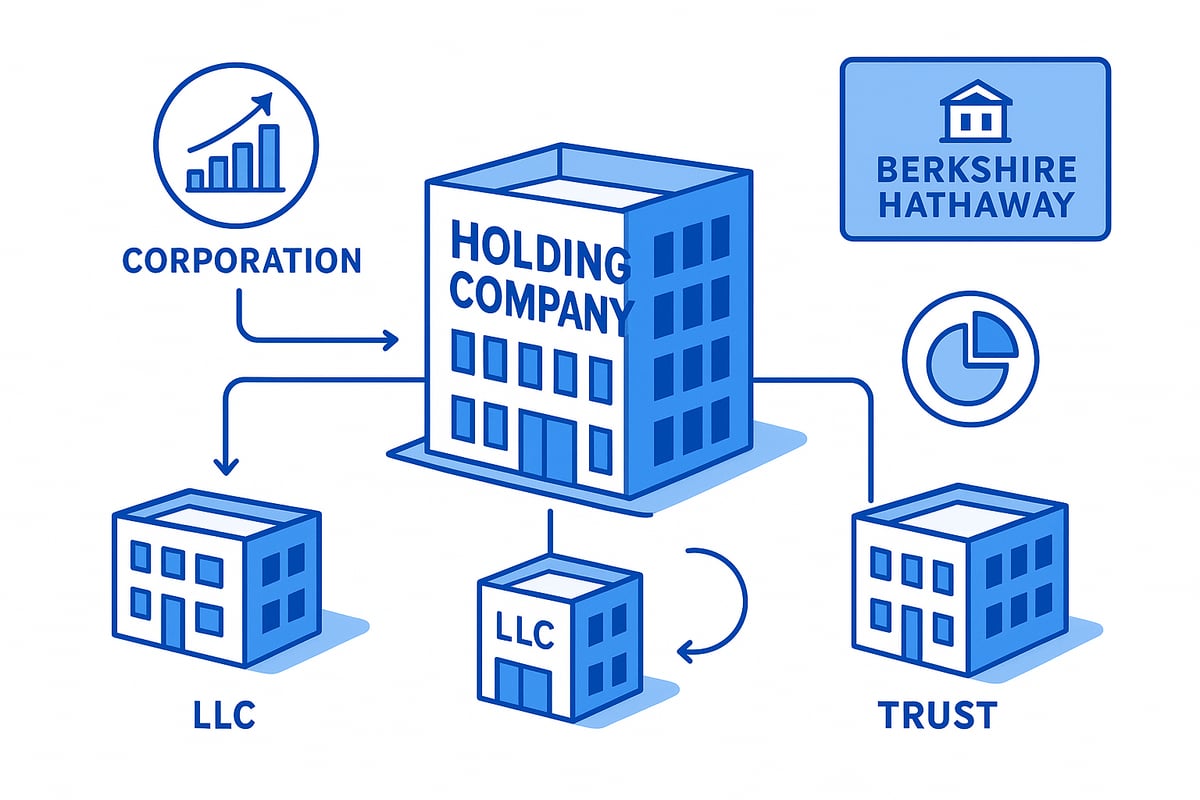
A holding company is a specialized business entity that exists primarily to own and control other companies, known as subsidiaries. Unlike operating companies, a holding company does not produce goods or provide services directly. Instead, it holds equity interests, typically in the form of shares, and exercises control through voting rights or majority ownership.
Holding companies can take several legal forms, such as corporations, LLCs, or even trusts, depending on jurisdiction and strategic goals. The main mechanisms of control include holding more than 50 percent of voting shares or having contractual arrangements that grant decision-making power. Legal requirements for setting up a holding company usually involve registration with relevant authorities, appointing a board of directors, and complying with reporting standards.
A classic example is Berkshire Hathaway, which owns controlling stakes in numerous businesses across industries, from insurance to manufacturing. This structure enables centralized oversight and strategic direction while allowing subsidiaries operational independence. For a broader perspective on holding company functions and their benefits, you can review this comprehensive overview.
Definition and Key Characteristics
A holding company is defined by its core function—owning assets in other companies rather than engaging in day-to-day business operations. This distinct separation allows the holding company to focus on governance, capital allocation, and risk management.
Key characteristics of a holding company include:
- Ownership of controlling interests in subsidiaries
- Separate legal entity status from its subsidiaries
- Authority to appoint or replace subsidiary directors
- Centralized strategic oversight
The holding company structure is popular for both private and public organizations seeking to manage diverse investments or protect valuable assets. Legal requirements vary, but typically involve clear documentation of ownership, formal incorporation, and adherence to regulatory frameworks.
Types of Holding Companies
There are several types of holding company structures, each serving different strategic needs:
- Pure holding company: Exists solely to own shares in other firms, with no direct business operations.
- Mixed holding company: Owns controlling interests but also conducts its own business activities.
- Immediate holding company: Directly controls a subsidiary without itself being controlled.
- Intermediate holding company: Both a subsidiary and a parent, sitting between other entities in a group.
- Personal holding company: Often subject to specific tax rules, especially in the U.S., when most income is passive.
- Financial holding company: Predominant in the banking sector, these entities must meet regulatory requirements for financial oversight.
Each holding company type offers unique advantages, from streamlined management to specialized tax treatment. Selecting the right structure depends on the organization’s goals, regulatory environment, and risk profile.
Holding Company vs. Parent Company
While the terms holding company and parent company are often used interchangeably, there are subtle distinctions. A parent company is a broader term for any entity that owns enough of another company's shares to control it. However, a holding company typically refers to a legal entity created specifically to own and oversee subsidiaries, often without direct involvement in business operations.
For example, Alphabet Inc. serves as both a parent company and a holding company for Google and a range of other ventures. The key difference is intent and structure: a holding company is designed for asset protection, tax efficiency, and risk segregation, whereas a parent company may also participate in the daily management of its subsidiaries.
Understanding these differences is crucial for entrepreneurs and investors evaluating business structures or planning for future growth. Both models enable strategic expansion, but a holding company offers unique benefits related to governance and liability management.
How Holding Companies Work: Structure, Function, and Examples
Understanding how a holding company operates is crucial for anyone considering this business model. The structure, core functions, and global use cases all play a role in determining its effectiveness and appeal. Below, we break down these elements to give you a clear, actionable overview.
Typical Holding Company Structures
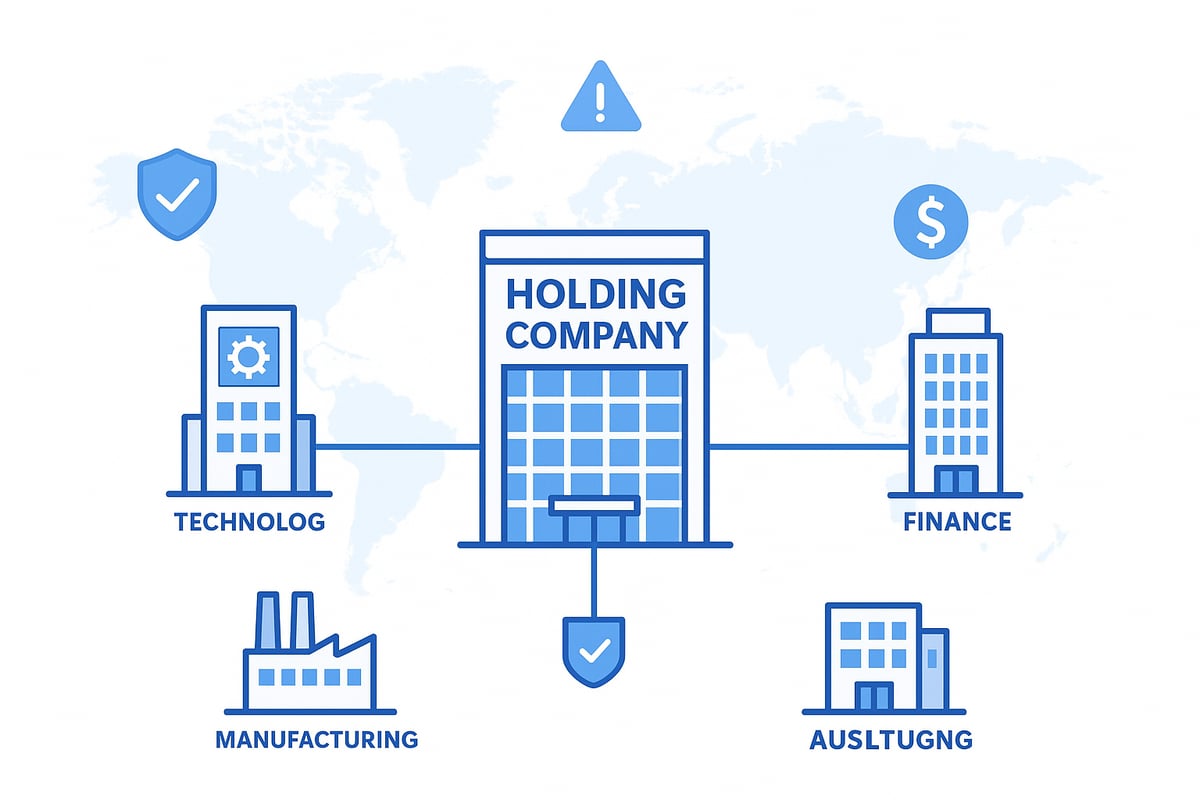
A holding company is distinguished by its unique organizational framework. The most common structure is the parent-subsidiary model, where the holding company sits at the top and owns controlling stakes in one or more subsidiaries. This design allows for centralized oversight while each subsidiary operates independently.
Other structures include multi-tiered holdings, where layers of subsidiaries are owned through a chain, and cross-holdings, where subsidiaries may own shares in each other. Management can be centralized, with key decisions made by the holding company's board, or decentralized, giving more autonomy to each subsidiary.
The board of directors typically oversees strategic planning, capital allocation, and risk management. This framework helps maintain clear control lines and ensures that the holding company’s interests are protected. For a deeper dive into the organizational structure and its benefits, see Holding Company: Structure, Benefits and Risks.
Functions and Purposes
The holding company structure serves several key purposes. Asset protection is a primary benefit, as assets are separated from operational liabilities. If a subsidiary faces a lawsuit or bankruptcy, the core assets held by the parent remain shielded.
Risk mitigation is another vital function. The holding company can isolate high-risk ventures or new projects within separate subsidiaries, reducing potential negative impacts on the entire group. Tax planning is also significant, since this model often enables group taxation, consolidated returns, and the ability to leverage differences between jurisdictions.
Additionally, the holding company structure streamlines acquisitions, mergers, and divestitures. By owning subsidiaries as separate legal entities, it is easier to buy, sell, or restructure parts of the business without disrupting the entire organization.
Real-World Examples and Case Studies
Many global leaders use the holding company model to manage complexity and drive growth. Berkshire Hathaway exemplifies this, with its vast portfolio of companies across insurance, energy, and consumer goods, all managed under one corporate umbrella.
Alphabet Inc. operates as the holding company for Google and various other technology ventures, showcasing how innovation and diversification thrive within this framework. Tata Group in India demonstrates effective multi-industry management, spanning steel, automotive, and IT services.
| Company | Sector | Structure Summary |
|---|---|---|
| Berkshire Hathaway | Conglomerate | Multi-industry, multi-tiered |
| Alphabet Inc. | Technology | Parent-subsidiary |
| Tata Group | Multi-industry | Multi-subsidiary, diversified |
According to industry analysis, over 60 percent of Fortune 500 firms use a holding company structure to manage assets and risk as of 2023.
International Perspectives
The legal and regulatory landscape for holding companies varies worldwide. In the United States, Delaware is a popular jurisdiction due to business-friendly laws. The United Kingdom offers flexibility and robust governance frameworks. Singapore and Australia are attractive for their tax efficiency and ease of cross-border operations, while Canada provides favorable conditions for international investment.
Holding companies are especially popular for global investment strategies, as they allow firms to navigate different legal and tax regimes efficiently. However, compliance requirements, reporting standards, and regulatory scrutiny differ, so businesses must adapt their structure to local and international laws.
Holding companies continue to evolve, adapting to new markets and regulatory environments, making them a strategic choice for businesses aiming for growth and resilience.
Advantages and Disadvantages of Holding Companies
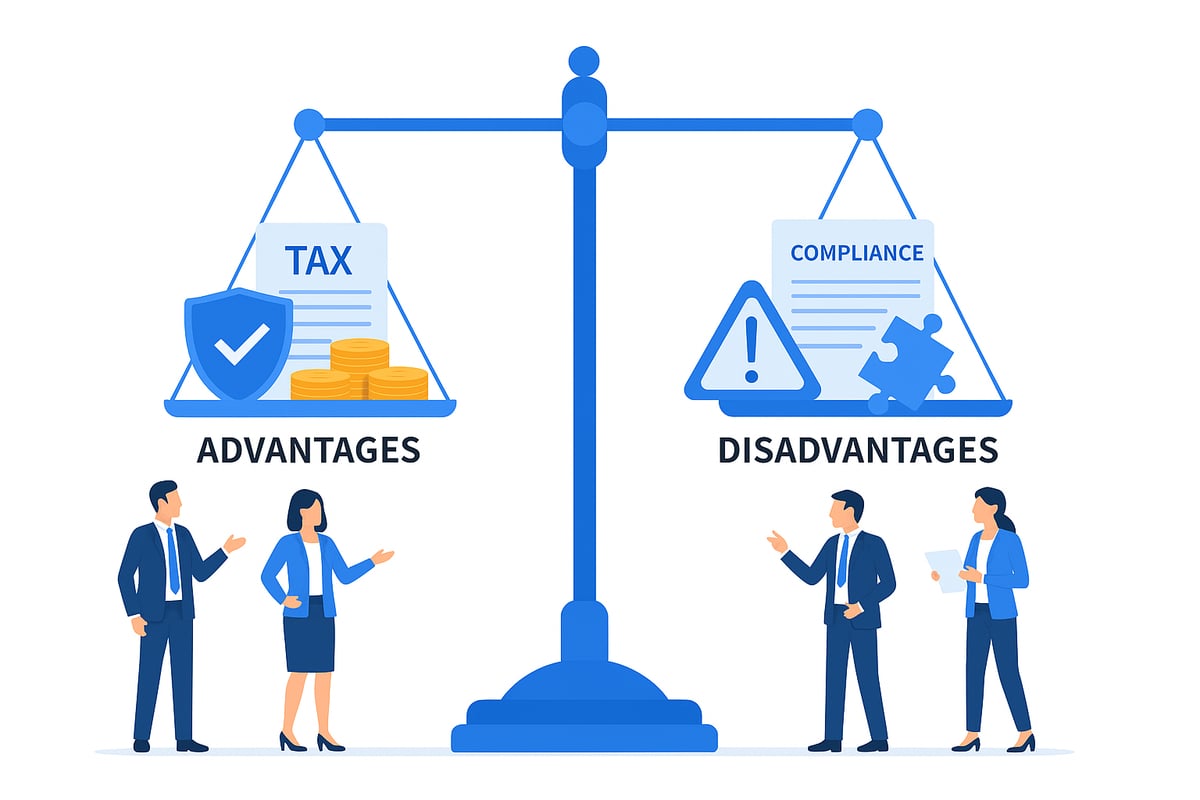
Understanding the advantages and disadvantages of a holding company is crucial for anyone considering this structure in 2025. Holding companies offer numerous benefits but also come with unique challenges that demand careful planning and management.
Key Benefits
A holding company provides powerful tools for protecting assets and optimizing business operations. By separating valuable assets from day-to-day business activities, a holding company helps shield them from potential lawsuits and operational risks.
Tax efficiency is another major advantage. Through strategies like group taxation and loss consolidation, a holding company can reduce overall tax exposure. Centralized management simplifies oversight, making it easier to allocate capital and resources where they are needed most.
Flexibility is a hallmark benefit. A holding company can quickly adapt to new opportunities, diversify investments, and restructure subsidiaries with minimal disruption.
Summary Table: Key Benefits of a Holding Company
| Benefit | Description |
|---|---|
| Asset Protection | Shields assets from liabilities of operating companies |
| Tax Efficiency | Group tax planning, consolidated returns |
| Simplified Management | Centralized control over multiple subsidiaries |
| Capital Allocation | Easier funding and investment decisions |
| Flexibility | Quick diversification and restructuring |
For a deeper dive into these points, see this Holding Company Advantages and Disadvantages resource.
Potential Drawbacks and Risks
Despite its strengths, a holding company structure introduces complexities. Compliance and regulatory reporting can be burdensome, especially in industries like finance and utilities. Double taxation may arise if profits are taxed at both the subsidiary and holding company levels in some jurisdictions.
Regulatory scrutiny is a growing concern. Authorities closely monitor holding companies for anti-competitive practices or improper use of tax benefits. Managing diverse subsidiaries can also be difficult, especially if they span multiple industries or regions.
Finally, the costs of setting up and maintaining a holding company should not be underestimated. Expenses include legal fees, accounting, and administrative overhead.
Notable Statistics and Insights
Recent data highlights the increasing use of holding company structures to address global market volatility. According to Wolters Kluwer (2025), more businesses are leveraging a holding company to navigate shifting trade policies and tariffs.
During economic downturns, the holding company model enables businesses to reallocate resources efficiently and pivot quickly. Over 60 percent of Fortune 500 companies now use a holding company structure, underscoring its value in risk mitigation and long-term strategy.
This adaptability is a core reason why the holding company remains popular among large corporations and investors worldwide.
When a Holding Company Makes Sense
A holding company is not just for large conglomerates. Family businesses often use this structure to streamline generational wealth transfer and succession planning. Startups may form a holding company to spin off high-risk research and development projects, protecting core assets.
Investors managing multiple businesses find that a holding company offers a practical way to organize and oversee diverse interests. When asset protection, tax planning, and strategic flexibility are top priorities, a holding company can be an ideal solution.
In summary, evaluating the advantages and disadvantages of a holding company is essential for making informed decisions about its use in your business strategy.
Legal, Regulatory, and Tax Considerations in 2025
Navigating the legal, regulatory, and tax landscape is essential for any business considering a holding company in 2025. The rules and requirements are evolving rapidly, making it crucial to understand the framework that governs holding company structures worldwide.

Legal Requirements and Compliance
Setting up a holding company demands strict adherence to corporate law. Every jurisdiction has its own incorporation process, but most require filing articles of incorporation, appointing directors, and establishing governance policies.
In the United States, Delaware remains a preferred location due to its business-friendly statutes. London and Singapore are also popular, offering robust legal frameworks and international credibility. Understanding anti-trust and competition laws is vital, as these can impact how a holding company acquires or manages subsidiaries.
Compliance does not end after registration. Ongoing reporting, annual filings, and transparent record-keeping are mandatory. Failure to meet these requirements can result in penalties or loss of limited liability protection for the holding company. Companies must stay updated on changing regulations to avoid missteps.
Tax Implications and Planning
Tax planning is a key driver for forming a holding company. Group taxation allows consolidated returns, helping businesses offset profits and losses across subsidiaries. Transfer pricing rules govern the way intercompany transactions are valued, ensuring that profits are not shifted unlawfully between jurisdictions.
Jurisdictions differ in their approach to group relief and loss offsetting. For example, Singapore offers favorable tax incentives for regional holding company headquarters, while the U.S. has precise rules about consolidated returns. The line between tax avoidance and evasion is thin, so companies must document all transactions and follow legal guidelines.
Recent updates in 2024 and 2025 have tightened regulations around tax planning for holding company structures. Authorities are increasing scrutiny on cross-border transactions and demanding greater transparency. Careful planning and expert advice are crucial to optimize tax outcomes without crossing legal boundaries.
Regulatory Developments and Trends
Regulatory trends in 2025 reflect a global push for transparency and accountability. Authorities are focusing on shell and personal holding companies, especially those used for opaque ownership or aggressive tax minimization. Financial holding companies in banking and utilities face even stricter rules and reporting standards.
Environmental, social, and governance (ESG) criteria are now part of regulatory reporting in many countries. In addition, new disclosure requirements require holding company groups to provide detailed information about their subsidiaries and financial flows. For a deeper look at how these shifts affect businesses, review the Holding Company Structure - Advantages and Disadvantages resource, which covers the practical impact of regulatory changes.
Staying ahead of these trends is essential for any holding company. Proactive compliance and regular policy reviews can help prevent legal surprises and maintain stakeholder trust.
Common Legal Pitfalls
Despite the benefits, a holding company can face serious legal challenges if compliance is neglected. One major risk is "piercing the corporate veil," where courts disregard the company's separate legal status due to improper conduct. This can expose parent company assets to subsidiary liabilities.
Another common pitfall is failing to maintain arms-length transactions between related companies. Regulators closely monitor these dealings, particularly in sectors like utilities and finance. In recent years, several holding company groups in the U.S. have faced substantial fines for non-compliance and inadequate documentation.
To avoid these risks, maintain clear records, separate accounts for each entity, and follow all governance requirements. Legal counsel and regular audits are vital tools for safeguarding your holding company structure.
How to Set Up a Holding Company: Step-by-Step Guide
Establishing a holding company involves a clear, methodical process. Each step builds a solid legal and operational foundation, ensuring your structure delivers maximum value. Below is a practical, step-by-step approach to guide you from planning through ongoing management.
Step 1: Define Objectives and Structure
Start by clarifying why you want to form a holding company. Are you looking for asset protection, tax planning, investment diversification, or risk segregation? Your objectives will determine the best structure.
Next, decide on the legal entity type. Common options include corporations, LLCs, or trusts. Each has unique benefits and compliance obligations. Consult with legal and tax advisors to ensure your holding company aligns with your long-term goals.
Key checkpoints:
- Identify core objectives
- Choose the appropriate entity type
- Outline ownership and management structure
Step 2: Choose Jurisdiction
Selecting the right jurisdiction for your holding company is crucial. Different regions offer varying legal protections, tax environments, and privacy standards. For example, Delaware in the U.S. is popular for its business-friendly laws, while Singapore and the Cayman Islands attract global investors seeking tax advantages.
Consider where your subsidiaries will operate and whether international expansion is part of your plan. Assess factors like registration costs, reporting requirements, and cross-border compliance challenges. This step influences how your holding company is managed and taxed.
Checklist:
- Research legal and tax implications in top jurisdictions
- Evaluate regulatory environments
- Plan for international operations if needed
Step 3: Register the Holding Company
Once you’ve selected a jurisdiction, proceed with registration. This process typically involves filing articles of incorporation or organization with the relevant authority. Appoint directors and officers, draft bylaws, and establish governance policies.
You’ll also need to obtain necessary business licenses or permits. Keeping your holding company compliant from day one reduces legal risks and facilitates smooth operations.
Key tasks:
- File formation documents
- Appoint required officers
- Create internal governance policies
Step 4: Acquire or Establish Subsidiaries
With your holding company in place, the next step is to acquire existing businesses or create new entities as subsidiaries. Methods include direct purchase, merger, or forming new companies from scratch. Conduct thorough due diligence and valuation to ensure each subsidiary fits your strategic goals.
Many private equity firms use private equity structures and uses to manage investments and risks efficiently within a holding company framework.
Essential actions:
- Identify acquisition targets or new ventures
- Perform due diligence and valuation
- Complete acquisition or formation process
Step 5: Capitalization and Financing
Determine how you’ll fund your holding company and its subsidiaries. Options include injecting equity, securing loans, or utilizing intercompany financing. Each method carries distinct regulatory and tax implications, so it’s important to align your strategy with your objectives and compliance obligations.
Set up transparent capital flows and document all transactions. This supports future audits and enables efficient financial planning.
Consider:
- Raising capital through equity or debt
- Structuring intercompany loans
- Ensuring regulatory compliance for funding
Step 6: Ongoing Management and Compliance
After setup, focus on maintaining proper management and compliance. Centralize oversight with consistent reporting systems. Keep separate books, records, and bank accounts for each entity.
Stay up to date with annual filings, audits, and any changes in local law. This ensures your holding company remains protected and avoids costly penalties.
Ongoing requirements:
- Implement centralized management systems
- Maintain separate financial records
- Complete all required filings and audits
Example: Timeline for Setting Up a Holding Company (Typical: 4-12 weeks)
The entire process—from defining objectives to establishing subsidiaries—often takes between four and twelve weeks. Timelines vary based on jurisdiction, complexity, and the speed of regulatory approvals. With careful planning, you can set up a holding company efficiently and start leveraging its benefits quickly.
Common Uses and Strategies for Holding Companies in 2025
Modern businesses use a holding company as a strategic tool for protection, growth, and adaptability. In 2025, these entities play a vital role in navigating complex markets, optimizing finances, and managing risk. Let us explore the key approaches and success stories that define holding company strategies today.
Asset Protection and Risk Mitigation
A holding company structure is often chosen to shield valuable assets from business liabilities. By separating intellectual property, real estate, or cash reserves into distinct subsidiaries, companies can insulate core assets from operational risks. This segregation makes it harder for creditors or litigants to reach protected assets if a subsidiary faces lawsuits or bankruptcy.
One advanced strategy involves assessing risk-weighted assets in finance to determine where to allocate high-value holdings. Companies use this data-driven approach to further minimize exposure and enhance overall security.
Tax Optimization and Financial Planning
Tax efficiency is a core motivation for establishing a holding company. Group relief and loss offsetting allow profits and losses to be managed across subsidiaries, reducing overall tax liabilities. International holding companies can also leverage favorable treaties and local incentives to optimize tax outcomes.
Strategic planning with a holding company often includes consolidating returns and utilizing intercompany loans. This approach streamlines financial flows and enables effective capital management, supporting both short-term liquidity and long-term investment goals.
Strategic Growth and Expansion
A holding company is uniquely positioned to facilitate mergers, acquisitions, and divestitures. By holding shares in multiple businesses, it can easily acquire new subsidiaries or spin off non-core assets. This flexibility supports rapid expansion into new markets or sectors.
Family businesses and startups frequently use a holding company to manage succession planning. Centralized ownership allows for clear governance and smoother transitions across generations or leadership changes, ensuring business continuity.
Investment and Portfolio Management
Managing diverse investments is another hallmark of a holding company. Subsidiaries may include everything from operating companies to investment vehicles like unit investment trusts. This setup enables portfolio diversification and risk balancing.
Private equity firms and large investors often use a holding company to structure complex deals. By organizing assets under one umbrella, they can monitor performance, reallocate capital, and respond quickly to market opportunities.
Navigating Regulatory and Economic Changes
The holding company model offers resilience in the face of shifting regulations or global economic uncertainty. Businesses adapt structures to comply with new trade policies, tariffs, or environmental standards. In 2025, increased ESG reporting and cross-border compliance are driving further evolution in holding company strategies.
Proactive companies regularly review their holding company setup to ensure it meets the latest legal and regulatory requirements. This vigilance helps them stay ahead of risks and maintain a competitive edge.
Real-World Success Stories
Many leading organizations have thrived by leveraging a holding company. During recent economic downturns, some restructured their holdings to focus on profitable sectors, while others used their flexible structure to pivot into emerging markets.
For example, multinational groups have weathered regulatory shifts by reallocating assets and streamlining management through their holding company. These real-world cases highlight the enduring power of the holding company as a tool for long-term success.
Frequently Asked Questions About Holding Companies
Understanding the intricacies of a holding company is crucial for entrepreneurs, investors, and business owners in 2025. Below, we address the most common questions, offering clarity for those considering this strategic structure.
Top Questions Answered
What is the minimum capital required to start a holding company?
The minimum capital for a holding company varies by jurisdiction. In many regions, such as Delaware, the requirement is nominal or even zero. Always check local regulations to ensure compliance.
How does a holding company protect assets from lawsuits?
A holding company separates valuable assets from operating activities. If a subsidiary faces legal claims, the holding company's structure helps shield core assets, provided legal formalities are maintained.
Are holding companies only for large corporations?
No, a holding company is not exclusive to large enterprises. Individuals, families, and small businesses can use this structure for estate planning, asset protection, and business growth.
Can individuals or families use holding companies for estate planning?
Yes, many families employ a holding company to manage investments and facilitate generational wealth transfer. This can simplify succession and protect assets across generations.
What are the ongoing costs of maintaining a holding company?
Costs include annual state fees, accounting, legal compliance, and administrative expenses. These vary by jurisdiction and complexity of the holding company structure.
How do holding companies impact subsidiary operations?
A holding company typically guides strategy and oversight, while subsidiaries handle daily operations. This arrangement allows for both centralized control and operational flexibility.
What are the latest trends in holding company structures for 2025?
Trends include increased cross-border formations, focus on ESG compliance, and adapting structures for regulatory changes. Many businesses use a holding company to facilitate complex transactions, such as understanding management buyouts.
Where can I find professional help to set up a holding company?
Consult legal and tax professionals familiar with your jurisdiction. Many firms specialize in holding company formation and ongoing compliance.
Practical Tips and Resources
To establish and maintain a holding company, consider these practical steps:
- Seek expert advice: Engage attorneys and accountants with experience in holding company structures.
- Gather key documents: Prepare articles of incorporation, operating agreements, and bylaws.
- Understand regulatory obligations: Research business registry requirements in your chosen jurisdiction.
- Use templates: Many business registries offer downloadable templates for compliance documents.
Helpful resources include:
| Resource Type | Where to Find |
|---|---|
| Legal Requirements | State/country business registries |
| Tax Guidelines | National tax authority websites |
| Templates | Official government portals |
Taking these steps ensures your holding company is set up for long-term success and compliance.
As you’ve seen throughout this guide, understanding holding companies in 2025 is more than just learning definitions—it’s about gaining the context and clarity you need to make strategic decisions in a rapidly evolving market. If you’re eager to dive deeper and see how history shapes financial strategies, I invite you to join us as we develop a platform that brings the stories behind market movements to life. Your perspective as an investor, student, or entrepreneur can help shape the future of financial insights. Ready to be part of something unique? Join our beta and help us bring history to life