
High-Frequency Trading: Markets, Technology & History
The financial markets have undergone remarkable transformations over the past four decades, but few innovations have sparked as much debate as high-frequency trading. This sophisticated approach to buying and selling securities relies on powerful computers executing thousands of orders in fractions of a second, fundamentally changing how markets operate. Understanding high-frequency trading requires examining its technical foundations, historical development, and lasting impact on market structure, all of which provide critical context for analyzing modern financial events and recognizing patterns that continue to shape trading today.
The Technical Foundation of High-Frequency Trading
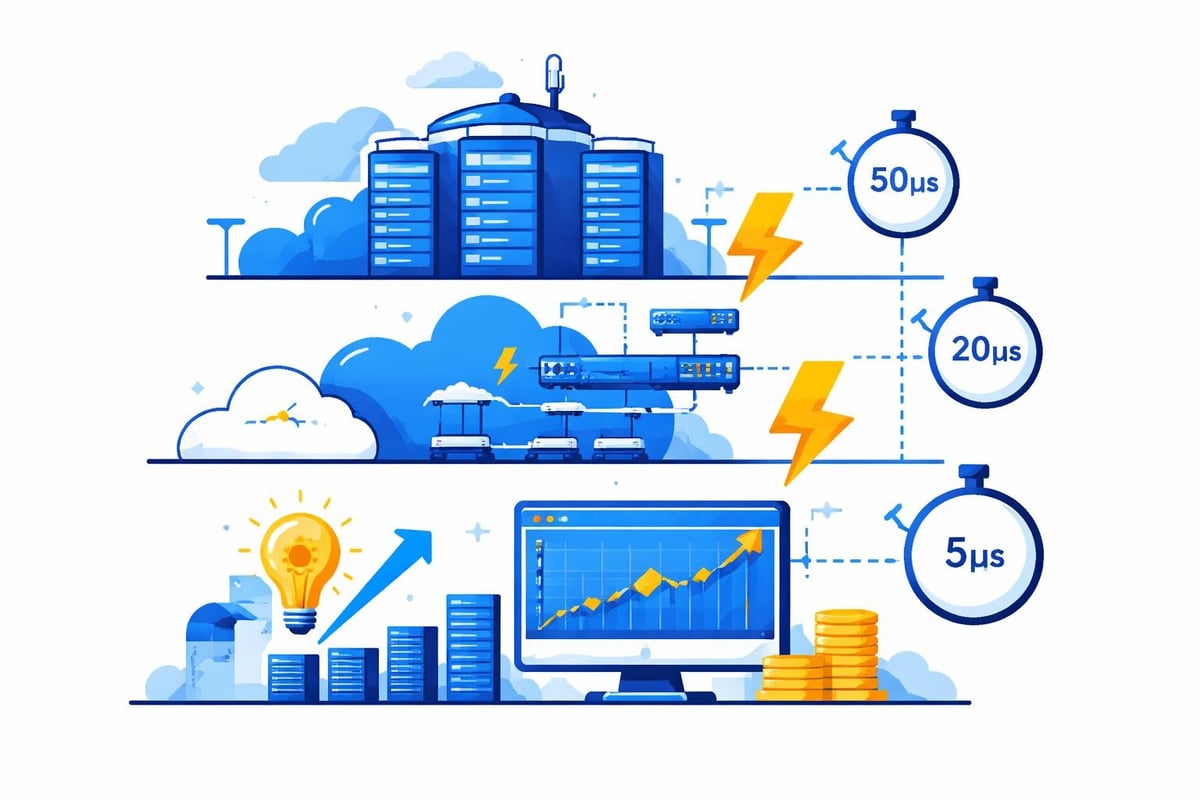
High-frequency trading represents the convergence of advanced computing power, sophisticated algorithms, and ultra-fast data transmission. At its core, this trading methodology executes large volumes of orders at extraordinary speeds, often measured in microseconds or nanoseconds. The technology stack supporting these operations includes co-located servers positioned physically close to exchange data centers, specialized network infrastructure, and custom-built hardware optimized for minimal latency.
Speed as Competitive Advantage
The race for speed defines the competitive landscape of high-frequency trading. Firms invest millions of dollars in infrastructure that shaves microseconds off execution times, understanding that even infinitesimal advantages translate into significant profits when multiplied across millions of transactions.
Key technological components include:
- Co-location services placing servers within exchange facilities
- Microwave and laser networks for faster data transmission than fiber optics
- Field-programmable gate arrays (FPGAs) for hardware-level order processing
- Custom algorithms designed to identify and exploit fleeting price discrepancies
Market participants without access to this technology operate at substantial disadvantages. The order book dynamics change so rapidly that traditional traders often see stale information, while high-frequency traders act on real-time data streams that update thousands of times per second.
Historical Evolution and Market Impact
The rise of high-frequency trading accelerated dramatically following regulatory changes in the early 2000s. The SEC's Regulation NMS, implemented in 2007, required brokers to seek the best available prices across all exchanges, inadvertently creating opportunities for algorithms to profit from tiny price differences between venues. This regulatory shift, combined with advancing technology, transformed market microstructure.
According to research from the Commodity Futures Trading Commission, high-frequency trading participation fundamentally altered market quality metrics. The study examining account-level futures data revealed complex trade-offs between enhanced liquidity provision and potential volatility amplification during stressed market conditions.
Notable Historical Events
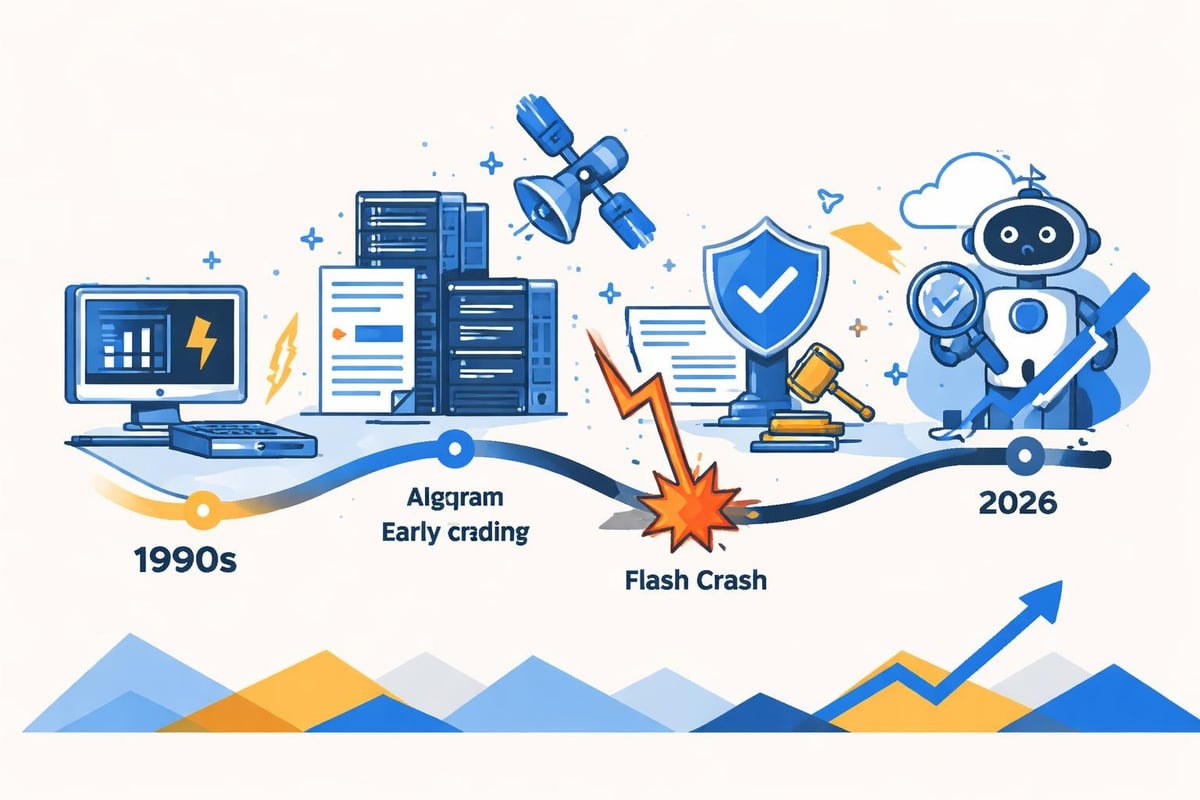
The Flash Crash of May 6, 2010, stands as perhaps the most dramatic demonstration of high-frequency trading's market influence. The Dow Jones Industrial Average plunged nearly 1,000 points within minutes before recovering almost as quickly. As detailed in Michael Lewis's book Flash Boys, this event exposed vulnerabilities in market structure created by the interplay between traditional investors and algorithmic trading systems.
| Event | Date | Impact | Duration |
|---|---|---|---|
| Flash Crash | May 6, 2010 | 1,000-point DJIA drop | Minutes |
| Knight Capital Glitch | August 1, 2012 | $440 million loss | 45 minutes |
| ETF Flash Crash | August 24, 2015 | Severe ETF dislocations | Opening minutes |
These incidents illustrate how quickly markets can move when algorithmic systems dominate trading activity. For students and analysts examining historical market movements, understanding the role of high-frequency trading provides essential context for interpreting price action and volume patterns.
Strategic Approaches and Trading Methodologies
High-frequency trading encompasses multiple distinct strategies, each designed to capitalize on specific market inefficiencies. These approaches vary significantly in their market impact, risk profiles, and economic rationale.
Market Making and Liquidity Provision
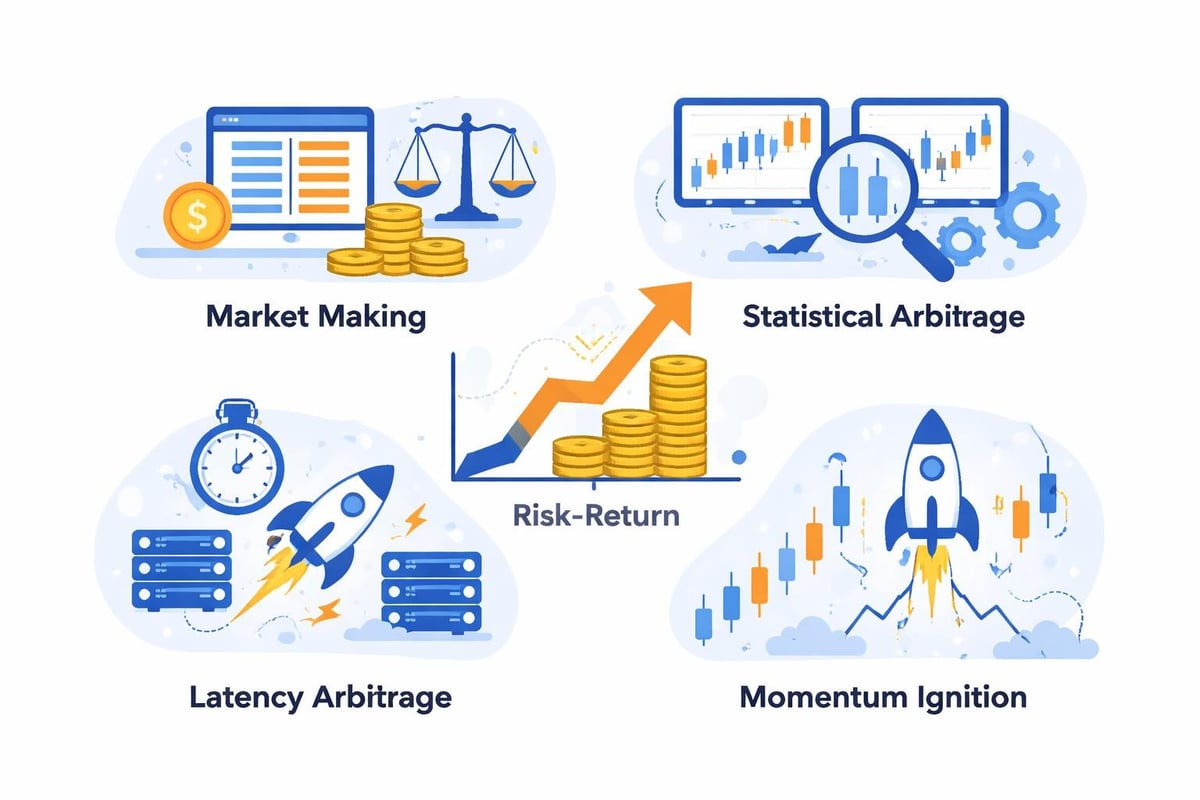
Market-making strategies represent the most economically defensible form of high-frequency trading. These algorithms continuously post bid and ask orders, profiting from the spread while providing liquidity to other market participants. The efficient market hypothesis suggests that such activities contribute to price discovery and market efficiency.
Benefits of HFT market making:
- Tighter bid-ask spreads reducing transaction costs
- Increased market depth improving order execution
- Enhanced price discovery through continuous quoting
- Greater market resilience during normal conditions
Conversely, critics argue that this liquidity proves illusory during market stress, when high-frequency market makers withdraw precisely when stability matters most.
Arbitrage Strategies
Arbitrage-focused high-frequency trading exploits temporary price discrepancies across markets, instruments, or venues. These strategies include:
- Statistical arbitrage identifying mean-reversion opportunities through quantitative analysis
- Latency arbitrage profiting from information asymmetries created by speed advantages
- Cross-market arbitrage capturing price differences for identical securities on different exchanges
- Index arbitrage trading discrepancies between index futures and underlying components
Research introducing EarnHFT, a hierarchical reinforcement learning framework for cryptocurrency markets, demonstrates how machine learning advances continue pushing high-frequency trading strategies into new domains and asset classes.
Regulatory Response and Market Structure Changes
The proliferation of high-frequency trading prompted significant regulatory scrutiny and structural reforms designed to address perceived market fairness issues. Regulators worldwide have grappled with balancing innovation benefits against potential systemic risks.
Key Regulatory Developments
The regulatory landscape evolved substantially between 2010 and 2026 as authorities sought to mitigate high-frequency trading risks without stifling legitimate market-making activities. The SEC implemented various measures including:
- Enhanced market-wide circuit breakers to prevent cascading selloffs
- Minimum quote life requirements preventing excessive order cancellations
- Consolidated audit trail systems improving market surveillance
- Registration requirements for proprietary trading firms
According to Stanford Institute for Economic Policy Research findings, these regulatory interventions created complex trade-offs between market liquidity and information production efficiency.
International Approaches
Different jurisdictions adopted varying regulatory philosophies regarding high-frequency trading oversight:
| Region | Primary Approach | Key Measures |
|---|---|---|
| United States | Market structure reform | Tick size pilot, access fee caps |
| European Union | Transaction tax proposals | MiFID II transparency requirements |
| Australia | Market integrity rules | Order-to-trade ratios, messaging throttles |
| Canada | Speed bumps | Intentional delays on certain order types |
These divergent approaches reflect ongoing debates about optimal market structure and the appropriate balance between speed-driven efficiency and stability-focused regulation.
Economic Debates and Performance Analysis
The economic impact of high-frequency trading remains hotly contested among academics, practitioners, and policymakers. Proponents emphasize liquidity improvements and cost reductions, while critics highlight fairness concerns and systemic vulnerabilities.
Measuring Market Quality
Academic research presents nuanced findings about high-frequency trading effects on market quality. A comprehensive review by Columbia Law School synthesizes multiple studies examining liquidity, volatility, and price efficiency impacts.
Documented benefits include:
- Reduced bid-ask spreads saving institutional investors billions annually
- Increased trading volumes reflecting enhanced market accessibility
- Faster price adjustments improving information incorporation
- Lower operating margins for traditional market makers driving efficiency
Documented concerns include:
- Two-tiered market structure favoring technologically sophisticated participants
- Potential for predatory algorithms exploiting slower market participants
- Flash crash risks from algorithm interactions during stressed conditions
- Reduced incentives for fundamental research and long-term investment
Profitability Trends
High-frequency trading profitability has declined substantially from peak levels reached in the late 2000s. Increased competition, technological arms races requiring continuous capital investment, and regulatory constraints have compressed margins. Firms that once generated extraordinary returns now face challenging economics requiring constant innovation.
The industry consolidation that followed reflects these economic pressures. Smaller firms lacking resources for ongoing technology investments exited the market, while larger players achieved economies of scale through expanded operations across multiple asset classes and geographies.
Technological Evolution and Future Directions
High-frequency trading technology continues advancing despite regulatory headwinds and margin compression. Recent developments focus on machine learning integration, quantum computing applications, and expansion into previously untapped markets.
Machine Learning Integration
The introduction of frameworks like FlowHFT, which uses imitation learning to adapt strategies across diverse market conditions, represents the cutting edge of algorithmic trading evolution. These systems learn from historical patterns and adjust tactics dynamically, potentially improving performance while reducing development costs.
Artificial intelligence enables more sophisticated pattern recognition, better risk management, and improved execution quality. However, it also introduces new concerns about model opacity, unexpected behaviors, and difficulty in regulatory oversight.
Market Expansion
High-frequency trading firms increasingly target markets beyond traditional equities and futures:
- Cryptocurrency markets offering 24/7 trading with high volatility
- Foreign exchange markets providing deep liquidity and continuous operation
- Fixed income markets undergoing electronic transformation
- Options markets requiring complex pricing calculations suited to algorithmic approaches
This expansion reflects both opportunity-seeking by established firms and the maturation of electronic trading infrastructure across asset classes.
Learning From Historical Patterns
For those studying financial market history, high-frequency trading represents a critical lens for understanding modern market dynamics. Price movements, volume patterns, and volatility characteristics differ fundamentally from pre-HFT eras, requiring adjusted analytical approaches.
Pattern Recognition Challenges
Traditional technical analysis developed during periods of human-dominated trading may not translate effectively to markets where algorithms execute most transactions. Patterns that once signaled human psychology now often reflect algorithmic responses to specific market conditions.
Considerations for historical analysis:
- Intraday volatility patterns changed substantially after 2007
- Volume spikes may reflect algorithm interactions rather than fundamental news
- Liquidity evaporation during stress periods occurs more rapidly than historically
- Price discovery mechanisms operate differently across various market microstructures
Understanding these distinctions proves essential for investors and analysts attempting to apply historical lessons to current market contexts. The price-to-earnings ratios, volume trends, and momentum patterns visible in historical data require interpretation accounting for structural changes in how markets function.
Comparative Historical Analysis
Examining how similar events unfolded before and after high-frequency trading dominance reveals important insights. Market responses to Federal Reserve announcements, earnings surprises, and geopolitical events show measurably different characteristics across these periods, reflecting the changed composition of market participants.
| Market Characteristic | Pre-HFT Era (1990s) | HFT Era (2010s-2020s) |
|---|---|---|
| Average bid-ask spread | 10-20 basis points | 1-3 basis points |
| Order execution speed | Seconds to minutes | Microseconds |
| Daily trading volume | Lower | 3-5x higher |
| Flash crash frequency | Rare | Periodic occurrences |
Information Asymmetry and Market Fairness
The comprehensive overview on Wikipedia details numerous controversies surrounding high-frequency trading, with information asymmetry concerns dominating fairness debates. Speed advantages create situations where some market participants access and act upon information before others can react.
Structural Advantages
High-frequency traders benefit from several structural advantages that create information asymmetries:
- Queue position from faster order placement
- Data feed latency differences providing millisecond advantages
- Market fragmentation enabling arbitrage across venues
- Order flow information from market-making activities
Critics argue these advantages constitute a "tax" on traditional investors, while defenders maintain that competitive markets naturally reward efficiency and innovation. This debate continues shaping regulatory discussions and market structure evolution.
Impact on Long-Term Investors
Long-term investors generally benefit from improved liquidity and tighter spreads resulting from high-frequency trading activities, even while facing disadvantages in short-term execution. The net effect depends on investment timeframe, trading frequency, and order size characteristics.
For shareholders focused on fundamental value rather than trading gains, high-frequency trading impact appears more neutral than sometimes portrayed in popular media. Transaction cost reductions often outweigh execution disadvantages for buy-and-hold strategies.
Risk Management and Systemic Concerns
High-frequency trading introduces unique systemic risks requiring sophisticated oversight and management. The speed and interconnectedness of algorithmic trading systems create potential failure modes absent in human-dominated markets.
Operational Risk Categories
Financial institutions operating high-frequency trading systems face multiple operational risk dimensions:
- Technology failures causing unintended order submission or execution
- Algorithm errors producing unexpected trading behavior
- Cybersecurity vulnerabilities enabling unauthorized access or manipulation
- Regulatory compliance challenges given rapidly evolving requirements
The Knight Capital incident of August 2012, where faulty software generated a $440 million loss in 45 minutes, exemplifies how quickly operational failures can cascade into financial catastrophe. Such events demonstrate why robust risk management frameworks prove essential for firms engaging in high-frequency trading.
Market Stability Implications
Systemic concerns extend beyond individual firm risks to broader market stability questions. During periods of market stress, high-frequency trading algorithms may amplify volatility through:
- Coordinated withdrawal of liquidity provision
- Momentum-chasing behavior creating feedback loops
- Circuit breaker triggering causing cascading halts
- Cross-market contagion from arbitrage linkages
Regulators continue developing safeguards addressing these concerns while preserving benefits from enhanced market efficiency. The ongoing evolution reflects learning from historical incidents and advancing understanding of complex system dynamics.
Understanding high-frequency trading's technical foundations, historical development, and market impact provides essential context for analyzing modern financial markets and interpreting price movements across different time periods. Historic Financial News offers interactive tools, AI-powered analysis, and comprehensive historical data helping investors, students, and journalists explore how trading technology transformed markets over the past three decades. Our platform enables users to compare market behavior before and after the HFT revolution, spot patterns that persist across market structures, and gain deeper insights from financial history.