
FDIC Guide: Understanding Your Bank Protection in 2026
Imagine checking your phone and seeing headlines about a major bank collapse. Would your savings be protected? In 2026, understanding how the fdic safeguards your deposits is more important than ever. This guide breaks down what the FDIC is, how it works, current coverage limits, and the latest updates for digital banking and crypto. You will learn practical steps to keep your money safe and get answers to the most common questions about deposit insurance. Ready to take control of your financial security? Let’s begin.
What Is the FDIC and Why Was It Created?
Imagine a time when a single rumor could send crowds racing to withdraw their life savings, unsure if their money would survive the week. The fdic was born out of this chaos, and today, it stands as a cornerstone of trust in the American banking system. To understand why the fdic matters in 2026, it's important to explore its origins, its ongoing mission, and how it operates to protect your financial future.
The Origins of the FDIC
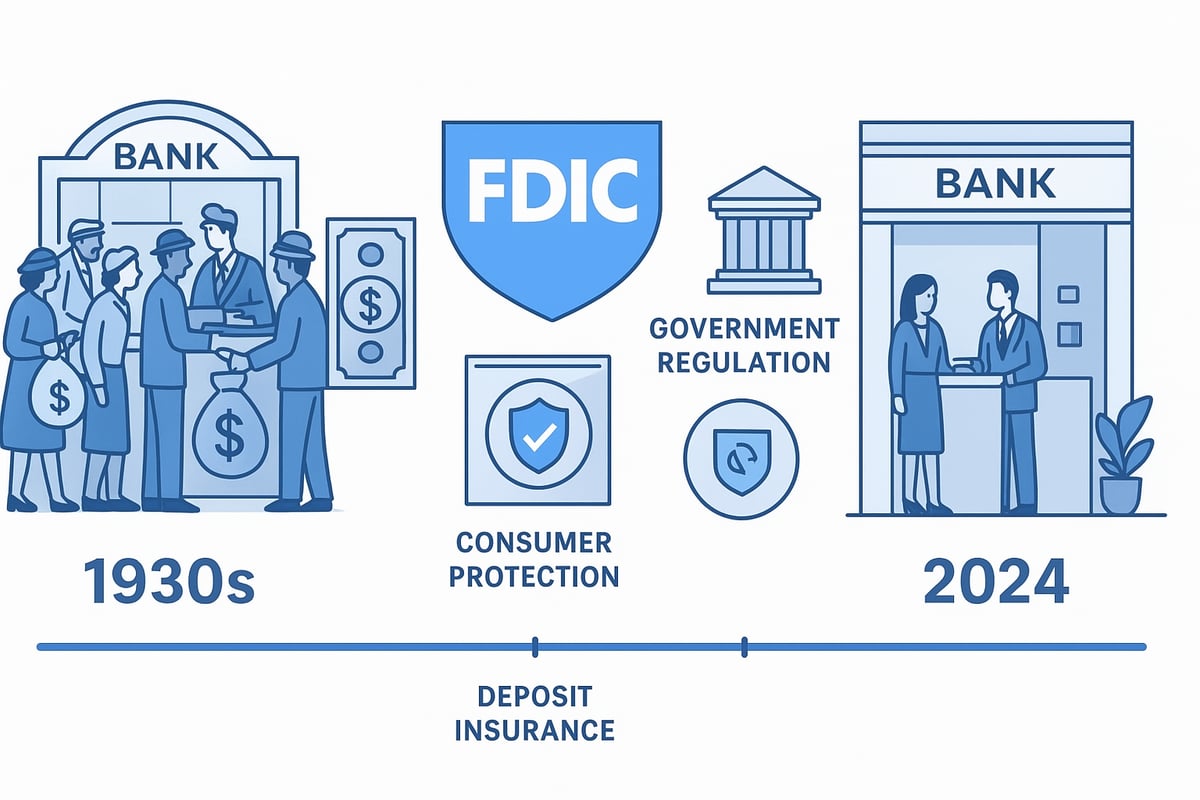
The roots of the fdic trace back to the dark days of the 1933 Banking Crisis. During the Great Depression, widespread bank failures eroded public trust, leaving millions without access to their hard-earned savings. In response, Congress passed the Glass-Steagall Act, creating the Federal Deposit Insurance Corporation.
The fdic's establishment instantly restored confidence by guaranteeing deposits up to a set limit. Before its creation, depositors faced the real risk of losing everything if a bank collapsed. Afterward, bank runs became rare, and the system stabilized.
Key milestones in fdic history include expanding insurance limits, adapting to new banking products, and refining its oversight role. Comparing the Great Depression era to the post-fdic period, the difference in depositor safety is striking. The fdic became a symbol of reliability, shaping the way Americans interact with their banks.
Core Functions and Mission of the FDIC
At its core, the fdic serves several vital functions. It insures deposits at member banks, ensuring that individuals and businesses are protected up to the coverage limit. The fdic also supervises and regulates banks, promoting safety, soundness, and adherence to financial laws.
When a bank faces trouble, the fdic steps in to manage resolutions and liquidations, safeguarding insured deposits. Consumer education is another pillar, with the fdic providing guidance to help people avoid fraud and make informed decisions. Notably, since its inception, no depositor has lost insured funds due to a bank failure.
To understand the fdic's forward-looking mission, readers can review the FDIC's 2022-2026 Strategic Plan, which outlines objectives for deposit protection and regulatory excellence through 2026.
How the FDIC Is Funded and Operates
Unlike many government programs, the fdic does not rely on taxpayer dollars. Instead, it is funded by insurance premiums collected from member banks. These contributions feed into the Deposit Insurance Fund, which is carefully monitored for health and adequacy.
The fdic is governed by a Board of Directors, including government officials who oversee policy and major decisions. Transparency is central to operations, with regular reporting on the fund's balance and annual payouts.
Recent years have shown the fdic's effectiveness in managing risks and paying out insured deposits swiftly when banks fail. This structure allows the fdic to remain a trusted backstop for depositors, adapting to new challenges while maintaining financial stability.
FDIC Insurance Coverage Explained: What’s Protected in 2026?
Understanding exactly how the fdic protects your bank deposits is crucial for financial peace of mind in 2026. Coverage rules have evolved to keep up with changing banking trends, but the core purpose remains the same: safeguarding your money against bank failures. This section breaks down what’s insured, recent updates, how to maximize your coverage, and what to expect if your bank closes.

Standard Coverage Limits and Account Types
The fdic standard coverage limit in 2026 is $250,000 per depositor, per insured bank, per ownership category. This means you’re protected up to that amount for each account type at each bank.
Ownership categories include:
- Individual accounts
- Joint accounts
- Retirement accounts (like IRAs)
- Trust accounts (revocable and irrevocable)
- Business accounts (corporate, partnership, nonprofit)
Covered account types:
- Checking accounts
- Savings accounts
- Money market deposit accounts (MMDAs)
- Certificates of deposit (CDs)
Not covered by fdic insurance:
| Covered by FDIC | Not Covered by FDIC |
|---|---|
| Checking | Stocks, bonds, mutual funds |
| Savings | Crypto assets, annuities, safe deposit boxes |
| MMDAs | Unit investment trusts |
| CDs | Treasury securities held outside deposit accounts |
For example, if you have $250,000 in a single account and $250,000 in a joint account at the same fdic-insured bank, both amounts are fully covered because they fall under different ownership categories.
Changes and Updates to FDIC Coverage for 2026
In 2026, the fdic continues to review coverage rules to keep pace with economic shifts and new banking products. While the standard $250,000 limit remains unchanged, there have been clarifications on coverage for certain trust arrangements and business accounts.
Adjustments for inflation are considered periodically, but as of 2026, the coverage limit holds steady. The fdic has also enhanced guidance for complex account structures, especially for high-balance depositors and multi-beneficiary trusts.
Recent data shows a steady increase in overall insured deposits, reflecting greater public confidence in the fdic system. The number of insured banks has remained stable, ensuring widespread access to deposit protection.
Understanding the “Per Bank, Per Category” Rule
Maximizing your fdic coverage requires careful attention to the “per bank, per ownership category” rule. This rule means your coverage resets at each fdic-insured bank and for each unique ownership category.
Scenarios for maximizing coverage:
- Open accounts at multiple fdic-insured banks.
- Use different ownership categories (individual, joint, trust) to increase total insured balances.
Common mistakes:
- Exceeding the $250,000 limit in one category at a single bank.
- Assuming separate accounts at the same bank are each insured up to the limit, regardless of ownership.
For instance, if you have $400,000 in a single account and $100,000 in a joint account at one fdic-insured bank, only $250,000 of the single account is insured. Spreading funds across multiple banks or categories can help ensure full protection.
The Claims Process: What Happens If a Bank Fails?
If an fdic-insured bank fails, the fdic steps in as receiver to protect depositors. Access to insured funds is typically restored within one to three business days, often through a new institution or direct payment.
For uninsured deposits, the fdic begins a claims process. Depositors may recover additional funds as assets are liquidated, but this is not guaranteed. The process is transparent, with regular updates provided to affected customers.
A recent example is a 2025 regional bank failure, where the fdic transferred insured deposits to a healthy bank within 48 hours. Uninsured balances entered receivership, and partial recoveries were paid out over several months as the bank’s assets were sold.
New Developments in FDIC Policy and Banking Risks for 2026
The landscape of bank protection is evolving rapidly as technology, digital assets, and changing regulations reshape the industry. In 2026, staying informed about FDIC policy updates and banking risks is essential for every depositor. This section explores the most significant trends, regulatory adjustments, and lessons learned that influence how the FDIC safeguards your money.

Emerging Risks: Digital Assets, Crypto, and Fintech
The FDIC has faced new challenges as banks and consumers embrace digital assets. Crypto-related activities, stablecoins, and fintech partnerships present both opportunities and risks for the traditional banking sector. In 2025, federal regulators introduced the GENIUS Act, establishing a framework for permitted payment stablecoin issuers (PPSI) to operate under stricter oversight.
Importantly, the FDIC clarified its process for banks engaging in crypto-related activities, emphasizing that not all digital assets are covered by deposit insurance. For instance, stablecoins and tokenized deposits require specific regulatory approval and are not automatically protected. If you hold digital assets through your bank or a fintech partner, it is crucial to understand exactly what is insured and what is not.
For more details on this evolving area, see the FDIC Clarifies Process for Banks to Engage in Crypto-Related Activities. The FDIC’s stance will likely continue to adapt as technology changes the nature of banking products.
Regulatory Changes and Enhanced Oversight
The FDIC and other federal agencies have ramped up oversight to balance innovation with safety. In 2025, the Federal Reserve shifted policy to encourage innovation while maintaining robust risk management. Uninsured state member banks now face stricter requirements if they engage in novel activities, such as digital lending or crypto custody.
The FDIC also updated review processes and timelines for PPSI applications. These changes mean more frequent audits, enhanced data reporting, and closer scrutiny of non-traditional banking activities. For depositors, these adjustments strengthen the safety net and ensure that institutions remain sound, even as the financial ecosystem evolves.
Statistics show an uptick in application reviews and a higher bar for approval, reflecting the FDIC’s commitment to stability. As banking models diversify, oversight will continue to be a cornerstone of depositor protection.
Lessons from Recent Bank Failures and Market Events
Bank failures between 2023 and 2025 provided valuable lessons for the FDIC and depositors alike. Rising interest rates, tech sector volatility, and liquidity pressures tested the resilience of many institutions. The FDIC responded by swiftly stepping in to protect insured deposits, often returning funds to customers within days.
A notable case involved a regional bank with heavy exposure to non-performing loans and digital assets. The FDIC’s intervention ensured that insured depositors were made whole, while uninsured funds faced longer recovery prospects. These events highlighted the importance of robust risk management and the limits of deposit insurance.
The Deposit Insurance Fund (DIF) was drawn down in several instances but replenished efficiently through industry assessments. These cycles illustrate the FDIC’s ability to adapt and protect consumers, even amid rapid market shifts.
The Future of FDIC Insurance: Trends to Watch
Looking ahead, several trends are shaping the future of FDIC insurance. Policymakers are debating whether to increase coverage limits to keep pace with inflation and larger average deposit sizes. The integration of fintech and digital banking into the FDIC framework is also accelerating, with new guidance expected for tokenized deposits and digital account models.
There is ongoing debate about the scope of deposit insurance, especially as more consumers diversify their holdings across traditional and digital channels. Some experts warn of potential moral hazard if coverage becomes too broad, while others argue for expanded protection to match modern banking realities.
For depositors, staying informed about FDIC developments is the best way to ensure full protection. As the financial system evolves, the FDIC remains committed to its mission of safeguarding public confidence in the nation’s banks.
Step-by-Step Guide: Maximizing Your FDIC Protection in 2026
Safeguarding your money in 2026 means understanding how to make the most of your fdic coverage. This step-by-step guide will walk you through practical actions to ensure your bank deposits are fully protected, no matter what the financial landscape brings.

Step 1: Identify All Your Bank Accounts and Ownership Categories
Start by making a complete list of your bank accounts, noting the name of each bank and the type of account. Include details such as whether each account is individual, joint, trust, retirement, or business.
Understanding ownership categories is essential since fdic insurance applies separately to each one. For example, if you have an individual account and a joint account at the same bank, both may be insured up to the coverage limit.
To avoid exceeding the limits, map out your accounts and ownership structures. Use the FDIC's Electronic Deposit Insurance Estimator (EDIE) tool to calculate your total insured balances quickly and accurately.
- List accounts by bank and type
- Note ownership categories for each account
- Use EDIE to check your coverage
This first step gives you a clear picture of your current fdic protection and highlights any potential gaps.
Step 2: Verify Your Bank’s FDIC Membership
Not every financial institution is fdic-insured, especially some fintech companies and online platforms. Always confirm that your bank is a member of the fdic before depositing significant funds.
You can check a bank’s status using the FDIC’s BankFind Suite online. If your bank merges with another or changes its charter, verify its updated fdic membership and be alert to any changes in your coverage.
If you discover that an account is at a non-insured institution, consider moving your funds to a bank with fdic protection. This is vital for safeguarding your money in case of unexpected events.
- Search for your bank’s fdic membership online
- Monitor for mergers or status changes
- Move funds if necessary to maintain fdic coverage
Staying vigilant about your bank’s status ensures your deposits remain protected under fdic rules.
Step 3: Structure Accounts to Maximize Coverage
You can expand your fdic insurance by strategically spreading your deposits across different banks and utilizing various ownership categories. The standard coverage is $250,000 per depositor, per bank, per ownership category.
For example, a married couple can each have individual accounts and a joint account at the same bank, potentially insuring up to $750,000. Trust and retirement accounts might offer even more coverage when structured correctly.
Consider these strategies:
- Open accounts at multiple fdic-insured banks
- Use joint, trust, and retirement account categories
- Set up revocable or irrevocable trusts with multiple beneficiaries
By taking these steps, you can boost your overall fdic protection and reduce the risk of uninsured balances.
Step 4: Stay Informed About Policy Changes and Emerging Risks
The fdic continually updates its rules and guidance, particularly as new financial products and risks emerge. In recent years, digital assets, stablecoins, and fintech innovations have prompted regulatory changes.
Subscribe to fdic consumer alerts and regularly visit their website for updates. If you use digital banking platforms or are considering stablecoins, pay close attention to fdic announcements regarding what is and is not insured.
- Monitor policy updates on the fdic website
- Subscribe to consumer alerts and newsletters
- Review new products for fdic insurance eligibility
Adapting your strategy based on updated fdic policies helps you stay ahead of changes and protects your assets against new risks.
Step 5: Prepare for Bank Failures—Know the Claims Process
Even with strong oversight, banks can fail. Knowing what to do in this scenario is crucial for accessing your fdic-insured funds without delay.
Keep accurate records of your account balances and ownership details. If your bank is placed into receivership, the fdic typically provides access to insured funds within one to three business days. Uninsured amounts may be partially recovered through the receivership process, but there are no guarantees.
- Maintain up-to-date account records
- Know how to contact the fdic and file a claim
- Understand the payout timeline and process
By being prepared and understanding the fdic claims process, you can act quickly and minimize disruption to your finances if your bank ever closes its doors.
Special Considerations: Trusts, Business Accounts, and High Net Worth Depositors
Navigating the complexities of fdic insurance requires special attention when your finances involve trusts, businesses, or significant cash balances. These situations introduce unique coverage rules and planning strategies that can make a crucial difference in how protected your funds are in 2026.
FDIC Coverage for Trust Accounts
FDIC coverage for trust accounts has specific rules depending on whether the trust is revocable or irrevocable. Revocable trusts, often called payable-on-death (POD) accounts, typically insure up to $250,000 per unique beneficiary, per fdic-insured bank. Irrevocable trusts may have different rules, especially if there are conditions on distributions.
Recent updates for 2026 have streamlined beneficiary counting. Now, both revocable and irrevocable trusts often use the same calculation method. For example, a family trust with four beneficiaries at one bank could be insured up to $1 million ($250,000 x 4).
| Trust Type | Coverage Per Beneficiary | Max Insured Amount Example |
|---|---|---|
| Revocable | $250,000 | $1M (4 beneficiaries) |
| Irrevocable | $250,000 (if qualified) | Varies by structure |
Always update beneficiary designations and review your trust documents to maximize fdic protection.
Business and Organizational Accounts
Business accounts—whether for corporations, partnerships, or nonprofits—are covered by fdic insurance up to $250,000 per legal entity, per bank. Each business is treated as a separate depositor from its owners or other entities.
For example, a small business with separate payroll and operating accounts at the same fdic-insured bank would have total coverage of $250,000 across all its deposit accounts. If the company holds funds at multiple banks, each relationship is separately insured.
Business owners should also understand how bank stability impacts their deposits. Reviewing a bank’s risk-weighted assets can help assess its health and the likelihood of needing fdic intervention.
High Net Worth Strategies for Full Protection
If you have balances well above $250,000, maximizing fdic protection means careful planning. The most effective strategy is to use multiple fdic-insured banks and different account ownership categories.
Consider these approaches:
- Distribute deposits across several banks.
- Use joint, individual, business, and trust accounts for higher total coverage.
- Leverage deposit placement services like CDARS or ICS for seamless multi-bank protection.
For instance, a family with $2 million in liquid assets might allocate funds among four banks and use joint and trust accounts to ensure every dollar is fully protected by fdic insurance.
Estate Planning and FDIC Insurance
Estate planning should align with fdic rules to prevent gaps in coverage, especially during inheritance transfers. Payable-on-death (POD) and in-trust-for (ITF) accounts allow for additional insurance per named beneficiary, but the rules must be followed precisely.
Suppose a parent leaves $500,000 split between two children in POD accounts at an fdic-insured bank. Each child’s share is insured up to $250,000, so the total is fully protected. Careful account titling and up-to-date beneficiary records are essential for maintaining fdic coverage during estate transitions.
When creating or updating your estate plan, consult with legal and financial experts to ensure your strategies are aligned with fdic guidelines.
Frequently Asked Questions About FDIC Insurance in 2026
When it comes to protecting your money, understanding the fdic is essential. Below, we address the most common questions people have about fdic insurance in 2026, providing clarity on coverage, claims, and the latest rules.
What Is Not Covered by FDIC Insurance?
The fdic protects your deposits, but not every financial product is included. Products that are not covered by fdic insurance include:
- Stocks and bonds
- Mutual funds
- Crypto assets and stablecoins
- Annuities
- Life insurance policies
- Municipal securities
- Contents of safe deposit boxes
For example, if you hold shares in a mutual fund or own cryptocurrency through your bank, those assets are not protected by fdic insurance. If the bank fails, you could lose the value of those investments, even if your deposits are safe. Always separate your deposit accounts from investment products to ensure your money is protected by the fdic.
How Do I File a Claim If My Bank Fails?
If your fdic-insured bank fails, the claims process is designed for speed and clarity. Here’s what you should do:
- Stay calm: The fdic typically provides access to insured funds within 1–3 business days.
- Check official communications: The fdic will notify depositors, either by mail or through the bank’s website.
- Gather documentation: Have your account statements, identification, and any records of deposits ready.
- File a claim: Follow instructions provided by the fdic, usually through their website or a special hotline.
- Monitor your account: Most insured funds are transferred to a new institution or paid by check.
In rare instances, if you have uninsured funds, the fdic will explain your next steps for potential partial recovery. The process is designed to be straightforward, ensuring depositors get their money back as quickly as possible.
Are Online Banks and Fintechs FDIC Insured?
Online banks often advertise fdic insurance, but it is important to verify this status. True fdic-insured banks display their membership on their website and in disclosures. Some fintechs offer “pass-through” fdic insurance by partnering with insured banks.
However, not all digital platforms are equally protected. For instance, if you use a payment app or hold digital assets, coverage may depend on whether your funds are actually deposited at an fdic-insured institution. The fdic has announced plans to issue guidance on tokenized deposits and stablecoin applications, which could soon affect coverage rules for fintechs and digital banks. For more, see FDIC Plans Guidance on Tokenized Deposits, Stablecoin Applications.
What Happens to Uninsured Deposits?
If your deposits exceed fdic limits, the uninsured portion is not guaranteed. In a bank failure, uninsured depositors stand in line as creditors during the bank’s liquidation process. The fdic pays insured amounts first, then distributes remaining assets, if any, to uninsured depositors and other creditors.
Uninsured funds may sometimes be partially recovered, but this depends on how much the bank’s assets fetch during liquidation. Shareholders, for example, are among the last to be paid. To understand more about depositor versus investor protections, read the role of shareholders in banks.
How Does FDIC Coverage Work for Joint Accounts?
Joint accounts receive separate fdic insurance coverage, up to $250,000 per co-owner, per insured bank. For example, a married couple with a joint account at one fdic-insured bank is covered up to $500,000. Each co-owner’s share is automatically insured, provided both have equal rights to withdraw. This coverage is separate from individual accounts at the same bank, allowing families to maximize their fdic protection.
Can FDIC Insurance Limits Change in the Future?
The fdic insurance limit may change based on inflation or new legislation. For years, the standard limit has been $250,000 per depositor, per bank, per ownership category. However, Congress has the authority to raise this limit if economic conditions warrant. Past increases occurred during financial crises, and there are ongoing debates about whether to raise the limit again. The fdic regularly reviews coverage limits to adapt to changing needs.
Where Can I Find Reliable FDIC Resources?
The fdic maintains several resources to help consumers. Visit the official fdic website for up-to-date information, use the Electronic Deposit Insurance Estimator (EDIE) tool to check your coverage, and access the BankFind Suite to verify a bank’s insured status. You can also subscribe to fdic consumer alerts and educational newsletters to stay informed about new policies and potential fraud risks. These tools make it easy to manage your fdic insurance and keep your savings protected.
As you’ve discovered, understanding FDIC insurance is essential for protecting your hard-earned savings in today’s evolving financial landscape. With new risks, digital assets, and changing regulations on the horizon for 2026, it’s more important than ever to stay informed and proactive. If you’re passionate about learning from financial history and want tools that make complex market stories clear and accessible, I invite you to Join Our Beta. Experience firsthand how exploring the past can help you make smarter decisions for your financial future.