
Equity Financing Guide: Strategies and Insights for 2026
In today’s rapidly evolving financial world, securing the right capital is crucial for every business. Equity financing continues to be a powerful engine, driving innovation and growth for startups and established companies alike.
This comprehensive guide will walk you through the essentials of equity financing, highlighting how new strategies and emerging trends are shaping the landscape in 2026.
You’ll discover clear definitions, insightful comparisons with other funding methods, and a breakdown of current market trends. We’ll also provide actionable strategies and expert guidance designed for founders, investors, and finance professionals aiming to thrive in a competitive market.
Understanding Equity Financing: Core Concepts and Evolution
Defining Equity Financing
Equity financing is the process of raising capital by selling shares of ownership in a company to investors. Unlike debt financing, which requires repayment with interest, equity financing does not create an obligation to repay funds. Instead, investors receive partial ownership, which may result in dilution for existing shareholders.
Key terms in equity financing include equity, shares, dilution, and valuation. For example, a startup might raise funds through a Series A round by offering new shares to venture capitalists. This method is essential for startups, growth-stage companies, and even established firms seeking to scale. Paid-in capital, a concept explained in detail here, increases every time a company issues new shares.
| Term | Definition |
|---|---|
| Equity | Ownership interest in a company |
| Shares | Units representing equity |
| Dilution | Reduction in ownership percentage |
| Valuation | Estimated value of the company |
How Equity Financing Works in Practice
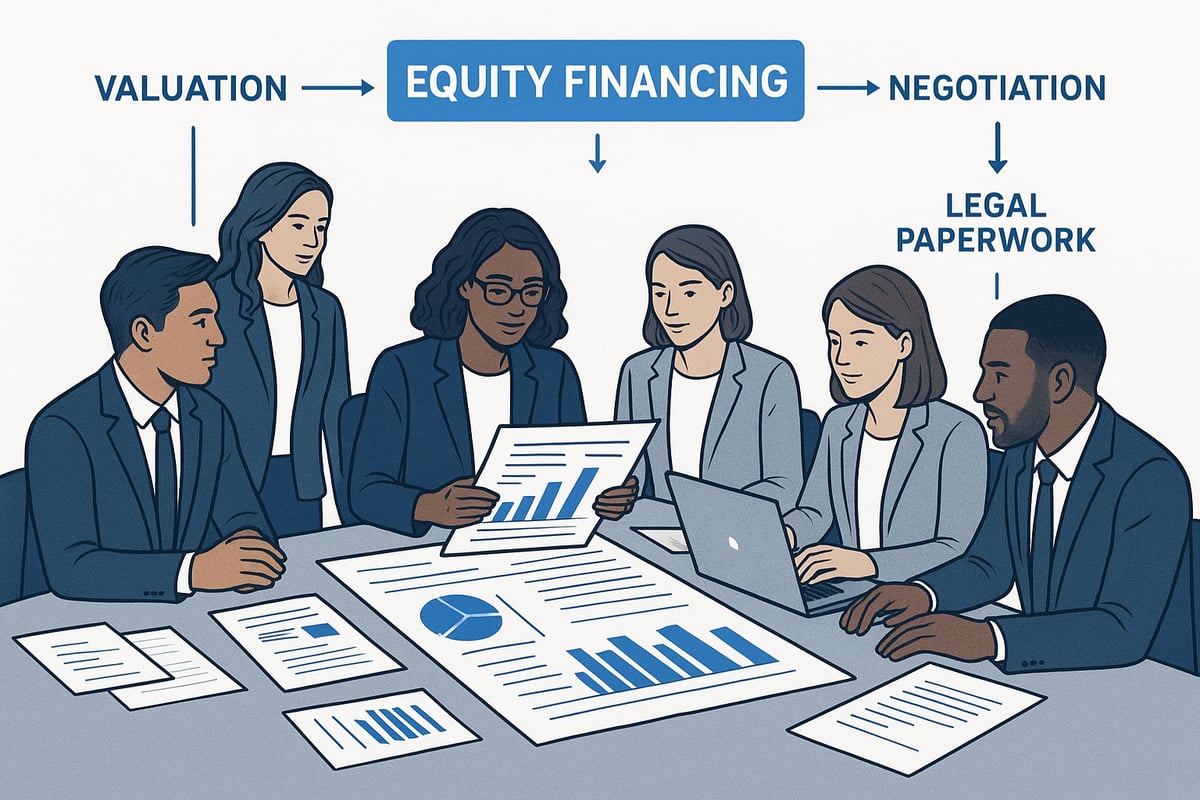
The equity financing process typically begins with company preparation, including financial audits and business planning. Next, valuation is determined, often using methods like comparable company analysis or discounted cash flow. The company then reaches out to suitable investors, such as angel investors, venture capitalists, private equity firms, or through public markets.
Negotiations follow, covering terms like share classes and investor rights. The round closes with legal documentation and regulatory compliance. A tech startup, for instance, might progress from a seed round to multiple funding stages, eventually culminating in an IPO. Throughout each phase, equity financing shapes the company's capital structure and growth trajectory.
The Evolution of Equity Financing Models
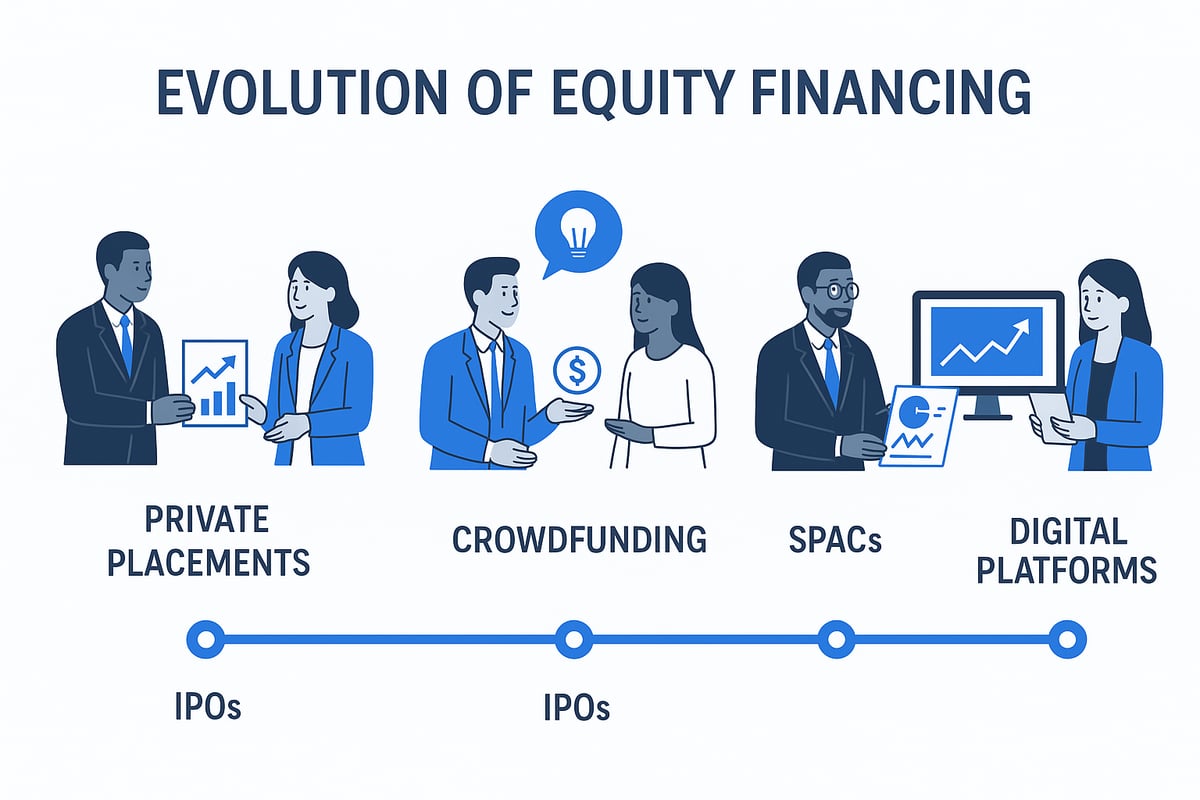
Equity financing has evolved significantly over the decades. Historically, private placements and IPOs dominated the landscape. More recently, innovations like crowdfunding, SPACs, direct listings, and secondary markets have broadened access for both companies and investors.
Technological advancements and globalization have fueled this evolution. Digital platforms make it easier to connect with a global investor base, while secondary markets provide liquidity options before an IPO. According to industry data, global equity issuance has grown steadily, reflecting increased demand for flexible capital solutions. These changes underscore the expanding role of equity financing in today's markets.
Pros and Cons of Equity Financing
Equity financing offers several advantages. Companies do not face repayment obligations, gain access to investor expertise, and can expand their networks. However, it also comes with disadvantages, such as dilution of ownership, potential loss of control, and increased disclosure requirements.
Choosing equity financing depends on a company's goals and stage. For example, a founder may weigh the benefits of expert guidance and growth capital against the trade-off of sharing decision-making power. Ultimately, the strategic fit of equity financing must align with both short-term needs and long-term vision.
Equity Financing vs. Other Funding Methods in 2026
Choosing the right funding route is critical for any business in 2026. With evolving market conditions, understanding how equity financing stands against other options helps leaders make informed decisions at every stage.
Comparing Equity and Debt Financing
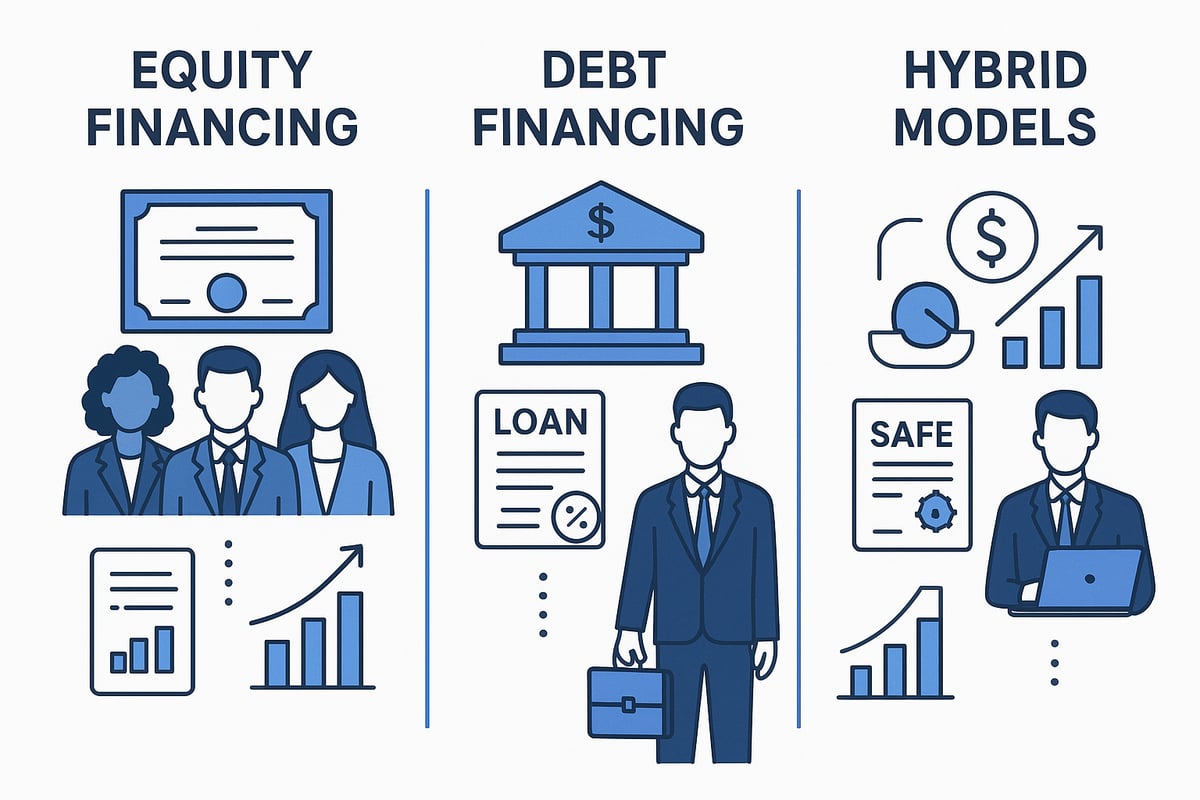
Equity financing involves raising capital by selling shares, while debt financing means borrowing funds with an obligation to repay. The key differences lie in ownership dilution, repayment terms, and impact on financial statements.
| Feature | Equity Financing | Debt Financing |
|---|---|---|
| Repayment | No | Required |
| Ownership | Diluted | Retained |
| Risk | Shared with investors | On borrower |
| Cost of Capital | Often higher | Typically lower |
For example, a startup choosing between a bank loan and equity round must weigh control and flexibility. Understanding metrics like the debt-to-equity ratio explained can clarify the financial impact of each method. This comparison is essential before committing to equity financing.
Hybrid and Alternative Financing Options
Hybrid instruments bridge the gap between pure equity financing and traditional loans. Convertible notes and SAFE agreements allow early-stage companies to raise funds quickly without immediate valuation discussions.
- Convertible notes convert to equity at a later round.
- SAFEs (Simple Agreements for Future Equity) are flexible and founder-friendly.
- Mezzanine financing blends debt and equity features.
A common scenario: startups use convertible debt before a formal equity financing round, gaining capital while delaying complex negotiations. These hybrid options can be strategic stepping stones in a company’s growth journey.
Trends in Private vs. Public Equity Markets
Private equity markets are expanding, with late-stage funding rounds becoming more common. Public market access—through IPOs, direct listings, or SPACs—remains a goal for many, but the journey is changing.
Recent years have seen a surge in private mega-rounds, while SPACs and direct listings offer alternative routes to public markets. The number of IPOs fluctuates with market conditions, influencing when companies pursue equity financing. Staying informed about these trends helps businesses time their fundraising for maximum impact.
When to Choose Equity Financing
Deciding if equity financing is right depends on growth stage, industry, and risk appetite. Early-stage startups needing capital for innovation often favor equity, accepting dilution for strategic support. In contrast, mature firms with stable cash flow might prefer debt.
For instance, a SaaS company aiming for rapid international expansion may opt for equity financing to access larger sums and investor expertise. Assessing capital needs, future goals, and industry norms is vital before selecting the best funding method.
The 2026 Equity Financing Landscape: Trends and Market Insights
As we approach 2026, the equity financing landscape is transforming at an unprecedented pace. Market forces, technology, and shifting investor priorities are redefining how businesses access and deploy capital. Understanding these trends is essential for any founder or finance professional aiming to stay ahead.

Macro Trends Shaping Equity Financing in 2026
Global macroeconomic conditions are steering the direction of equity financing in 2026. Slowdowns in some regions and growth spurts in others are influencing capital flows. Technology is at the forefront, enabling faster, borderless fundraising through AI-driven platforms and blockchain solutions.
Investors now prioritize ESG and sustainability, with data showing a significant rise in green and impact-focused equity financing. According to the Equity market outlook 2026, sectors like technology, health, and renewable energy are seeing robust equity issuance. Companies must adapt to these macro shifts to secure capital and thrive.
Regulatory and Policy Developments
Regulation continues to shape equity financing, with new rules impacting both private and public markets. In 2026, increased disclosure requirements and cross-border compliance are the norm. For example, GDPR-style privacy laws now influence investor due diligence, requiring companies to be more transparent with their data practices.
Major markets like the US, EU, and Asia have adapted their frameworks, making it easier for international investors to participate but also introducing new compliance hurdles. Staying informed on these regulatory changes is vital to avoid delays and ensure successful fundraising rounds.
Investor Expectations and Due Diligence
Investor expectations for equity financing have evolved. Due diligence is more rigorous, with a heightened focus on clear financial metrics, governance, and ESG performance. Data-driven business models and transparent reporting are now baseline requirements.
Many investors demand comprehensive climate risk disclosures before committing capital. Industry surveys reveal over 70% of institutional investors prioritize ESG when evaluating equity financing opportunities. For founders, preparing robust documentation and aligning with these expectations is a must.
Technology-Enabled Fundraising Platforms
Digital transformation is reshaping how equity financing rounds are executed. Online platforms now facilitate private placements and crowdfunding, making capital more accessible to startups and growth companies. Blockchain-based security tokens and smart contracts are gaining traction, streamlining transactions and enhancing trust.
A recent example includes a tech company raising $10M through a tokenized equity offering. Crowdfunding volumes continue to grow, and digital platforms are expected to handle an increasing share of global equity financing activity in 2026.
Sector-Specific Trends and Hotspots
Equity financing in 2026 is especially dynamic in sectors like fintech, healthtech, green energy, and AI. North America, Asia-Pacific, and Europe remain the leading regions for deal activity. Post-pandemic, biotech has seen a surge in equity rounds, reflecting investor confidence in healthcare innovation.
Sectoral data highlights that technology and sustainability-focused industries attract the majority of equity financing. Companies in these hotspots should tailor their strategies to capitalize on investor appetite and evolving market dynamics.
Step-by-Step Guide: Executing a Successful Equity Financing Round in 2026
Navigating an equity financing round in 2026 requires careful planning, strategic decision-making, and a clear understanding of each step. Whether you are a founder, CFO, or advisor, this guide breaks down the process to help you maximize capital and minimize risk in today’s evolving landscape.
Step 1: Assessing Readiness and Setting Objectives
Before starting equity financing, conduct an internal financial review. Analyze your cash flow, revenue projections, and operational health. Define how much capital you need and why, aligning fundraising targets with business milestones.
For example, a tech startup might map its equity financing to a major product launch, ensuring new funds directly support growth. Set clear objectives, such as entering new markets or scaling operations. This clarity will help attract the right investors and strengthen your pitch.
Step 2: Valuation and Structuring the Deal
Determining company value is crucial in equity financing. Common methods include comparable company analysis, discounted cash flow (DCF), and precedent transactions. Each method brings a different perspective.
| Valuation Method | Key Feature |
|---|---|
| Comparable Company Analysis | Market-based benchmarking |
| Discounted Cash Flow (DCF) | Future cash flow focus |
| Precedent Transactions | Real deal comparisons |
Negotiate with investors to reach a fair valuation. Structure share classes, rights, and preferences thoughtfully. For instance, a SaaS company with rapid ARR growth can leverage its metrics to negotiate a higher value during equity financing.
Step 3: Identifying and Approaching the Right Investors
Map the investor landscape to identify the best fit for your equity financing needs. Consider angels for early rounds, venture capital for scaling, or private equity for later stages. Tailor your pitch to each audience, highlighting your vision and growth strategy.
Leverage networks, accelerators, and digital platforms to expand reach. For example, a healthtech startup might target impact investors aligned with its mission. Craft compelling narratives and data-driven presentations to stand out in a crowded equity financing market.
Step 4: Due Diligence and Negotiation
Prepare for rigorous due diligence during equity financing. Investors will scrutinize your legal structure, financial records, and operational processes. Address potential red flags early to build trust.
Key negotiation points include valuation, board seats, and liquidation preferences. Avoid common pitfalls like over-dilution or unfavorable terms. For example, a company that thoroughly prepares for due diligence can confidently negotiate a favorable term sheet, setting the stage for long-term success in equity financing.
Step 5: Closing the Round and Post-Funding Steps
Once terms are agreed, finalize legal documents such as subscription and shareholder agreements. Comply with regulatory filings in your jurisdiction. For a comprehensive overview of compliance and best practices, review Equity finance techniques and regulation.
After closing, focus on investor relations. Establish clear communication channels, schedule regular updates, and onboard new board members if necessary. Effective post-funding management ensures ongoing support and confidence throughout your equity financing journey.
Common Mistakes and How to Avoid Them
Many founders underestimate dilution and control loss during equity financing. Poor communication with investors or inadequate preparation for due diligence can derail the process. Always seek expert advice, clarify terms before signing, and maintain transparency.
For example, a startup accepting an unfavorable term sheet may face future challenges, such as limited strategic flexibility. By anticipating common pitfalls, you set the stage for sustainable growth and successful equity financing outcomes.
Strategic Equity Financing: Advanced Tactics for 2026 and Beyond
In 2026, advanced strategies in equity financing can be the difference between scaling efficiently and facing unnecessary dilution or missed opportunities. As founders and finance leaders navigate a complex funding environment, mastering the latest tactics is essential for maximizing value and long-term success.
Optimizing Capital Structure for Growth
Choosing the right capital structure is foundational to effective equity financing. Companies must strike a balance between equity, debt, and alternative instruments to fuel growth while managing dilution. Scenario analysis is vital, especially when planning multiple funding rounds over several years.
For example, a SaaS company might use convertible notes in early rounds, then layer in traditional equity as its valuation grows. This approach provides flexibility and can help preserve ownership for founders. Staying updated on private equity trends 2026 enables leaders to benchmark their strategies and anticipate investor expectations.
| Capital Source | Dilution Risk | Flexibility | Typical Use Case |
|---|---|---|---|
| Common Equity | High | High | Early-stage, growth |
| Convertible Notes | Medium | Very High | Bridge, pre-equity |
| Venture Debt | Low | Medium | Later-stage, de-risked |
Timing the Market and Navigating Cycles
The timing of an equity financing round can significantly impact valuation and investor appetite. Recognizing favorable market windows allows companies to secure better terms, while understanding cycles helps avoid raising capital during downturns.
For instance, some firms have delayed IPOs when public markets are volatile, waiting for conditions to improve. Monitoring macroeconomic indicators and investor sentiment is key. In 2026, companies that align their equity financing with positive market trends position themselves for stronger growth and resilience.
Leveraging Secondary Markets and Liquidity Solutions
Secondary markets provide early shareholders and employees with liquidity options before a public exit. These platforms have gained traction, enabling the sale of shares without a full company exit.
For example, employees at a tech startup might cash out vested options through a secondary transaction, enhancing retention and morale. Understanding what is a shareholder? is fundamental, as these transactions directly affect ownership dynamics. Incorporating secondary market strategies into equity financing can attract top talent and align incentives across the company.
Building Investor Relationships and Long-Term Value
Long-term success in equity financing goes beyond raising capital. Building strong relationships with investors fosters ongoing support, strategic guidance, and smoother follow-on funding rounds.
Founders who prioritize transparency and regular communication often benefit from investors' networks and expertise. In one notable case, a founder leveraged their investors to recruit key executives, accelerating the company’s growth. Well-managed investor relations can enhance governance and drive superior outcomes in equity financing.
ESG and Impact Investing: Attracting Modern Capital
Environmental, social, and governance (ESG) factors now play a pivotal role in equity financing. Investors in 2026 increasingly require robust ESG disclosures and seek companies with measurable impact.
A green energy startup, for instance, may secure funding from sustainability-focused funds by demonstrating clear environmental benefits. Aligning business practices with ESG standards not only attracts modern capital but also builds long-term trust with stakeholders. Companies that embed ESG into their equity financing narrative position themselves as future-ready leaders.
Case Studies: Equity Financing Success Stories
Examining recent success stories offers valuable lessons. Between 2024 and 2026, several companies achieved significant valuation gains following strategic equity financing rounds.
For example, a fintech firm increased its valuation by 3x after a targeted Series B, using proceeds to expand internationally and invest in technology. These cases highlight the importance of timing, capital structure, and investor alignment. By studying real-world outcomes, founders and finance professionals can refine their own equity financing strategies for optimal results.
The Future of Equity Financing: Predictions and Actionable Insights for 2026
The coming years will redefine how companies access capital and how investors participate in the evolving world of equity financing. As we look ahead to 2026, new models, global trends, and advanced skills will shape the strategies for founders and finance leaders. Staying informed about these shifts is essential for anyone navigating the modern funding landscape.
Emerging Models: Tokenization, AI, and Decentralized Finance
In 2026, equity financing is undergoing rapid transformation driven by technology. Security token offerings (STOs) are gaining traction, allowing companies to issue tokenized shares on blockchain platforms, which can increase liquidity and global reach. Artificial intelligence is revolutionizing deal sourcing and due diligence, streamlining processes for both startups and investors. Decentralized finance (DeFi) platforms are enabling peer-to-peer equity investment, reducing barriers to entry. For a broader perspective on how these models fit into the broader financial environment, see the investment backdrop heading into 2026. These innovations are making equity financing more accessible, efficient, and globally interconnected.
Globalization and Cross-Border Equity Financing
Globalization is reshaping equity financing strategies. Companies are increasingly seeking capital beyond their home markets, resulting in a rise of cross-border investments. Navigating this landscape requires understanding currency risks, legal frameworks, and cultural nuances. For example, Asian tech firms are raising significant capital from US and European investors, leveraging regional strengths and global investor appetite. As more startups pursue international expansion, effective cross-border equity financing will demand robust compliance and local expertise. This shift is unlocking new funding sources and fostering greater market integration.
Preparing for the Next Decade: Skills and Mindsets for Founders and CFOs
To thrive in the future of equity financing, founders and CFOs must cultivate a blend of financial literacy, negotiation skills, and regulatory awareness. The adoption of advanced technologies, like data analytics and AI-driven reporting, is becoming a competitive advantage in fundraising. Embracing agility and openness to change will help leaders navigate market volatility and investor expectations. For instance, a CFO leveraging real-time analytics can deliver insights that build investor confidence and streamline decision-making. These skills will be critical as the pace of innovation accelerates.
Key Takeaways and Next Steps for Stakeholders
As equity financing evolves, all stakeholders must adapt to new realities. Here are key actions to consider:
- Stay informed: Monitor trends and regulatory changes.
- Embrace technology: Use digital tools for fundraising and reporting.
- Prioritize ESG: Meet investor expectations for sustainability and governance.
- Build global networks: Explore cross-border opportunities.
- Prepare thoroughly: Develop a checklist for a successful equity round.
Success in 2026 will depend on proactive learning, strategic planning, and leveraging the full potential of modern equity financing models.
As we’ve explored, understanding equity financing means seeing both where the market is headed in 2026 and how history shapes those trends. By learning from past market movements and the strategies that worked—or didn’t—you can make smarter decisions for your next funding round. If you’re interested in exploring financial markets through a historical lens and want to spot patterns that matter, you’ll love what we’re building at Historic Financial News. We invite you to Join Our Beta and help us bring greater context and clarity to the world of equity financing and beyond.