
Deficit Guide: Understanding Causes and Solutions in 2026
As 2026 approaches, concerns about the deficit are making headlines and shaping debates across the globe. The topic is more urgent than ever, with policymakers and citizens alike seeking clarity on what drives these financial gaps and how they can be addressed.
This guide will break down the meaning of deficit, reveal its root causes, and offer actionable solutions for individuals, businesses, and decision-makers.
You'll find clear definitions, an exploration of underlying causes, the latest trends and data, a look at economic and societal impacts, and evidence-based strategies for moving forward. Let this guide equip you with the knowledge to make informed choices as the world faces fiscal challenges in 2026.
What is a Deficit? Definitions and Types
Understanding the deficit is essential for decoding today’s economic headlines. Whether you’re following government budgets or analyzing business financials, the term shapes conversations about growth, risk, and fiscal health. But what exactly is a deficit, and why does it matter across different sectors?

Defining Deficit: Core Meaning and Types
A deficit, as defined by the Cambridge Dictionary, is the amount by which money spent exceeds money received. In practical terms, it means an entity—such as a government, company, or household—is operating at a shortfall for a specific period.
There are several major types of deficit:
- Budget deficit: Occurs when a government’s annual expenditures surpass its revenues. For example, the U.S. federal budget deficit recently neared $30 billion, highlighting a gap between what the government spends and collects.
- Trade deficit: Happens when a country imports more goods and services than it exports. If a nation reports a balance-of-payments deficit of $250 million, its outflows exceed inflows for that period.
- Other forms: Deficit also appears in sports (score deficits), medicine (cognitive or functional deficits), and business (operational shortfalls).
Often, the term “deficit” is confused with “debt.” While a deficit refers to the gap within a single period, debt is the cumulative total of past deficits. For instance, if a government runs a deficit each year, the sum becomes its national debt. The opposite of a deficit is a surplus, where revenues exceed expenses.
For further clarity, you can explore related terms like surplus or shortfall in this comprehensive glossary of fiscal terms.
Measuring Deficits and Their Contexts
Deficits are typically measured over a fiscal year or specified accounting period. Governments may report their deficit as a percentage of GDP, while businesses reflect it on their income statements. For international trade, the balance of payments tracks whether a country is running a surplus or a deficit.
Here’s a quick comparison:
| Term | Definition | Example |
|---|---|---|
| Deficit | Expenses exceed revenues for a period | Federal budget deficit of $30 billion |
| Debt | Accumulated deficits over time | National debt from years of deficits |
| Surplus | Revenues exceed expenses | Trade surplus in agricultural products |
The deficit is a common concept across many sectors. Governments face budget deficits, businesses may operate with an operational deficit, and households experience a deficit if spending outpaces income. In each context, the deficit signals a need for adjustment or corrective action.
Common synonyms include shortfall and disadvantage. Whether in public finance, private enterprise, or international trade, understanding the deficit helps clarify financial health and inform strategic decisions.
Key Causes of Deficits in 2026
As we approach 2026, understanding the key causes of a deficit is more important than ever. Multiple forces contribute to the persistence and growth of deficits at every level of society. Let us explore the primary drivers shaping the deficit landscape in 2026.

Government Spending and Fiscal Policy
Government spending is often at the heart of a deficit. When expenditures exceed revenues, the gap grows, creating budgetary challenges for policymakers. In 2026, legislative changes, such as expanded disaster relief and new social programs, have driven spending upward in several countries.
There are two main types of deficits to consider: cyclical and structural. Cyclical deficits occur during economic downturns, as governments spend more to stimulate growth or respond to crises. Structural deficits, on the other hand, persist even when the economy is stable, reflecting ongoing imbalances between spending and revenue.
Recent examples include spikes in government outlays following natural disasters and the rollout of large stimulus packages. These events often lead to a notable increase in the deficit, which in turn adds to the national debt. Interest costs then rise, further straining budgets and making future spending more expensive.
Political cycles also play a significant role. Election years can bring promises of new benefits or tax relief, while international comparisons show that some nations, under pressure from organizations like the International Monetary Fund, are urged to address their fiscal deficit concerns. For instance, the IMF's Warning on U.S. Fiscal Deficits highlights how global oversight shapes domestic policy.
Ultimately, the ongoing tension between political priorities and fiscal discipline is a central reason many governments face a growing deficit.
Revenue Shortfalls and Economic Fluctuations
A deficit can also result from weak revenue collection or unexpected economic shifts. Tax revenues are closely tied to the health of the economy. When business activity slows or unemployment rises, tax receipts often fall, making it harder to balance budgets.
For example, countries reliant on oil exports may see a sudden deficit if global prices drop, reducing government income. In 2026, expiring tax cuts are another major factor, as they can lead to lower overall revenue. Even with an April surge in tax payments, many governments still face an annual shortfall that widens the deficit.
Forecasting plays a crucial role in managing these risks. Unexpected economic shocks, such as a rapid decline in consumer spending or a sudden market downturn, can quickly shift projections and deepen the deficit. Accurate models and real-time data are essential to anticipate and mitigate these challenges.
Tax policy changes, whether through rate adjustments or new incentives, also influence the size and persistence of a deficit. Governments must weigh the potential benefits of stimulating growth against the risk of worsening a deficit through lost revenue.
External Factors: Trade, Demographics, and Global Events
External forces often have a profound impact on the deficit. Trade deficits emerge when a nation imports more than it exports, leading to a negative balance of payments. Changes in global demand, shifting supply chains, and volatile commodity prices all contribute to these imbalances.
Demographic shifts are another critical factor. Aging populations can reduce workforce participation, leading to lower tax revenues and higher spending on social programs. This demographic pressure intensifies the deficit, especially in advanced economies facing shrinking labor forces.
Global events, such as pandemics, wars, or major technological changes, can also reshape the deficit landscape. For instance, the UK's recent reduction in its manufacturing goods deficit shows how international trends influence national outcomes. Technological advances, including automation, can disrupt industries and alter employment patterns, impacting both government revenue and spending.
The interconnectedness of the global economy means that a deficit in one country can have ripple effects elsewhere. Policymakers must remain vigilant, adapting strategies to address both domestic and international factors that drive the deficit.
The Current State of Deficits: Trends and Data for 2026
Understanding the current state of the deficit in 2026 is crucial for anyone seeking to make informed financial or policy decisions. As economic conditions evolve, real-time data and transparent analysis help individuals, businesses, and policymakers navigate challenges and opportunities related to the deficit.
Recent Deficit Data and Patterns
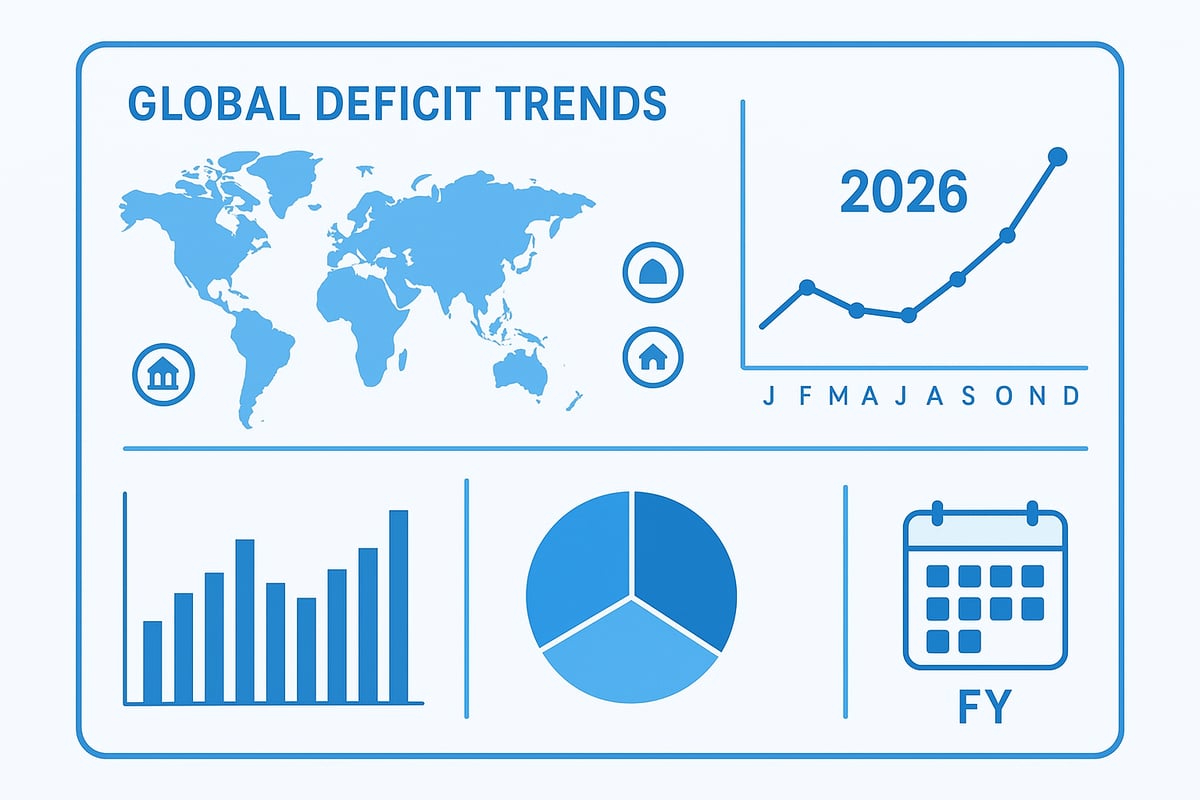
The deficit landscape in 2026 is shaped by both predictable cycles and unexpected shocks. According to the latest CBO's 2026 Deficit Projection, the U.S. federal deficit reached $439 billion in just the first two months of the fiscal year. This marks a notable increase compared to previous years, reflecting ongoing fiscal pressures.
Monthly and yearly deficit accumulation often follows recognizable patterns. For example, the influx of tax receipts in April temporarily reduces the deficit, while end-of-year spending surges can cause sharp increases. Interactive tools such as deficit trackers help visualize these trends, showing both seasonal effects and sudden deviations, such as large grants or legal settlements.
It is important to distinguish between one-off events and recurring patterns. For instance, stimulus measures or disaster relief may cause temporary spikes in the deficit, while structural imbalances drive longer-term trends. Comparing data from 2021 to 2026 reveals that the deficit has generally worsened, with higher interest costs and mandatory spending outpacing revenue growth.
Sectoral and International Comparisons
Deficit trends are not limited to the federal government. States and localities are also experiencing fiscal pressures, with many running persistent deficits in education, healthcare, and infrastructure. For example, several school districts have reported operating in deficit for consecutive years, prompting difficult choices about staffing and services.
A comparison of global economies shows that the deficit challenge is widespread. The European Union, United Kingdom, and emerging markets each face unique pressures. Recent months have seen the UK's trade deficit in manufactured goods narrow slightly, while some emerging markets contend with current account deficits driven by fluctuating commodity prices.
| Sector/Economy | Recent Deficit Trend | Key Pressure Points |
|---|---|---|
| U.S. Federal | Rising | Interest costs, entitlements |
| U.S. States | Mixed | Education, healthcare |
| UK | Slight improvement | Manufacturing trade |
| EU | Variable | Energy, social spending |
| Emerging Markets | Persistent | Commodity prices, trade |
Balance-of-payments deficits and current account deficits underscore the interconnectedness of global economies. These trends can spill over, affecting currency stability and investment flows.
Public Perception and Political Debate
Media coverage and political debate around the deficit have intensified in 2026. Headlines often highlight the risks of a growing deficit, with some policymakers promising to cut the deficit in half over the next five years. Others argue that targeted investments are necessary, even if the deficit remains elevated.
Arguments for deficit reduction focus on long-term fiscal health, lower interest costs, and investor confidence. On the other hand, critics warn that aggressive cuts could undermine essential public services or stall economic recovery. Public opinion is divided, with many citizens expressing concern about the deficit but also supporting spending on priorities like healthcare and infrastructure.
Transparency and effective communication play a key role in shaping perceptions. When governments provide clear, accessible information about the deficit, it helps build trust and fosters informed debate. As the deficit remains a defining issue in 2026, ongoing engagement between policymakers, experts, and the public is essential.
The Impact of Deficits on Economies and Societies
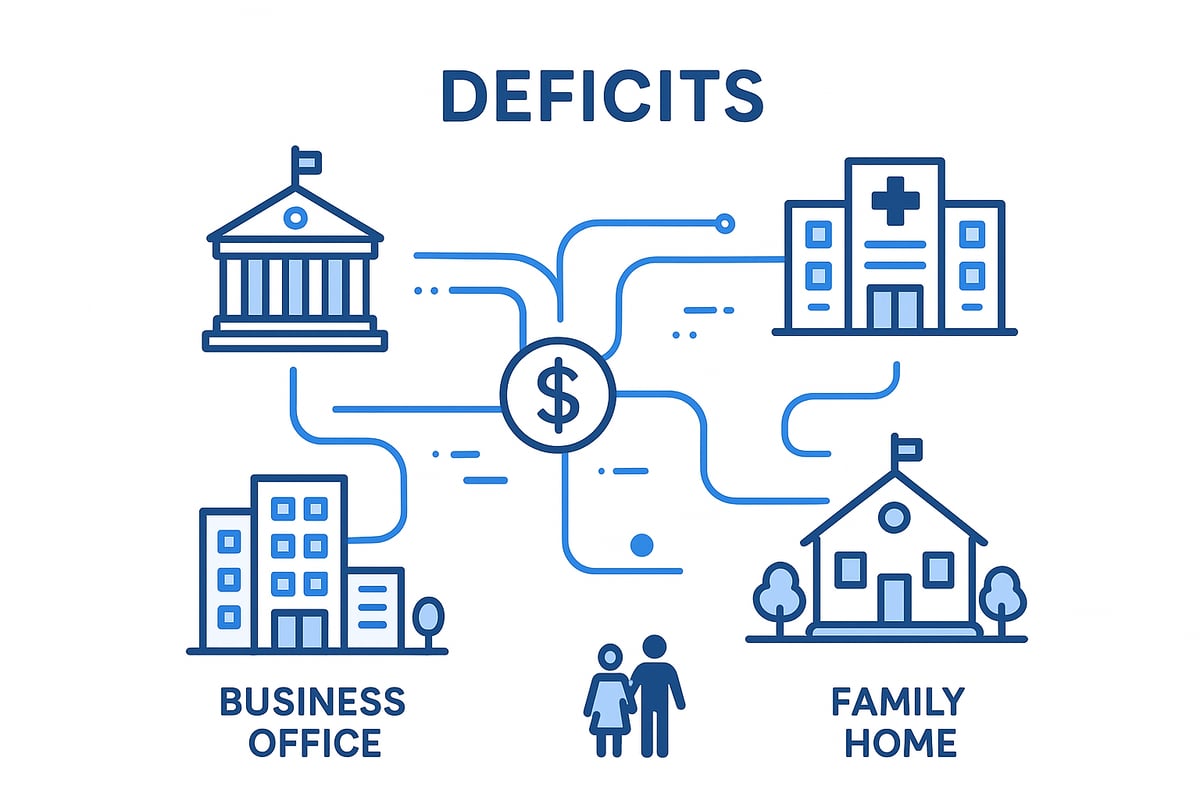
Deficits shape economies and societies in profound and varied ways. The effects ripple through government budgets, business confidence, and household finances, influencing everything from inflation rates to public services. Understanding how a deficit operates within each sphere is crucial for making informed decisions and preparing for future challenges.
Economic Consequences: Growth, Inflation, and Interest Rates
When a deficit persists over time, it can alter the course of economic growth and stability. Governments may borrow more to finance spending, increasing demand for credit and possibly leading to higher interest rates. As interest rates climb, the cost of servicing debt grows, consuming a larger share of the budget and leaving less for essential services.
A significant deficit can also contribute to inflation, especially if the government finances it by increasing the money supply. Higher inflation erodes purchasing power and can destabilize long-term investment planning. At the same time, investors may demand higher yields on government bonds, signaling concerns about fiscal sustainability.
The relationship between ongoing deficits and interest costs is central to fiscal health. For a deeper understanding of how these expenses affect an entity's ability to meet obligations, explore the Interest Coverage Ratio insights. This ratio is a key metric for assessing how much room remains in a budget after covering debt payments.
Historically, periods of high deficit have been linked to both economic recovery and instability. For example, during recessions, increased government spending can stimulate growth, but unchecked deficits over the long term may crowd out private investment. The balance between short-term stimulus and long-term fiscal responsibility remains a critical policy debate.
Social and Policy Implications
The presence of a deficit directly affects the quality and reach of public services. Governments facing large deficits may be forced to reduce funding for education, healthcare, and social security. This can result in larger class sizes, longer wait times for medical care, and reduced social benefits for vulnerable populations.
To address a growing deficit, policymakers often consider spending cuts or tax increases. Both approaches carry trade-offs. Spending reductions can undermine essential services, while higher taxes may slow economic activity. States sometimes announce plans to cut funding for schools or law enforcement to close budget gaps, highlighting the social impact of fiscal choices.
Communities with persistent deficit challenges may see widening inequality as support for at-risk groups diminishes. The debate over how to allocate limited resources becomes more contentious, especially during election cycles. Striking a balance between fiscal discipline and meeting social needs is essential for long-term stability.
Public discourse around the deficit often influences policy direction. Calls for austerity or investment depend on the prevailing economic context and the perceived urgency of the fiscal gap. Transparent communication and evidence-based decision-making are critical as leaders weigh the consequences of deficit-driven policy shifts.
Business, Investor, and Household Impacts
A deficit impacts not only governments but also businesses and households. For businesses, uncertainty about future tax rates or government spending can make long-term investment planning challenging. Concerns about a rising deficit may lead to higher borrowing costs and affect credit ratings, making it more expensive to finance expansion or innovation.
Investors track deficit trends closely, as persistent fiscal gaps can signal instability and prompt shifts in asset allocation. Sovereign credit ratings may be downgraded if deficit levels are seen as unsustainable, increasing the cost of capital for both public and private sectors.
Households feel the effects of a deficit in several ways. Changes in tax policy or reductions in public services can alter disposable income and access to benefits. Inflation, often linked to large deficits, erodes savings and affects purchasing power. Job opportunities, especially in the public sector, may shrink if governments cut spending to address a deficit.
Ultimately, the deficit shapes economic confidence and influences daily decisions for businesses and families alike. A clear understanding of its effects helps stakeholders anticipate challenges and adapt strategies for a rapidly changing fiscal landscape.
Solutions to Deficits: Strategies for 2026 and Beyond
Tackling the deficit in 2026 requires a multi-pronged strategy that balances fiscal prudence, economic growth, innovation, and public engagement. As governments, businesses, and individuals confront rising fiscal challenges, actionable solutions are more important than ever.
Fiscal Reforms and Policy Adjustments
Fiscal reforms are foundational for addressing the deficit. Policymakers often debate the right mix of spending cuts and revenue enhancements, seeking a balance that supports economic stability without harming essential public services.
Key strategies for deficit reduction include:
- Conducting targeted spending reviews to identify inefficiencies and eliminate waste.
- Reforming entitlement programs while protecting vulnerable populations.
- Adjusting tax policies to broaden the base and close loopholes.
- Implementing automatic stabilizers that adjust spending and taxes in response to economic changes.
Bipartisan proposals in recent years have focused on transparent budgeting, regular audits, and stricter fiscal rules. Lessons from past efforts show that gradual, well-communicated reforms are more effective than abrupt measures.
For a detailed look at potential federal solutions, the Heritage Foundation's Budget Solutions outlines five changes that could help fix the nation’s budget woes. Comparing international approaches, some countries have achieved deficit reduction by linking spending to long-term economic forecasts and enforcing fiscal discipline across all levels of government.
Ultimately, the success of fiscal reforms depends on political will, public support, and a commitment to accountability.
Economic Growth and Innovation
Promoting economic growth is a powerful lever for reducing the deficit. When the economy expands, tax revenues increase, and reliance on government support declines, easing fiscal pressures.
Effective measures to spur growth include:
- Investing in infrastructure upgrades to boost productivity and job creation.
- Supporting innovation in technology and green energy to create new industries.
- Expanding access to quality education and workforce training.
- Encouraging entrepreneurship through regulatory reform and incentives.
Demographic shifts, such as aging populations and changing workforce participation, also affect the deficit. Policies that encourage higher labor force participation can help offset rising costs.
International best practices highlight the importance of fostering a business-friendly environment and investing in forward-looking sectors. As countries compete for talent and investment, those that prioritize innovation are better positioned to manage their deficit challenges.
Sustained growth, paired with smart policy choices, creates a virtuous cycle that strengthens fiscal health and supports long-term prosperity.
Strengthening Data, Transparency, and Public Engagement
Transparent, data-driven fiscal management builds public trust and supports effective deficit reduction. Real-time data and advanced analytics, including AI-powered forecasting, enable policymakers to make more informed decisions.
Key initiatives for enhancing transparency and engagement include:
- Developing accessible deficit tracking tools and dashboards for the public.
- Publishing timely, clear reports on fiscal performance and projections.
- Hosting forums and consultations to engage citizens in budget discussions.
- Promoting financial literacy and education on deficit issues.
State and local governments increasingly use digital platforms to share budget information and invite feedback. For example, Pew's Analysis on State Budget Pressures highlights how transparency and public involvement are shaping responses to mounting fiscal challenges.
Global examples show that countries with strong public engagement in fiscal policy are better equipped to manage deficits and build consensus for long-term reforms.
Prioritizing transparency, data accuracy, and open communication will be essential as societies navigate the complex landscape of deficit management in 2026 and beyond.
Deficit Myths, Misconceptions, and the Path Forward
Understanding the deficit is not just about numbers on a balance sheet. Myths and misconceptions can cloud judgment, making it harder for policymakers and citizens to make informed decisions. By separating fact from fiction, we can chart a smarter path forward in 2026.
Common Misunderstandings About Deficits
Many believe that every deficit spells disaster, but the truth is more nuanced. A deficit simply means spending exceeds income for a given period. Not all deficits are inherently bad. In fact, governments sometimes run a deficit intentionally to stimulate growth during downturns.
A frequent misconception is that a deficit is the same as debt. While related, they are distinct. The deficit is a flow, capturing the difference between revenues and expenses over a specific timeframe, while debt is the accumulation of past deficits. For a deeper understanding of how this distinction matters in financial analysis, see the Debt-to-Equity Ratio explained.
Other myths include ideas like "deficits always cause inflation" or "all countries must balance their budgets every year." In reality, the impact of a deficit depends on context, timing, and economic environment.
Consider these examples:
- During recessions, deficits can support recovery.
- Short-term deficits may be necessary after natural disasters.
- Structural deficits, however, can signal underlying fiscal problems.
Expert consensus suggests that moderate, well-managed deficits are sustainable, while persistent, unchecked deficits may lead to challenges. Recognizing these distinctions is crucial for sound economic planning.
The Role of Historical Context in Understanding Deficits
Looking at deficit trends in isolation can be misleading. Historical context provides vital perspective. By analyzing past deficit cycles, we learn how economies have weathered financial storms and recovered.
For example, the 2008 financial crisis led to large deficits as governments intervened to stabilize markets. Over time, as growth returned, deficits naturally declined. Similarly, the COVID-19 pandemic forced many countries to run significant deficits to protect jobs and health systems.
Key lessons from history include:
- Economic crises often require temporary deficit increases.
- Fiscal discipline during growth periods can restore balance.
- The effects of deficits depend on interest rates, inflation, and global conditions.
A table summarizing historical deficit responses:
| Event | Deficit Trend | Outcome |
|---|---|---|
| 2008 Financial Crisis | Sharp increase | Recovery followed by gradual reduction |
| COVID-19 Pandemic | Large spike | Economic stabilization, ongoing adjustment |
Understanding these contexts helps avoid overreacting to short-term deficit changes. Informed decisions rely on recognizing patterns and adjusting policy based on evidence, not fear.
Navigating Deficit Discussions: Practical Tips for 2026
Deficit discussions can be complex, but there are strategies to cut through confusion. When evaluating deficit news or policy proposals, consider the following:
- Ask whether the deficit is short-term or structural.
- Examine the underlying causes: is it due to emergency spending, tax changes, or economic shocks?
- Look for credible data sources and transparent reporting.
- Consider the broader economic environment: interest rates, employment, and growth.
Stay engaged by seeking out expert commentary and diverse perspectives. Learning the basics of financial statements, such as those outlined in Income Statement fundamentals, can help demystify how deficits are tracked and reported.
For individuals and businesses, understanding the deficit landscape is vital for planning and risk management. Policymakers should prioritize evidence-based analysis and clear communication to foster public trust.
By asking the right questions and focusing on facts, we can navigate deficit debates with confidence and clarity.
After exploring what deficits truly mean, their causes, and the solutions shaping 2026, we can see how vital it is to understand the lessons history offers us. If you want to dig deeper, spot patterns in past economic cycles, or simply make better sense of today’s headlines, you’ll find real value in viewing financial markets through a historical lens. I invite you to be part of this journey—join our growing community and help shape the future of financial insight. You can Join our beta and help us bring history to life.