
Structured Product Guide: Understanding Options in 2026
In 2026, the structured product is transforming how investors approach the markets, responding to a world defined by volatility and rapid change.
This guide is designed to demystify the structured product, especially those built with options at their core. Whether you are seeking tailored risk management or innovative return opportunities, understanding these investments is vital.
You will discover what structured products are, their major types, how options power their flexibility, and the benefits and risks they bring. We will also cover current trends and provide practical steps to help you get started.
Prepare to unlock smarter, more adaptable ways to invest. By the end, you will be ready to make informed decisions in the evolving financial landscape of 2026.
What Are Structured Products?
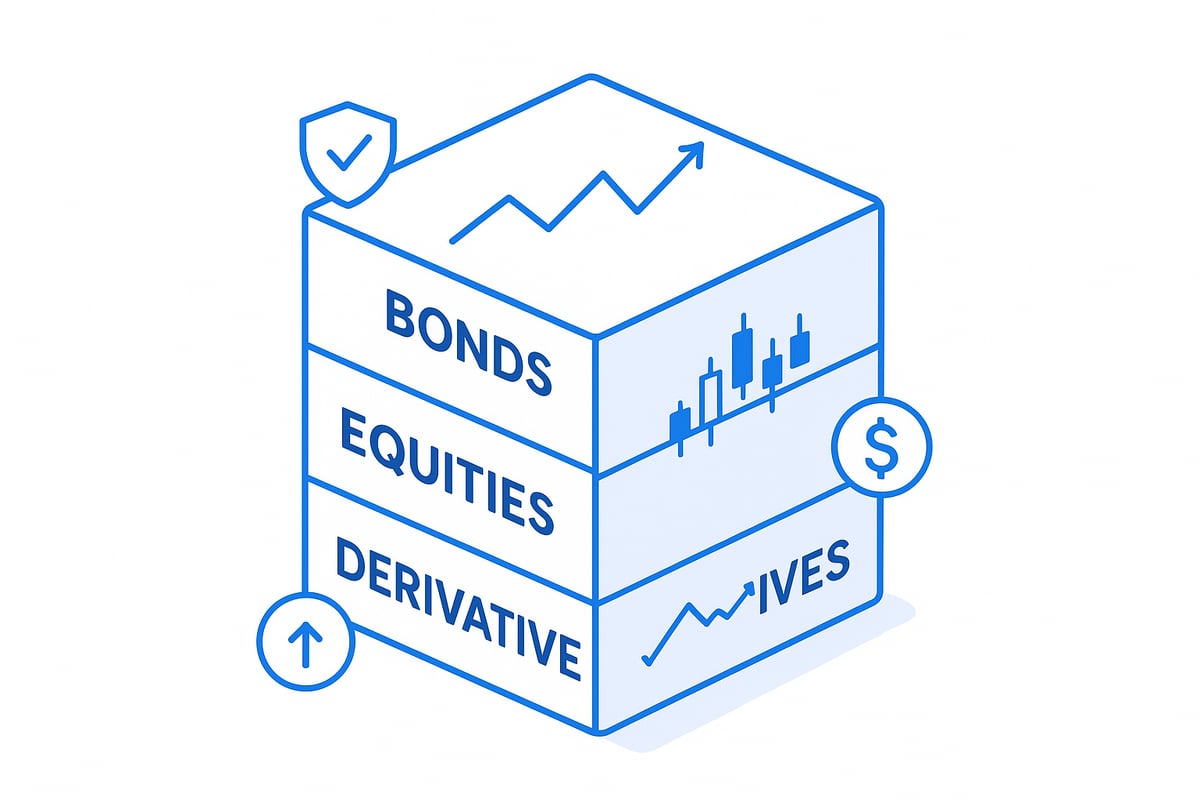
Understanding the structured product is essential for navigating today’s complex financial landscape. These investments are pre-packaged solutions that blend traditional assets, like bonds or equities, with derivatives such as options or swaps. The goal of a structured product is to deliver specific outcomes tailored to investor goals, whether that means capital protection, enhanced yield, or market-linked returns.
Definition and Core Concepts
A structured product is a financial instrument that combines traditional securities with derivatives to achieve a customized risk and return profile. These products are often designed to meet specific investor needs, such as capital preservation, targeted growth, or income generation.
Customization is at the heart of every structured product. Issuers can adjust the underlying assets, risk levels, and potential returns. Common structures include equity-linked notes, principal-protected notes, and credit-linked notes. For example, an equity-linked note might tie returns to the performance of a stock index, while offering some degree of downside protection.
According to leading financial institutions and regulators, a structured product is defined by its pre-packaged nature, blending at least one derivative component with traditional investments. Unlike mutual funds or ETFs, which pool assets and track broad market benchmarks, a structured product is engineered for a specific payoff and risk profile. Direct securities, on the other hand, do not offer the same level of customization or embedded features.
The global appetite for these products is growing. In 2025, issuance volume for structured product solutions surpassed $2 trillion worldwide, reflecting their rising popularity in uncertain markets. For more insights into market growth and future projections, see the Global structured products market trends report. This data highlights how investors are increasingly drawn to structured product offerings that address their unique risk management needs.
Evolution and Historical Context
Structured product innovation began in the 1980s as financial engineers sought new ways to meet client objectives. The sector expanded rapidly after the 2008 financial crisis, as investors demanded more capital-protected solutions in response to market shocks. Regulatory shifts, such as enhanced disclosure requirements, have also shaped the design and distribution of these products over time.
Major milestones include the introduction of principal-protected notes and the growth of credit-linked instruments. The COVID-19 pandemic created another surge in demand, with investors seeking safety and certainty during volatile periods. Each major market event has influenced the evolution of the structured product, prompting issuers to develop new features and more robust protections.
Today, the structured product landscape is more diverse and complex than ever. Products are increasingly tailored, often combining exposure to multiple asset classes or incorporating advanced derivatives. This ongoing evolution ensures that structured product offerings remain relevant for investors seeking flexible, innovative solutions in both stable and turbulent markets.
Types of Structured Products in 2026
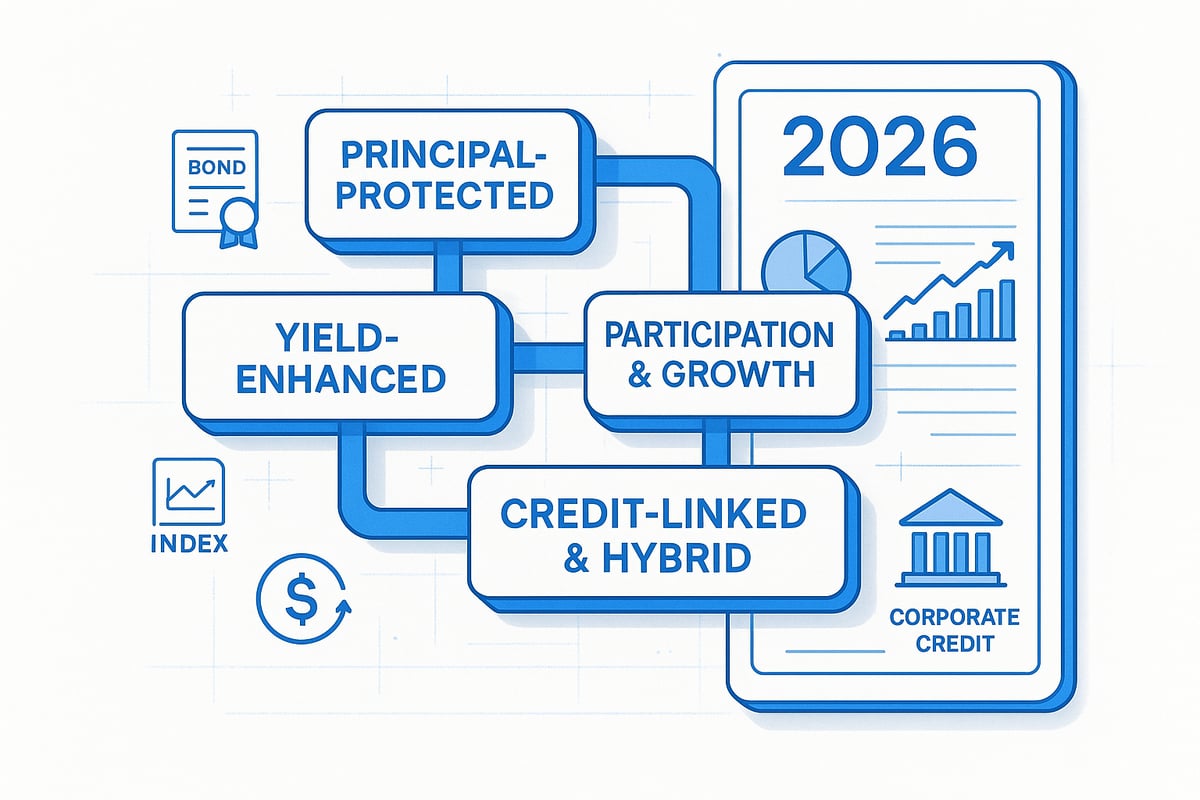
Investors in 2026 have access to a diverse range of structured product solutions, each designed for specific risk and return needs. As markets remain volatile and interest rates fluctuate, understanding the main types of structured product helps investors align their portfolios with their financial goals.
Principal-Protected Structured Products
Principal-protected structured product offerings remain popular with conservative investors in 2026. These products guarantee the return of the original investment at maturity, regardless of market performance, while providing limited upside potential. The core mechanics involve combining a zero-coupon bond with an options contract tied to an underlying asset such as an equity index, basket of currencies, or government bonds.
Common underlying assets:
- Major stock indices
- Currencies
- Government or investment-grade bonds
Pros:
- Downside protection
- Predictable outcomes
Cons:
- Capped returns
- Exposure to issuer credit risk
A typical example in 2026 is a five-year principal-protected note linked to the S&P 500, appealing to those prioritizing capital security. Demand for this type of structured product is rising as investors seek safety in uncertain markets.
Yield-Enhanced Structured Products
Yield-enhanced structured product designs focus on generating higher income by accepting additional risk. Investors may receive attractive coupon payments, but face the possibility of losing principal or early redemption if certain market conditions are met. Popular structures include autocallable notes and reverse convertibles, both of which use embedded options to boost yields.
Typical structures:
- Autocallable notes
- Reverse convertible notes
Risks:
- Loss of principal
- Early redemption
- Market volatility
For instance, an autocallable note in 2026 may offer a 10 percent annual coupon, callable if the underlying index rises by five percent. In low-yield environments, this structured product type is especially sought after by income-oriented investors.
Participation and Growth Structured Products
Participation and growth structured product solutions provide exposure to the appreciation of an underlying asset, sometimes with partial or full capital protection. These products come in various forms, such as digital notes, barrier notes, and capped participation notes, each offering different ways to benefit from market gains.
Variants:
- Digital notes with fixed payouts if a barrier is breached
- Barrier participation notes
- Capped upside growth notes
A digital note might pay a fixed return if a stock index reaches a specified level, regardless of how high it climbs beyond that. In 2026, these structured product options are increasingly used for targeted exposure to emerging markets or trending sectors, allowing investors to capture upside while managing risk.
Credit-Linked and Hybrid Structured Products
Credit-linked and hybrid structured product offerings combine exposure to credit events or multiple asset classes, adding diversification and complexity. Credit-linked notes may be tied to corporate default events, while hybrid products blend assets like equities, foreign exchange, and commodities within a single structure.
Examples:
- Credit-linked note tied to a basket of corporate bonds
- Hybrid note mixing equity performance with currency or commodity returns
These strategies allow investors to tailor risk profiles and pursue specific market themes. In 2026, the demand for more sophisticated structured product combinations is increasing as investors seek customized solutions. According to recent market reports, EQD trading spikes globally, FX options dominate structured products market, highlighting the complexity and innovation present in today’s offerings.
Options in Structured Products: Mechanics and Strategies
Options are the core building blocks behind almost every modern structured product. By combining options with traditional assets, issuers can design investments that meet highly specific risk and return goals. Understanding how these derivatives work within the structured product framework is essential for investors seeking tailored solutions in 2026.
How Options Power Structured Products
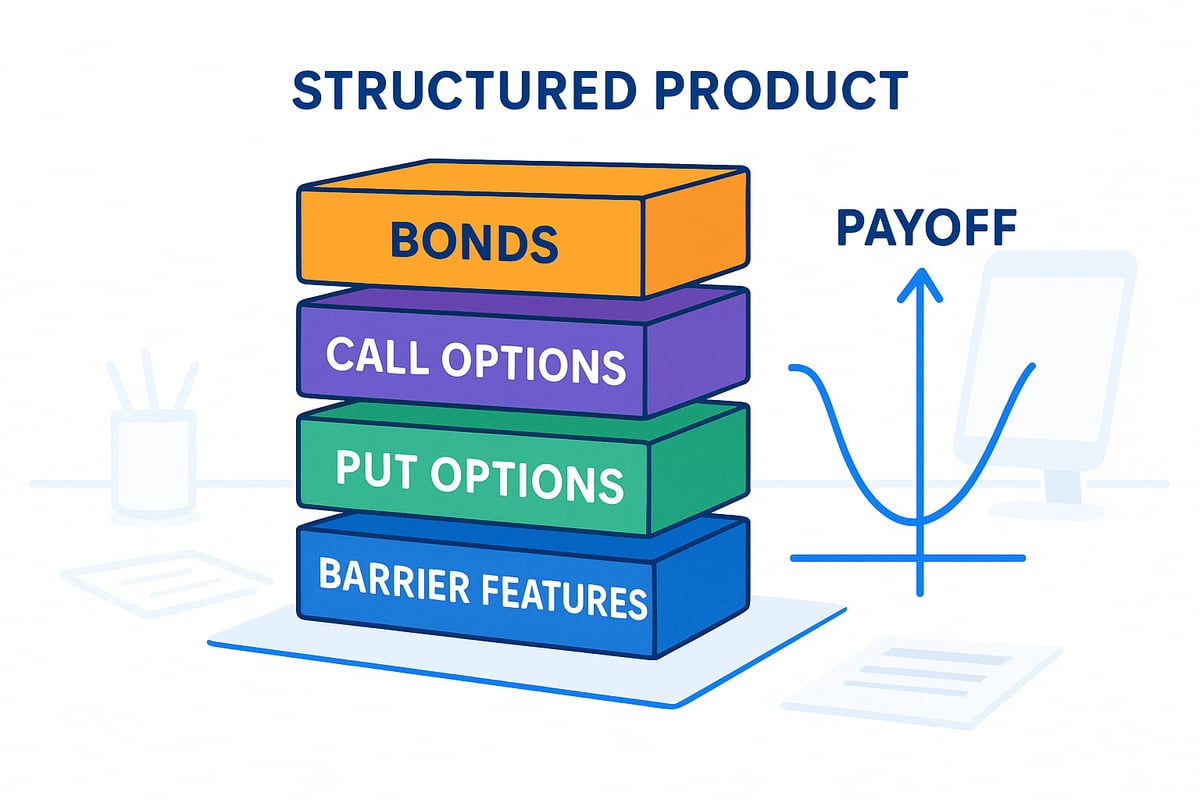
At the heart of most structured product designs are options such as calls, puts, and more complex derivatives like barriers and digitals. Issuers use these financial instruments to sculpt the exact payoff an investor receives, whether that means protecting capital, enhancing yield, or providing leveraged exposure to specific markets.
For instance, a principal-protected structured product often combines a zero-coupon bond, which guarantees the return of principal at maturity, with a call option on an index. This setup allows investors to participate in market gains while shielding their initial investment from loss. In fact, over 70% of structured product issuances in 2025 relied on options as their main component.
Options also enable the creation of highly customized payoff profiles. By layering different option types, issuers can generate returns that activate only under certain market conditions. Barriers, for example, introduce features where payoffs occur only if an asset price crosses a specific threshold. This level of customization is not possible with traditional investments.
Beyond options, some structured product designs incorporate other derivatives like forwards or swaps. For a deeper understanding of how these contracts work, see this Forward contract basics guide.
Common Options Strategies in 2026 Structured Products
Structured product issuers in 2026 employ a diverse range of options strategies to meet investor objectives. Some of the most common strategies include:
- Covered Calls: Selling call options on the underlying asset to generate income, often used in yield-enhanced products.
- Protective Puts: Buying put options to provide downside protection, a hallmark of capital-protected structures.
- Spreads: Combining multiple options at different strike prices to limit risk or enhance return within a range.
- Digital Options: Providing fixed payouts if certain conditions are met, used for targeted exposure.
Barrier options have become especially popular. Knock-in and knock-out barriers control when a structured product becomes active or is redeemed early, giving issuers and investors more flexibility in volatile environments. For example, an autocallable note might terminate early if a reference index rises above a preset level, rewarding investors with a coupon and reducing market exposure.
Volatility management is another key benefit. By embedding options, a structured product can be designed to profit from market swings, not just directional moves. In 2026, the use of exotic options, such as double barriers or range accruals, has grown as investors demand more personalized outcomes.
Real-World Examples and Payoff Diagrams
To illustrate, consider how option combinations within a structured product shape risk and return. Below is a simplified table comparing three popular structures in 2026:
| Product Type | Option Components | Payoff Profile |
|---|---|---|
| Principal-Protected Note | Zero-coupon bond + call option | Return of principal + upside participation |
| Autocallable Note | Barrier options, digital options | Early coupon if barrier breached |
| Growth Note | Call spread, buffer put | Capped upside, partial downside buffer |
For example, a growth note may use a call spread to cap returns above a certain level, while a buffer put limits losses if markets decline. Payoff diagrams for these products show how the structured product delivers different outcomes based on market performance.
Selecting the right options mix is crucial. If a product uses more puts, it typically offers better downside protection but may cap gains. More calls can boost upside potential, but often at the expense of principal protection. Understanding these mechanics helps investors align structured product choices with their risk tolerance and financial goals.
Benefits and Risks of Structured Products in 2026
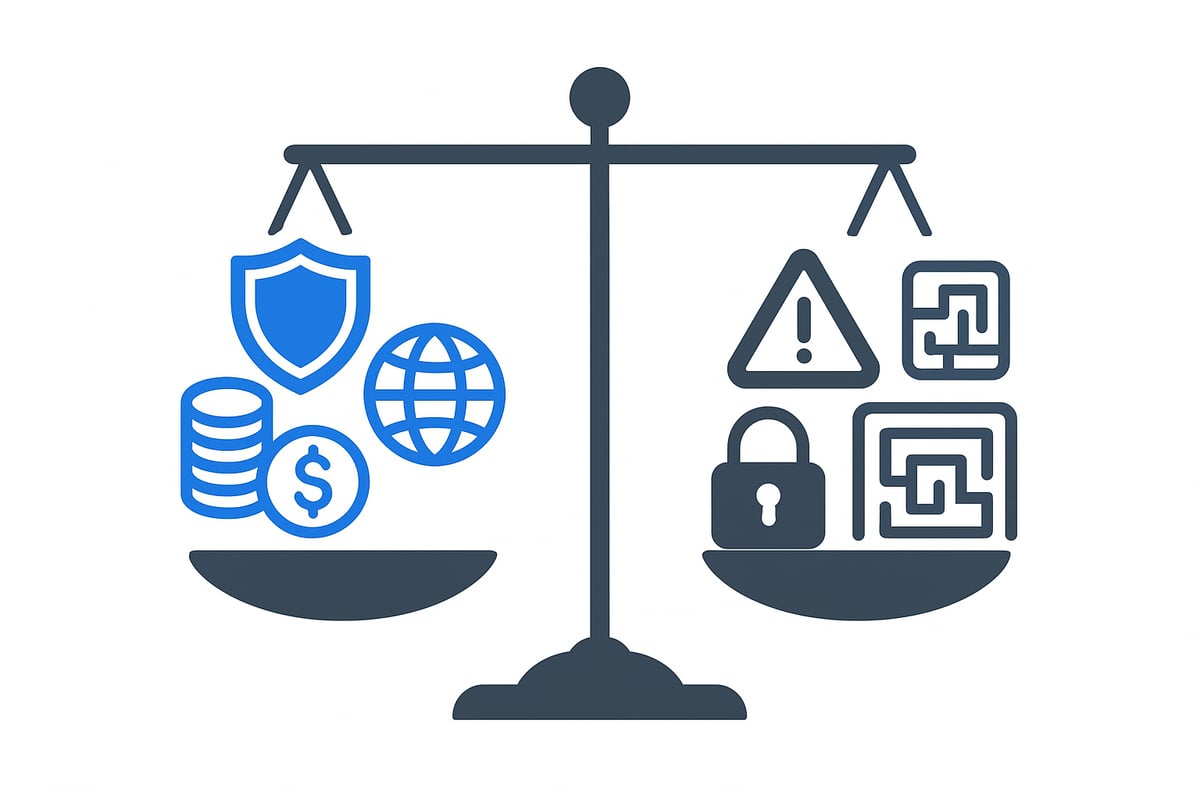
Understanding the benefits and risks of a structured product is essential for every investor considering these innovative financial instruments in 2026. With the market growing and more options available than ever, knowing both sides of the coin can help you make informed decisions that align with your investment goals.
Potential Benefits for Investors
A structured product offers a range of advantages that set it apart from traditional investments. The main appeal lies in the ability to tailor risk and return profiles to specific investor needs.
- Custom risk-return profiles: Structured products can be designed to match your desired level of risk and reward.
- Capital protection: Many products provide partial or full capital protection, which is valuable in uncertain markets.
- Enhanced income: Yield-enhanced structures can offer higher coupons than conventional bonds, especially in low-yield environments.
- Diversification: Exposure to multiple asset classes or markets is possible within a single structured product.
- Market access: Investors can use structured products to access strategies or sectors that are otherwise hard to reach.
- ESG integration: Recent trends show structured notes linked to ESG indices, helping align portfolios with sustainable investing goals.
For instance, a structured product with capital protection linked to an ESG index allows for both risk management and responsible investing. The structured products sector delivering in uncertain markets highlights how these solutions have continued to provide positive outcomes despite tough economic conditions.
Key Risks and Considerations
While a structured product offers unique benefits, it also comes with important risks that investors must weigh carefully.
- Credit risk: The safety of your principal depends on the issuer’s financial health.
- Liquidity risk: Many structured products lack a robust secondary market, making it hard to exit early.
- Complexity: The structures can be intricate, with features that are not always easy to understand.
- Market risk: Performance is still linked to underlying assets, so volatility can impact returns.
- Regulatory risk: Changes in financial regulations may affect product availability or features.
A recent survey in 2025 found that over 60 percent of retail investors viewed complexity as a major barrier to adopting structured products. Recognizing these risks is the first step toward making smarter investment choices.
| Benefit | Description | Risk | Impact |
|---|---|---|---|
| Capital protection | Safeguards initial investment | Credit risk | Loss if issuer defaults |
| Enhanced income | Higher returns vs. traditional assets | Liquidity risk | Difficult to sell early |
| Diversification | Multi-asset exposure in one product | Complexity | May be hard to understand |
| Market access | Exposure to new strategies or regions | Market risk | Losses if markets decline |
| ESG integration | Aligns with sustainability goals | Regulatory risk | Product features may change |
Risk Mitigation Strategies
Investors can take several steps to manage the risks associated with any structured product.
- Due diligence: Always review the product terms, underlying assets, and issuer’s financial strength.
- Professional advice: Consult with an independent financial advisor who understands structured products.
- Regulatory disclosures: Carefully read all documentation and disclosures before investing.
- Risk-rating systems: Many banks now use transparent risk ratings to help investors compare products.
- Ongoing monitoring: Track your investments and stay updated on market conditions and issuer news.
By combining knowledge, due diligence, and professional support, you can navigate the structured product landscape more confidently. Remember, the right balance between benefits and risks is key to achieving your financial objectives in 2026.
Trends and Innovations in Structured Products for 2026
Innovation is driving a new era for the structured product market in 2026. Investors are witnessing a transformation powered by technology, evolving regulations, and a shift toward thematic and sustainable investing. Understanding these trends can help you make smarter decisions as you navigate this dynamic landscape.
Digitalization and Technology Integration
Digital transformation is reshaping how investors access and manage structured product portfolios. In 2026, digital platforms offer seamless comparison and execution, making it easier for both retail and institutional clients to find suitable products.
Artificial intelligence plays a pivotal role in personalizing recommendations and automating risk assessments. Robo-advisors now include structured product allocations based on individual risk profiles and market trends. Blockchain and tokenization are also gaining traction, streamlining settlement processes and improving transparency for investors.
Key innovations include:
- AI-driven product selection and risk analysis
- Tokenized offerings for fractional ownership and faster settlement
- Digital portals providing real-time pricing and analytics
This focus on technological advancement is making the structured product market more accessible, transparent, and efficient.
Regulatory Developments
Regulatory shifts in 2026 are shaping the structured product industry in significant ways. Authorities in the US, EU, and Asia are enforcing stricter disclosure requirements and enhancing investor protections. These measures aim to address concerns about complexity and ensure products are appropriate for their target audiences.
New regulations are influencing product design, distribution, and documentation standards. Enhanced transparency is now a central theme, with issuers required to provide clearer, more detailed information on risks and payoffs. This has increased investor confidence and broadened participation.
For a deeper dive into recent regulatory trends and innovations, explore the 2024 Structured Investments Insights Report, which highlights the rise of Quantitative Investment Strategies and the latest market-linked product features.
Thematic and ESG Structured Products
Thematic investing has become a major force in the structured product landscape. In 2026, investors are drawn to notes linked to technology, healthcare, climate action, and other emerging sectors. ESG considerations are front and center, with a growing array of structured products tied to sustainability metrics or green bond components.
Key features of these offerings include:
- ESG-linked coupons or barriers
- Thematic baskets targeting specific industries or trends
- Integration of green and social impact criteria
This evolution reflects a broader shift in investor priorities, as more individuals and institutions demand alignment between their portfolios and their values. The structured product market is responding with creativity and customization.
Market Outlook and Demand Drivers
Several macroeconomic factors are fueling demand for structured product solutions in 2026. Inflation, fluctuating interest rates, and persistent market volatility are prompting investors to seek flexible tools for capital preservation and income generation.
Recent surveys indicate that over 40% of new structured product issuances are linked to ESG themes, while capital protection remains a top priority. Investor sentiment favors customization, and digital tools are making it easier to tailor exposures to specific goals.
In summary, the structured product market is entering a period of rapid innovation, driven by technology, regulation, and evolving investor preferences. Staying informed about these trends will help you make more confident investment choices.
How to Evaluate and Invest in Structured Products
Evaluating and investing in a structured product in 2026 requires careful analysis and a disciplined approach. With the market offering more customization and complexity than ever, investors must combine due diligence with practical tools to navigate their options. This section outlines the essential steps, criteria, and resources to help you make confident, informed decisions about structured product investments.
Key Evaluation Criteria
When assessing a structured product, start by evaluating the issuer’s creditworthiness. The safety of your investment hinges on the issuer's ability to meet obligations, so review their credit ratings and financial stability.
Next, scrutinize the payoff structure. Understand how returns are generated, what triggers payouts, and the scenarios in which you might lose capital. Compare the underlying assets to those in other investment vehicles, such as a unit investment trust overview, to appreciate differences in risk and transparency.
Fees and costs can erode returns. Review all charges, including structuring fees, distribution costs, and early redemption penalties. Consider product liquidity, since many structured product types have limited secondary market trading.
Finally, check regulatory status and investor protections for each structured product. Review disclosures and ensure compliance with relevant regulations in your region.
Step-by-Step Guide to Investing in Structured Products
Investing in a structured product is a structured process. Follow these steps for a thorough approach:
- Define your investment objectives and risk tolerance.
- Research available products using comparison tools and filter by features that match your goals.
- Analyze the payoff structure with scenario analysis to understand best and worst-case outcomes.
- Consult a financial advisor or structured product specialist for tailored advice.
- Review all regulatory disclosures and documentation before committing.
- Execute your investment through a reputable platform or broker.
- Monitor performance and reassess as market conditions change.
By following this sequence, you maximize your chance of selecting a structured product that truly fits your needs and risk appetite.
Practical Examples and Case Studies
Let’s compare two structured product options to illustrate evaluation in action:
| Feature | Principal-Protected Note | Yield-Enhanced Note |
|---|---|---|
| Capital Protection | Yes | No |
| Potential Return | Capped | Enhanced Coupon |
| Underlying Asset | S&P 500 Index | Basket of Stocks |
| Liquidity | Limited | Limited |
| Credit Risk | Issuer Default | Issuer Default |
For example, an investor seeking safety during market downturns might choose a principal-protected note, accepting lower returns for peace of mind. In contrast, a yield-enhanced note offers higher income but increases the risk of loss if the underlying asset performs poorly.
Common mistakes to avoid include overlooking complex barrier features, underestimating fees, or assuming liquidity where little exists. Ensuring you understand every aspect of your structured product is key to avoiding surprises.
Tools and Resources for 2026 Investors
Digital transformation has made it easier to evaluate and track structured product investments. In 2026, over 80 percent of investors use online comparison tools and calculators to model potential returns and risks.
Educational content from financial institutions and regulators is widely available, covering everything from product basics to advanced strategies. Professional networks and advisory services can provide deeper insights, especially for complex products.
If you want to understand the types of assets that may underlie a structured product, review this Asset-Backed Security definition for additional context. Rely on risk-rating systems and independent reviews to further safeguard your portfolio.
By leveraging these digital resources and professional networks, you can confidently navigate the structured product landscape in 2026.
As you’ve seen throughout this guide, understanding structured products and their options-based strategies is all about seeing the bigger picture—how past innovations, regulatory changes, and market trends shape your choices in 2026. If you’re curious to explore the financial world through a historical lens and want tools that bring context and clarity to complex markets, you’ll love what we’re building. We’re inviting thoughtful investors, students, and professionals like you to help shape this unique experience. Ready to see how history can empower smarter investing? Join Our Beta