
Spot Market Guide: Understanding Real-Time Trading in 2026
Instant transactions are redefining the pace of global finance in 2026. As markets grow more interconnected, understanding how real-time trading shapes decisions is essential for anyone involved in today’s economy.
This guide unpacks the spot market, revealing how it operates and why it matters for investors, businesses, and observers alike. You will explore the fundamentals, discover how real-time trading works, compare different spot market types, and learn about new technologies, benefits, risks, and future trends.
Ready to unlock expert insights and strategies? Dive into each section and position yourself for success in the evolving world of spot markets.
The Fundamentals of Spot Markets
The spot market sits at the core of global finance, driving immediate transactions and price formation for countless assets. As financial markets become faster and more interconnected, understanding how the spot market operates is vital for anyone seeking to navigate real-time trading environments.
What is a Spot Market?
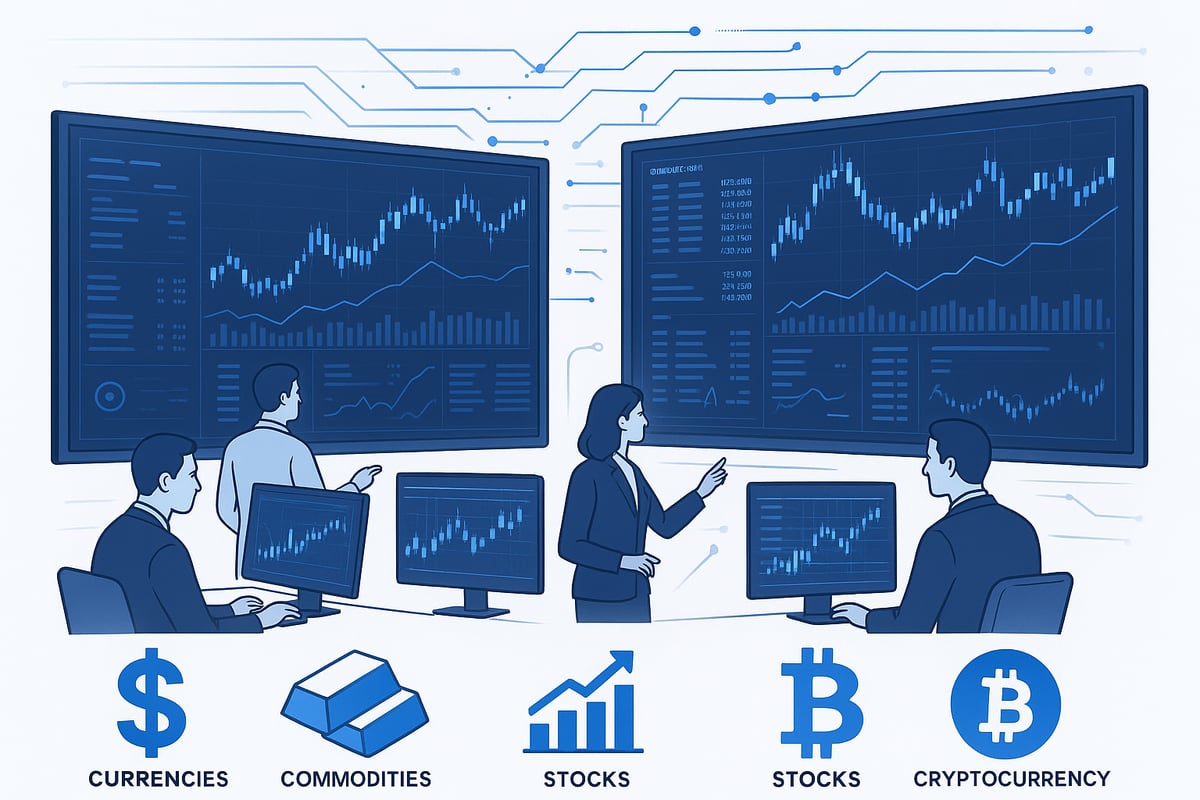
A spot market is a marketplace where financial instruments or commodities are traded for immediate delivery and payment. Unlike derivative markets, where contracts settle at a future date, the spot market focuses on the instant exchange of assets based on current prices.
The distinction between a spot market and a futures or forward contract is fundamental. In a spot market, the transaction reflects the asset's real-time value, while in a forward or futures contract, the terms are set today but settled later. For a deeper understanding, see Forward contract vs spot market.
Real-time trading is a defining feature of the spot market, as prices are determined by the immediate balance of supply and demand. For example, in energy and currency spot markets, trades are settled almost instantly, with delivery cycles ranging from seconds to a couple of days.
Spot trading has grown significantly over the decades. Spot crude oil transactions made up only 3–5% of the global oil market in the 1970s but now account for 30–35%, reflecting the shift toward real-time pricing and settlement.
Key Players and Instruments in Spot Markets
The spot market attracts a diverse group of participants, each playing a unique role in maintaining liquidity and efficiency. The main players include:
- Individual traders seeking short-term opportunities.
- Institutional investors, such as hedge funds and pension funds.
- Corporations managing currency or commodity exposures.
- Market makers who provide continuous buy and sell quotes.
Common instruments traded in the spot market are:
- Currencies (FOREX)
- Commodities (oil, gold, natural gas, agricultural products)
- Equities (stocks)
- Cryptocurrencies (Bitcoin, Ethereum, and others)
Exchanges and over-the-counter venues both facilitate spot trades. Exchanges offer a centralized platform with standard rules, while OTC markets provide flexibility and customized contracts. Liquidity providers are crucial for the spot market, ensuring tight spreads and stable prices even during volatile periods.
Major hubs like Rotterdam and Singapore have become global centers for oil spot trading, highlighting the importance of location and infrastructure in these markets. The spot market's ability to offer real-time pricing and settlement attracts participants from around the world.
Spot Market Structure and Settlement
Spot markets are organized through both centralized exchanges and decentralized OTC networks. Centralized exchanges provide transparency, standardized contracts, and efficient price discovery. In contrast, OTC markets allow for direct negotiation between parties, which can be beneficial for customized trades.
Settlement cycles in the spot market are typically short, with T+2 (trade date plus two days) and T+0 (same-day settlement) being common. Immediate delivery is a hallmark, enabling participants to respond quickly to price changes and market events.
Standardization of contracts and strict quality requirements are crucial, especially in commodity spot markets. Accurate metering, clear market rules, and confirmed creditworthiness help ensure smooth operations. Multilateral spot markets rely on standardized products, explicit rules, and robust credit checks to minimize risk and build trust among participants.
The structure and settlement process of the spot market underpin its reputation for speed, transparency, and reliability, making it a preferred choice for real-time trading.
How Real-Time Trading Works in Spot Markets
Understanding how real-time trading operates in the spot market is essential for anyone seeking to navigate today’s dynamic financial landscape. Every second, millions of transactions occur as buyers and sellers connect across global networks. Below, we break down the core mechanics, market structures, and the crucial role of transparency in real-time spot market trading.
The Mechanics of Real-Time Trading
Trading in the spot market involves a seamless process designed for speed and efficiency. The journey starts with order placement, where participants send buy or sell instructions via electronic platforms. Once submitted, orders enter the order book, a digital ledger that matches buyers and sellers based on price and quantity.
The matching engine pairs compatible orders, executing trades at the best available prices. Settlement in the spot market typically happens instantly or within a short cycle, such as T+0 or T+2. This immediacy distinguishes spot transactions from futures contracts, where delivery occurs at a later date.
Bid-ask spreads, representing the difference between the highest bid and lowest ask, are central to price discovery. The order book in trading provides a transparent view of current supply and demand, allowing participants to make informed decisions.
For example, in the FOREX spot market, currency prices fluctuate every second, reflecting global economic news and shifting capital flows. Electronic trading platforms and algorithmic strategies have accelerated these processes, enabling trades to execute in milliseconds. This speed is a defining characteristic of the spot market, ensuring that prices always mirror real-time market conditions.
Types of Spot Markets: Exchange vs. OTC
Spot market transactions take place on both centralized exchanges and decentralized over-the-counter (OTC) venues. Exchange-based spot markets operate under strict regulatory frameworks, offering standardized contracts, robust surveillance, and centralized clearing. These features enhance transparency and reduce counterparty risk.
OTC spot markets, by contrast, allow participants to negotiate trades directly, offering greater flexibility in contract terms and asset types. However, this flexibility introduces higher counterparty risk and often less transparency. Both models are prevalent in energy spot markets, where centralized exchanges handle standardized contracts while OTC venues support bespoke deals.
Here is a comparison of key features:
| Feature | Exchange-Based Spot Market | OTC Spot Market |
|---|---|---|
| Regulation | High | Variable |
| Transparency | Strong | Limited |
| Flexibility | Limited | High |
| Counterparty Risk | Low | Higher |
Centralized spot markets can increase efficiency and price reliability, but may sometimes challenge the physical delivery of contracts. OTC venues, while adaptable, require participants to carefully assess counterparties and manage unique risks. Selecting the right venue within the spot market depends on asset class, transaction size, and risk tolerance.
Price Formation and Transparency
Price formation in the spot market relies on a blend of market orders, limit orders, and auction mechanisms. Market orders execute instantly at the best available price, while limit orders specify a desired price, remaining open until matched. Some spot markets use periodic auctions to set prices at regular intervals, balancing supply and demand.
Transparency is vital for fair and efficient spot market operations. Real-time price feeds, visible order books, and open reporting standards ensure that all participants have access to the same information. For instance, electricity spot markets use nodal pricing to reflect local supply and demand, while crypto spot markets provide live price data 24/7.
However, transparency brings its own challenges. Price manipulation and market abuse remain risks, especially during periods of volatility. Robust market surveillance and active monitoring have become standard practices following past crises, such as the California electricity crisis. These measures help protect the integrity of the spot market and foster greater trust among participants.
In summary, real-time trading in the spot market is shaped by advanced technology, evolving structures, and an ongoing commitment to transparency. Understanding these elements equips investors and businesses to thrive in an environment where every second counts.
Technological Advances Shaping Spot Markets in 2026
The pace of innovation in the spot market is accelerating rapidly in 2026. Technology is reshaping how participants access, analyze, and execute trades. From digital platforms to artificial intelligence and blockchain, these advances are driving efficiency, transparency, and security across global spot market operations.

The Rise of Digital Platforms and Automation
Digital transformation is at the heart of the modern spot market. Electronic trading systems have replaced manual processes, allowing for instant order placement and execution. These platforms provide real-time access to liquidity, enabling traders to respond to market movements within seconds.
Artificial intelligence and machine learning are now standard tools. They analyze massive datasets, predict price trends, and automate trade execution. Many platforms offer AI-powered summaries and real-time analytics, improving decision-making for both individual and institutional traders. According to Deloitte 2026 Technology, Media & Telecommunications Predictions, AI's role in processing market data and powering automated trading strategies has become a competitive necessity.
Mobile trading apps have also expanded participation in the spot market. These apps provide seamless access to global markets, allowing users to monitor and execute trades anytime, anywhere. The result is a more inclusive and agile trading environment.
Blockchain and Decentralized Trading
Blockchain technology is revolutionizing settlement and transparency in the spot market. By recording transactions on a secure, distributed ledger, blockchain reduces the risk of fraud and manual errors. Settlement times have dropped dramatically, with many platforms now offering instant delivery of assets.
Decentralized exchanges (DEXs) are gaining momentum, especially for cryptocurrencies. These platforms use smart contracts to automate trade execution, removing the need for traditional intermediaries. As a result, costs are lower and security is enhanced.
In commodity spot markets, blockchain is enabling smart contract-based trades, guaranteeing quality and delivery standards. This transparency builds trust between counterparties and helps enforce compliance with market rules. The spot market benefits from increased efficiency, lower costs, and reduced counterparty risk.
Data Analytics and Market Intelligence
Big data and advanced analytics are transforming how the spot market operates. Real-time market data streams provide minute-by-minute insights into price movements and trading volumes. AI-driven tools sift through vast datasets to detect patterns, flag anomalies, and generate predictive insights.
For example, predictive maintenance systems in energy spot markets help optimize supply and demand in real time. In currency trading, sentiment analysis tools gauge market mood, supporting more informed trading strategies.
Market participants rely on these technologies for risk management and regulatory compliance. AI-powered surveillance systems monitor trading activity to identify suspicious behaviors and prevent market manipulation. The spot market is now more transparent and resilient, supported by data-driven decision-making and robust monitoring systems.
Benefits and Risks of Real-Time Spot Trading
Real-time trading in the spot market is transforming how investors and businesses interact with global assets. This dynamic environment offers immediate access to opportunities, but it also introduces unique challenges. Understanding both the advantages and risks is crucial for anyone seeking to participate in the spot market with confidence.

Advantages of Spot Markets
The spot market stands out for its immediate liquidity, allowing participants to buy or sell assets at current market prices with minimal delay. This instant settlement process means that traders can quickly respond to breaking news or sudden shifts in supply and demand.
Flexibility is a major benefit. Whether trading currencies, commodities, or cryptocurrencies, investors can act on short-term opportunities without being tied to long-term contracts. Transaction costs in the spot market are typically lower than those in derivatives or futures markets, making it attractive for both retail and institutional participants.
Transparency is another advantage. Prices in the spot market reflect real-time supply and demand, providing a reliable benchmark for other types of contracts. For example, retail investors in 2026 can use mobile apps to access spot market prices and trade commodities or currencies instantly. This level of access and clarity empowers market participants to make informed decisions with confidence.
Risks and Challenges
Despite its benefits, the spot market carries significant risks that traders must consider. High volatility is common, especially during periods of economic uncertainty or market stress. Prices can swing dramatically within seconds, leading to both rapid gains and sudden losses.
Counterparty risk is another concern, particularly in over-the-counter transactions where the reliability of the other party is not always guaranteed. Operational risks, such as technology failures, cyber threats, or execution errors, can disrupt trading activities and lead to financial losses.
Regulatory risks also play a role. As the spot market continues to grow and evolve, compliance requirements and cross-border complexities can introduce new challenges. For example, electricity spot markets face difficulties with congestion and balancing supply and demand in real time. Staying aware of these risks is essential for anyone active in the spot market.
Risk Management Strategies
To navigate the complexities of the spot market, traders must adopt effective risk management strategies. Setting stop-loss orders and using automated trading limits can help minimize potential losses during periods of extreme volatility.
Diversifying across multiple spot assets and markets reduces exposure to any single risk factor. Choosing reputable trading platforms and counterparties is critical for safeguarding funds and ensuring smooth transactions. Staying informed about regulatory changes and market developments is equally important.
Modern risk management increasingly relies on real-time data and advanced analytics. As highlighted in the Market Data in the Age of AI Report, market participants use AI-driven tools to monitor trades, identify anomalies, and ensure compliance. These technologies provide a competitive edge in the fast-paced spot market environment.
Continuous market monitoring and adherence to codes of conduct have become industry standards, especially after past manipulation scandals. By combining technology, diversification, and vigilance, traders can better manage the risks inherent in the spot market.
Spot Markets Across Major Asset Classes
Spot market activity spans multiple asset classes, each offering unique opportunities and trading dynamics for investors, businesses, and institutions. Understanding how the spot market operates across currencies, commodities, equities, and cryptocurrencies is vital for navigating real-time trading in 2026.
Currency (FOREX) Spot Markets
The currency spot market is the world's largest and most liquid financial arena. Here, currencies are exchanged at current market rates, with transactions typically settled within two business days. Central banks, corporations, and individual traders all participate, seeking instant access to global capital.
FOREX spot market turnover reached an impressive $6.6 trillion per day, according to the Bank for International Settlements. This vast liquidity ensures tight bid-ask spreads and efficient price discovery. Real-time trading platforms allow participants to respond instantly to geopolitical events, economic releases, and market sentiment shifts.
Price formation in the FOREX spot market reflects the efficient market hypothesis explained, where new information is rapidly incorporated into currency prices. The 24/5 trading schedule means opportunities and risks are ever-present, demanding vigilance and robust risk management from all market participants.
Commodity Spot Markets
Commodity spot markets are crucial for the immediate exchange of physical goods like oil, natural gas, metals, and agricultural products. Producers and consumers rely on these markets to hedge, procure, or sell raw materials at prevailing prices, with settlement often occurring the same day or within a short window.
Key global hubs such as Rotterdam and Singapore facilitate high volumes of oil spot market trades. These venues support instant price discovery and act as benchmarks for longer-term contracts. Electricity spot markets, including day-ahead and real-time models, help balance supply and demand, reflecting actual grid conditions.
Transparency and liquidity in the commodity spot market are essential for fair pricing. Market participants benefit from standardized contracts and regulated trading environments, although challenges such as volatility and logistical constraints persist. The rise of digital trading platforms and real-time analytics has further enhanced market access and operational efficiency.
Equity and Cryptocurrency Spot Markets
Equity spot markets enable investors to buy and sell shares of public companies with immediate ownership transfer. Stock exchanges provide a regulated environment for these transactions, supporting transparency and price discovery. The spot market for equities is distinct from the primary market, where companies issue new shares; for a detailed comparison, see Primary market versus spot market.
Cryptocurrency spot markets have surged in popularity, offering 24/7 trading and global access. Platforms now support instant settlement, smart contract execution, and decentralized trading through DEXs. Bitcoin and other major cryptocurrencies see billions in daily spot market volume, driven by both retail and institutional participants.
Regulatory oversight has grown in both equity and crypto spot market environments, focusing on investor protection, market integrity, and compliance. While spot markets offer immediate liquidity and price transparency, participants must remain alert to risks such as volatility and cyber threats.
Case Studies: Real-Time Spot Market Operations
Electricity spot markets exemplify real-time trading challenges and innovations. System operators balance supply and demand to ensure grid stability, often using nodal pricing to reflect local conditions and manage congestion. These models show how the spot market adapts to complex technical and logistical demands.
Oil spot markets have evolved with the rise of smaller producers and advanced refinery technology, increasing flexibility and competition. Meanwhile, cryptocurrency spot markets operate around the clock, leveraging decentralized liquidity pools and automated market makers for continuous trading.
Recent disruptions, such as market volatility spikes or infrastructure failures, highlight the importance of robust monitoring, transparent rules, and adaptive technology in every spot market. Lessons learned drive ongoing reforms and innovation, ensuring spot markets remain pivotal to global finance.
The Future of Spot Markets: Trends and Predictions for 2026 and Beyond
The spot market is evolving rapidly, shaped by new technologies, global integration, and shifting regulatory landscapes. As we look ahead to 2026 and beyond, understanding these trends is vital for anyone engaged in real-time trading. In this section, we explore the key drivers that will define the future of the spot market.
Increasing Integration and Globalization
Spot market integration is accelerating as financial and commodity markets become more interconnected across regions. Globalization is enabling seamless cross-border trading, allowing participants to access liquidity and pricing information from multiple jurisdictions.
For example, pan-European electricity spot markets are expanding, enabling efficient energy trading between countries. Similarly, global cryptocurrency exchanges have broken down barriers, creating a unified trading environment for digital assets.
This integration supports price convergence and transparency, while also fostering competition. As spot market access improves, participants benefit from increased choices and more accurate reflection of global supply and demand.
Regulatory Evolution and Market Reforms
The regulatory environment for the spot market is undergoing significant transformation. Authorities worldwide are enacting reforms to enhance transparency, efficiency, and consumer protection.
Centralized and decentralized market models are being debated, with each offering distinct benefits and challenges. In China, reforms in electricity spot markets are encouraging flexibility and operational efficiency, setting benchmarks for other sectors.
Stronger market monitoring and standardized rules help minimize risks such as manipulation and systemic shocks. As the spot market continues to grow, clear regulations will be crucial for maintaining trust and stability across asset classes.
The Role of AI and Advanced Analytics
Artificial intelligence is becoming a cornerstone of the modern spot market. AI-driven algorithms execute trades at lightning speed, analyze vast datasets, and detect market anomalies in real time. Predictive analytics provide traders and institutions with actionable insights, helping manage risk and identify new opportunities.
The adoption of advanced analytics is also improving compliance and market surveillance. For a deeper dive into these innovations, see the Top Tech Trends to Watch in 2026, which highlights the technologies transforming spot market operations.
As AI capabilities expand, expect smarter, more adaptive trading strategies that can respond instantly to market changes.
Sustainability and Environmental Considerations
Sustainability is taking center stage in the spot market, particularly as global priorities shift towards decarbonization and renewable energy. Markets for carbon credits and green certificates are now traded in real time, supporting the transition to cleaner energy sources.
Spot trading platforms are enabling instant transactions of renewable energy and carbon offsets, providing transparency and liquidity for environmental assets. This evolution helps businesses and investors meet regulatory requirements and sustainability goals.
By integrating sustainable products into the spot market, the financial sector is playing a critical role in promoting responsible practices and environmental stewardship.
Challenges Ahead and Strategic Opportunities
Despite its progress, the spot market faces challenges such as volatility, cyber threats, and the complexity of integrating advanced technologies. Managing systemic risk and ensuring market integrity require robust infrastructure and proactive oversight.
At the same time, innovation is opening new doors. Next-generation trading platforms, enhanced analytics, and cross-asset integration offer strategic opportunities for market participants. For further insights, explore Technology Trends for 2026 and Beyond to understand how these shifts may impact spot market strategies.
To succeed, traders and investors must stay informed, adapt to evolving conditions, and embrace a culture of continuous learning. The future of the spot market promises both challenges and rewards for those prepared to navigate its dynamic landscape.
As we’ve explored, understanding the real time dynamics of spot markets is crucial for making confident investment decisions in today’s fast moving financial landscape. By combining historical context, interactive data, and expert insights, you and I can better recognize patterns and navigate both opportunities and risks as they emerge. If you’re ready to deepen your market knowledge and actively shape the future of trading, I invite you to Join our beta and help us bring history to life. Together, we can unlock new perspectives and make smarter moves in the evolving world of spot markets.