
Nominal Value Guide: Understanding Its Role in 2026 Finance
In today’s fast-changing financial landscape, understanding concepts like nominal value is more important than ever. With new investment products emerging and markets growing more complex, a clear grasp of nominal value can be the difference between making sound decisions and costly mistakes.
This guide will demystify nominal value, showing how it shapes everything from your personal investments to major global markets. We will explore its definition, how it compares to real value, and why it matters so much in stocks, bonds, and even during periods of inflation.
Many investors feel overwhelmed by conflicting data and fast news cycles. By the end of this guide, you will have the clarity and confidence to use nominal value for smarter investing and financial planning in 2026.
What Is Nominal Value? Definition and Core Concepts
Understanding nominal value is essential for anyone navigating today’s financial markets. In its simplest form, nominal value refers to the stated or face value of a financial instrument or asset. This is the number printed on a bond, share certificate, or currency note. It does not account for inflation or market fluctuations, making it a stable reference point. For example, a $100 bond always has a nominal value of $100, even if its market price changes. Nominal value is a concept that serves both beginners and experienced professionals. For a detailed overview, the Nominal Value Overview by Corporate Finance Institute offers a comprehensive explanation with practical examples.

Nominal Value in Different Financial Instruments
Nominal value appears in many areas of finance. In stocks, it is called par value and represents the minimum price at which shares can be issued. For bonds, nominal value is the face value, which forms the basis for interest payments and the amount repaid at maturity. Currency notes and coins display their nominal value directly. In bank statements, your account balance shows the nominal value of your deposits. Even your paycheck lists gross (nominal) pay before deductions. Supermarket prices are nominal values too. Most financial statements report nominal values unless otherwise specified, making them a universal language in accounting and investing.
Nominal Value vs. Other Value Types
Nominal value is only one way to measure an asset. Market value is the price you could sell an asset for right now. Book value is what appears on a company’s balance sheet. Real value adjusts nominal value for inflation or changes in purchasing power. Consider this table for a quick comparison:
| Type | Definition | Example |
|---|---|---|
| Nominal Value | Stated or face value | $1 par value of a share |
| Market Value | Current trading price | $50 for the same share |
| Book Value | Accounting value on balance sheet | $10 per share |
| Real Value | Inflation-adjusted value | $1 in 2000 = $1.50 in 2026 |
Nominal value is foundational, but it rarely reflects an asset’s true worth in dynamic markets. Confusion often arises because financial publications may report nominal value more frequently than real value, especially during volatile periods.
Why Nominal Value Matters in Modern Finance
Nominal value plays a crucial role in legal contracts and financial disclosures. Many obligations, such as bond redemptions or insurance payouts, are tied to nominal value. It simplifies comparisons and standardizes reporting, allowing investors to assess different assets easily. However, misunderstanding nominal value can lead to poor investment decisions, especially when inflation is high. Regulatory frameworks require clear disclosure of nominal value in prospectuses and annual reports. For bondholders, nominal value determines the amount received at maturity, serving as a baseline for financial analysis and risk assessment.
Nominal Value vs. Real Value: Key Differences and Implications
Understanding the distinction between nominal value and real value is essential for anyone making financial decisions in 2026. Investors, professionals, and everyday consumers all encounter these terms, yet confusion is common. Let us clarify the differences, practical uses, and the impact of inflation.
Understanding Real Value
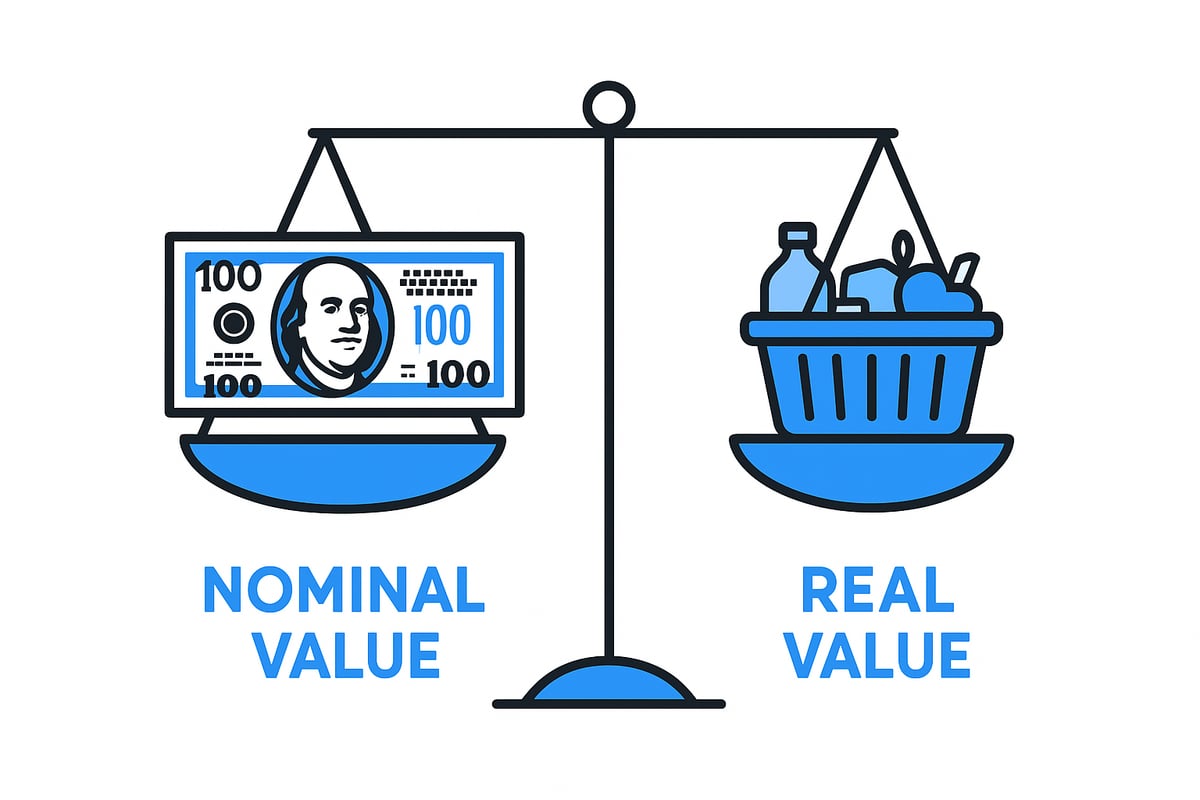
Nominal value refers to the stated value of money or an asset, but real value goes deeper. Real value adjusts the nominal value for inflation, reflecting what your money can actually buy. For example, $100 in 2000 had much more purchasing power than $100 in 2026.
To calculate real value, economists use price indices such as the Consumer Price Index (CPI). This adjustment helps you see the true economic impact of your investments or savings. Real value is crucial for comparing financial figures across different time periods. For a detailed definition of nominal value and its applications, see the Nominal Value Definition by AccountingTools.
Comparing Nominal and Real Value in Practice
Comparing nominal value to real value is vital in finance. Investment returns are often quoted in nominal terms, but real returns show what you earn after inflation. The same applies to wages: a nominal salary increase may not translate to higher real income if inflation is high.
| Aspect | Nominal Value | Real Value |
|---|---|---|
| Investment Returns | Stated interest or gain | Adjusted for inflation |
| Wages | Gross salary | Purchasing power after inflation |
| GDP | Unadjusted output | Output adjusted for price changes |
According to World Bank data, real GDP is often used to measure economic growth across years. In turbulent markets, relying solely on nominal figures can lead to misguided decisions.
How Inflation Impacts Nominal Value
Inflation directly affects nominal value by eroding purchasing power. If you hold a bond with a nominal value of $1,000 and inflation averages 4% per year, the real value of your bond decreases over time.
On average, global inflation rates have hovered between 3% and 5% annually in recent years. This means that the same nominal value buys fewer goods and services each year. Investors who ignore inflation risk overestimating their true returns. That is why inflation-adjusted analysis is critical when assessing nominal value.
When to Use Nominal vs. Real Value
Nominal value is typically sufficient for short-term transactions or immediate financial reporting. However, for long-term planning such as retirement or major investments, real value gives a clearer picture.
Regulations in many regions require companies to disclose both nominal and real values in annual reports. For example, pension planning relies on real projections to ensure future needs are met. The context of your financial decision will determine which value is more relevant.
Common Misconceptions and Pitfalls
Many people mistake nominal gains for real gains, especially during high inflation. For instance, if your investment grows by 5% nominally but inflation is 6%, your real return is negative.
Media often reports figures in nominal terms, which can mislead the public. Investors sometimes confuse face value with market value, leading to poor decisions. Financial education is key to avoiding these pitfalls and properly interpreting nominal value in various contexts.
Nominal Value in Stocks, Bonds, and Financial Instruments
Grasping nominal value is essential for anyone analyzing stocks, bonds, or financial instruments in today’s markets. The nominal value serves as the backbone for pricing, accounting, and legal considerations, giving investors a reference point as they navigate financial statements and contracts.

Nominal Value in Stocks
In equity markets, nominal value is often called par value. This is the minimum price a share can be issued for, set during incorporation. While the nominal value rarely reflects the actual market price, it holds legal significance for corporate accounting and shareholder rights.
For example, many tech companies set a nominal value of just $0.01 per share, despite their stock trading at much higher prices. The gap between nominal and market value is common. According to S&P 500 data, most firms now use a low par value, making it largely symbolic. Historically, nominal value protected creditors by ensuring shares weren’t issued below this base price.
To dive deeper into this topic, see Par Value of Shares Explained.
Nominal Value in Bonds
Nominal value is central to the bond market, where it is also known as face value. This is the amount the bond issuer promises to repay at maturity, and it determines the bond’s coupon payments. For instance, a government bond with a $1,000 nominal value will pay interest based on that figure, regardless of its trading price.
Bonds often trade at a premium or discount to nominal value, depending on interest rates and credit risk. The global bond market’s size is measured using total nominal value outstanding, highlighting its foundational role in fixed-income investing. Investors rely on nominal value to assess payouts and redemption expectations.
Nominal Value in Currencies and Commodities
In the world of money and commodities, nominal value appears directly on coins and banknotes. This is the stamped number that tells you what the currency is worth in transactions. For commodities, contracts specify a nominal value that sets the quantity or worth at stake, such as in gold futures.
Currency devaluation can erode the real worth of a nominal value, but central banks continue to issue new currency with fixed nominal values. This standardization simplifies everyday transactions and cross-border commerce, even when underlying values fluctuate.
Accounting and Reporting of Nominal Value
Financial statements typically report assets and liabilities at their nominal value unless adjusted for inflation or impairment. This approach ensures consistency and comparability across reporting periods and companies. Regulatory bodies require disclosure of nominal value in prospectuses and on balance sheets.
For example, a company issuing bonds will show the nominal value in its liabilities, providing transparency for investors. Standards like IFRS and GAAP outline strict rules for presenting nominal value, reinforcing its role in financial analysis and corporate governance.
Real-World Examples and Case Studies
History offers many lessons about nominal value. During the inflation spikes of the 2020s, bondholders saw their nominal value redeemed, but real returns lagged behind inflation. Stock splits adjust nominal value per share, keeping total equity unchanged.
Emerging markets have faced currency redenominations, such as Zimbabwe’s nominal value collapse during hyperinflation. Despite these crises, bondholders in stable economies typically receive the full nominal value at maturity. These cases highlight why understanding nominal value is crucial for navigating both routine markets and financial upheaval.
The Role of Nominal Value in 2026 Finance: Trends and Innovations
In 2026, nominal value remains a key pillar in the fast-evolving world of finance. As markets become more complex, understanding how nominal value shapes trends and innovations is essential for investors, businesses, and financial professionals. This section explores the transformation of nominal value across digital assets, inflation-linked products, regulatory changes, technology, cross-border finance, and education. By staying informed about these developments, you can leverage nominal value for smarter, future-ready financial decisions.

The Evolving Importance of Nominal Value
Nominal value is evolving rapidly as digital assets become mainstream. In 2026, tokenized securities and stablecoins highlight nominal value as a reference for digital and traditional assets alike. Fintech platforms now display both nominal value and real-time market data, helping users track their holdings more transparently. For example, stablecoins pegged to the US dollar maintain a clear nominal value, bridging old and new financial systems. According to industry data, the number of digital assets with stated nominal value has surged, underscoring its continued relevance. For a deeper dive, see this Nominal Value Explanation by Study.com.
Nominal Value and Inflation-Linked Products
Nominal value plays a foundational role in the growing market for inflation-protected securities. Investors in 2026 are increasingly drawn to products like TIPS and ILBs, which adjust principal and payouts based on inflation. The nominal value of these bonds serves as the baseline for calculating real returns and inflation adjustments. For instance, new government issues often specify both nominal value and the mechanism for linking to inflation indices. Market data shows that demand for inflation-protected products has risen sharply as concerns over purchasing power persist. Understanding nominal value is crucial for evaluating these assets.
Regulatory and Reporting Changes in 2026
Regulatory bodies have responded to financial innovation by updating standards for nominal value disclosure. In 2026, new rules from organizations like the SEC and IFRS require clearer reporting of both nominal value and inflation-adjusted figures. For example, prospectuses and annual reports now present nominal value side by side with real value, increasing transparency for investors. Adoption rates for these standards are high, with firms adapting their reporting systems accordingly. These regulatory changes aim to help analysts and investors make more informed decisions, emphasizing the critical role of nominal value in compliance and communication.
Nominal Value in Financial Technology and AI
Fintech and AI-driven platforms are transforming how nominal value is presented and understood. In 2026, most robo-advisors and investment apps calculate and display both nominal value and real value for user portfolios. Real-time updates ensure that investors see accurate nominal value figures, even as markets fluctuate. For example, portfolio allocation tools use nominal value as a starting point for risk and return analysis. Data from the fintech sector shows that a growing percentage of apps now offer nominal value tracking, which reduces confusion and empowers users to make data-driven decisions.
Nominal Value in Cross-Border Finance
As financial markets globalize, nominal value faces new challenges and opportunities in cross-border transactions. Currency exchange rates, purchasing power parity, and international bond issuance all rely on standardized nominal value reporting. For instance, Eurobonds often have nominal value denominated in US dollars for consistency. In 2026, the volume of cross-border instruments referencing nominal value continues to grow, requiring harmonization among regulators and market participants. Understanding nominal value in a global context is vital for navigating currency risk and ensuring accurate financial analysis.
Educational and Analytical Tools for Understanding Nominal Value
Financial literacy initiatives have expanded in 2026 to address confusion around nominal value. Universities and online platforms now offer updated courses covering the practical uses and implications of nominal value in modern finance. Interactive dashboards and analytical tools help users visualize differences between nominal value and real value. For example, curriculum updates ensure that finance students are prepared for the complexities of today’s markets. Data shows a significant rise in online searches and course enrollments about nominal value, reflecting its enduring importance and the growing need for clear, accessible education.
How to Analyze and Use Nominal Value in Investment Decisions (2026 Edition)
Making informed investment decisions in 2026 requires more than just tracking prices. Understanding how to analyze and apply nominal value in your strategies is essential for clarity and risk management. Here is a step-by-step guide to help you leverage nominal value in your financial planning and investment analysis.
Step 1: Identify the Nominal Value
Begin by locating the nominal value in the relevant financial documents. This could be the face value on a bond certificate, the par value on a stock, or the stated amount in a contract. For bonds, the nominal value often appears on the front page of the prospectus or certificate.
For a deeper understanding, consult resources like the Nominal Value Definition by Banco de España, which explains how nominal value is determined for debt securities. Identifying nominal value is the foundation for all further analysis and helps you avoid misinterpreting investment structures.
Step 2: Assess Market and Real Value
After identifying the nominal value, compare it to the current market value and adjust for inflation to find the real value. Market value reflects what buyers are willing to pay today, while real value accounts for changes in purchasing power.
For example, to calculate the real yield on a bond, subtract the inflation rate from the nominal interest rate. You can also reference the Understanding Face Value in Finance guide to clarify how face value relates to nominal value in bond analysis. This step ensures you consider both static and dynamic measures in your investment evaluation.
Step 3: Evaluate Risks Associated with Nominal Value
Nominal value is not immune to risk. Inflation can erode its purchasing power, and credit risk can affect whether the issuer will repay the full amount at maturity. Always assess the economic environment and the issuer’s financial health.
Consider sovereign bonds in emerging markets, where default rates may be higher. Reviewing historical data on defaults and inflation can help you gauge the likelihood of recovering the nominal value. Recognizing these risks is crucial for building a resilient portfolio.
Step 4: Consider Nominal Value in Portfolio Diversification
Diversification should include a mix of nominal value assets and those that protect against inflation, such as Treasury Inflation-Protected Securities (TIPS). Balancing traditional bonds with inflation-linked products can help safeguard your real wealth over time.
Look at current portfolio allocation trends to see how investors are managing exposure to nominal value risk. Allocating assets with different nominal and real value dynamics limits vulnerability to market shifts and inflationary pressures.
Step 5: Monitor Regulatory and Market Developments
Stay informed about new regulations, disclosure standards, and financial products affecting nominal value. Fintech platforms increasingly offer real-time tracking of nominal value, making it easier for investors to stay updated.
Regulatory updates may change how nominal value is reported or disclosed, influencing investment decisions. Adapting your strategies to these shifts ensures your analysis remains accurate and compliant with evolving standards.
Step 6: Apply Nominal Value Insights to Financial Planning
Integrate nominal value into your long-term financial planning by forecasting future cash flows and adjusting for inflation. Use retirement calculators to model both real and nominal projections, ensuring your plans account for potential changes in purchasing power.
Adoption rates of financial planning software are rising, making it easier to incorporate nominal value into your forecasts. Remember, nominal value provides a starting point, but combining it with real value analysis leads to more comprehensive and reliable financial strategies.
As we’ve explored, understanding nominal value is essential for navigating the complexities of 2026’s financial landscape—from making sense of market trends to planning smarter investments. If you’re eager to see these concepts come alive and want to explore how history shapes today’s markets, I invite you to experience our evolving platform first hand. You’ll gain access to interactive charts, AI-powered insights, and original news that provide the context you need to make informed decisions. Ready to help shape the future of financial analysis? Join Our Beta and be part of something truly unique.