
Understanding Impairment in Financial Reporting
Understanding how businesses recognize and report losses on their assets provides critical insights into corporate health and broader economic conditions. In accounting and financial reporting, impairment represents a permanent reduction in the value of an asset below its carrying amount on a company's balance sheet. This concept has shaped countless market events throughout history, from the banking crisis of 2008 to the telecommunications bubble of the early 2000s, making it essential knowledge for anyone studying historical market movements and corporate financial decisions.
The Accounting Foundation of Asset Impairment
Impairment occurs when a company determines that an asset's recoverable amount falls below its book value, requiring an immediate write-down to reflect current economic reality. This principle applies across various asset categories including property, equipment, investments, and intangible assets like goodwill or patents.
The accounting standards governing impairment recognition ensure that companies present accurate financial positions to investors and stakeholders. Under Generally Accepted Accounting Principles (GAAP) and International Financial Reporting Standards (IFRS), businesses must regularly test certain assets for impairment indicators and record losses when appropriate. These standards evolved significantly after major corporate scandals in the early 2000s revealed how companies manipulated asset values to inflate earnings.
Historical Development of Impairment Standards
The modern framework for impairment accounting emerged from lessons learned during major financial crises. Before the Enron scandal and subsequent reforms, companies enjoyed considerable discretion in timing and measuring asset write-downs. The Sarbanes-Oxley Act of 2002 and subsequent accounting standard updates tightened these requirements dramatically.
Key milestones in impairment accounting include:
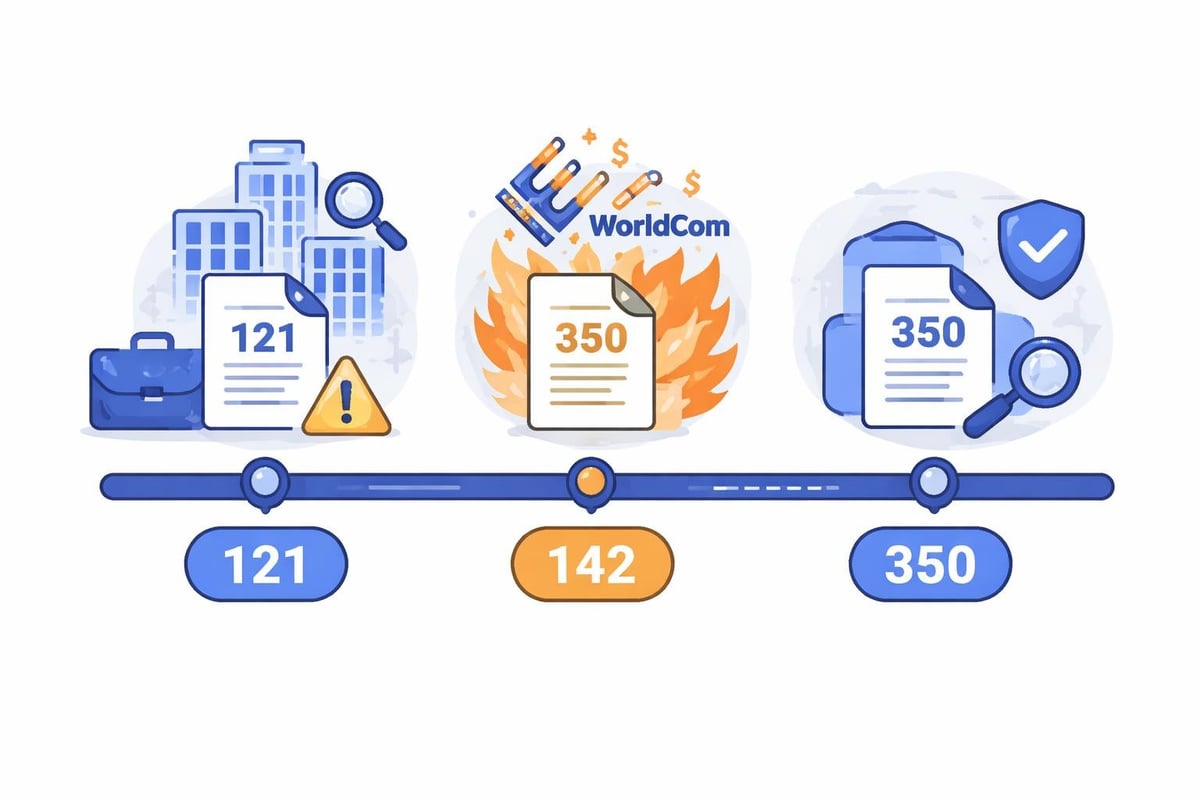
- Statement of Financial Accounting Standards No. 121 (1995): Established initial impairment recognition rules for long-lived assets
- SFAS 142 (2001): Introduced annual goodwill impairment testing requirements
- SFAS 144 (2001): Consolidated and replaced earlier standards with comprehensive impairment guidance
- ASC 350 (post-2009): Current codification covering intangible asset impairment under GAAP
These regulatory changes fundamentally altered how companies report asset values, creating more transparent financial statements but also introducing complexity that continues to challenge analysts today.
Types of Impairment in Corporate Finance
Asset impairment manifests in several distinct forms, each with unique triggers and measurement approaches. Understanding these categories helps investors identify warning signs in financial statements and recognize broader industry trends.
Goodwill Impairment
Goodwill represents the premium paid during acquisitions above the fair value of identifiable assets. When acquisition targets fail to generate expected returns, companies must recognize goodwill impairment. The dot-com crash of 2000-2002 produced massive goodwill write-downs as telecommunications and internet companies acknowledged overpayment for acquisitions made during the bubble.
Time Warner's $99 billion goodwill impairment charge in 2002, related to the AOL merger, stands as one of history's largest such write-downs. This single entry demonstrated how fundamental analysis must account for intangible asset risks when evaluating corporate combinations.
Fixed Asset Impairment
Manufacturing facilities, real estate holdings, and equipment require impairment testing when indicators suggest carrying values exceed recoverable amounts. The 2008 financial crisis triggered widespread fixed asset impairments across industries, particularly in banking, automotive, and real estate sectors.
| Asset Category | Common Impairment Triggers | Historical Example |
|---|---|---|
| Real Estate | Market value decline, vacancy rates | Commercial property write-downs 2008-2010 |
| Manufacturing Equipment | Technological obsolescence, demand shifts | Steel industry impairments 1980s |
| Oil & Gas Properties | Commodity price collapse | Energy sector write-downs 2014-2016 |
| Retail Locations | Consumer behavior changes | Department store closures 2017-2020 |
Investment Impairment
Companies holding equity securities, bonds, or other financial instruments must assess whether declines in value represent temporary fluctuations or permanent impairment requiring recognition. The distinction between temporary and other-than-temporary impairment proved particularly contentious during the 2008 financial crisis, when regulators temporarily suspended mark-to-market accounting rules to prevent cascading write-downs.
Financial institutions faced systematic pressure to recognize impairment on asset-backed securities as mortgage defaults accelerated. These forced recognitions revealed interconnected risks throughout the financial system, demonstrating how impairment accounting serves as an early warning mechanism for systemic problems.
Impairment Testing Methodology and Triggers
Companies don't test assets for impairment continuously. Instead, accounting standards identify specific triggers requiring formal impairment assessments. Recognizing these indicators helps investors anticipate potential write-downs before they appear in financial statements.
Impairment Indicators
Observable factors suggesting potential impairment include:
- Significant market value declines exceeding temporary fluctuations
- Adverse business climate changes affecting asset utility
- Legal or regulatory developments limiting asset use
- Accumulated costs exceeding original acquisition estimates
- Operating or cash flow losses associated with specific assets
- Technological advancements rendering assets obsolete
The technology sector regularly experiences impairment from obsolescence, as product lifecycles shorten and innovation accelerates. Historical examples include telecommunications equipment impairments following the fiber optic overbuild of the late 1990s, when companies installed far more network capacity than market demand justified.
The Impairment Test Process
When indicators suggest potential impairment, companies follow a structured testing process:
Step One: Compare the asset's carrying amount to its undiscounted future cash flows. If carrying amount exceeds undiscounted cash flows, impairment exists and measurement proceeds to step two.
Step Two: Measure impairment as the difference between carrying amount and fair value. Fair value typically represents the price that would be received in an orderly transaction between market participants.
This two-step approach prevents premature impairment recognition while ensuring material value declines receive appropriate accounting treatment. The methodology's reliance on management estimates creates opportunities for earnings manipulation, though external auditors and regulatory oversight provide counterbalancing scrutiny.

Historical Market Events Driven by Impairment Recognition
Examining past market crises through the lens of impairment reveals how accounting recognition reflects and sometimes accelerates economic downturns. These historical episodes demonstrate why understanding impairment matters for interpreting market movements.
The Savings and Loan Crisis (1986-1995)
The S&L crisis exemplified how delayed impairment recognition exacerbates financial instability. Savings and loan institutions held real estate loans at historical cost long after market values collapsed, avoiding impairment charges that would have revealed insolvency. Regulatory forbearance allowed institutions to defer recognizing losses, ultimately increasing taxpayer bailout costs when the crisis reached its peak.
This episode influenced subsequent accounting reforms requiring more timely loss recognition, particularly for financial institutions. The concept of non-performing loans gained prominence as regulators sought earlier warning signals of institutional distress.
The Dot-Com Collapse and Goodwill Impairments
The telecommunications and internet bubble of 1998-2000 generated unprecedented merger activity at inflated valuations. As the bubble burst, companies faced billions in goodwill impairment charges. AOL Time Warner, Global Crossing, WorldCom, and numerous internet companies recorded massive write-downs acknowledging acquisition overpayments.
These impairments revealed the extent to which market valuations had divorced from underlying economic fundamentals. Companies that aggressively pursued growth through acquisition during the bubble spent years recovering from impairment-driven balance sheet damage. The value investing approach gained renewed attention as investors sought companies with tangible assets supporting valuations.
The 2008 Financial Crisis and Banking Sector Impairments
The subprime mortgage crisis forced financial institutions to recognize trillions in asset impairments on mortgage-backed securities, commercial real estate, and loan portfolios. The scale and speed of these write-downs threatened the stability of the global financial system.
Banks struggled to measure fair values for assets lacking active markets, creating uncertainty about institutional solvency. The Financial Accounting Standards Board temporarily relaxed fair value measurement requirements, acknowledging that forced liquidation values didn't reflect assets' economic substance during the crisis.
Major banking impairments included:
- Citigroup: $40+ billion in credit-related write-downs (2007-2008)
- Bank of America: $50+ billion including Countrywide and Merrill Lynch acquisitions
- Royal Bank of Scotland: £28 billion ($50+ billion) leading to government rescue
- UBS: $38 billion in subprime-related losses
These recognitions validated concerns about leverage and risk management throughout the financial sector, demonstrating how impairment accounting provides transparency into institutional health during periods of stress.
Impairment's Impact on Financial Ratios and Analysis
Asset impairment charges significantly affect financial metrics investors use to evaluate companies. Understanding these impacts helps analysts separate operational performance from accounting adjustments when studying historical market data.
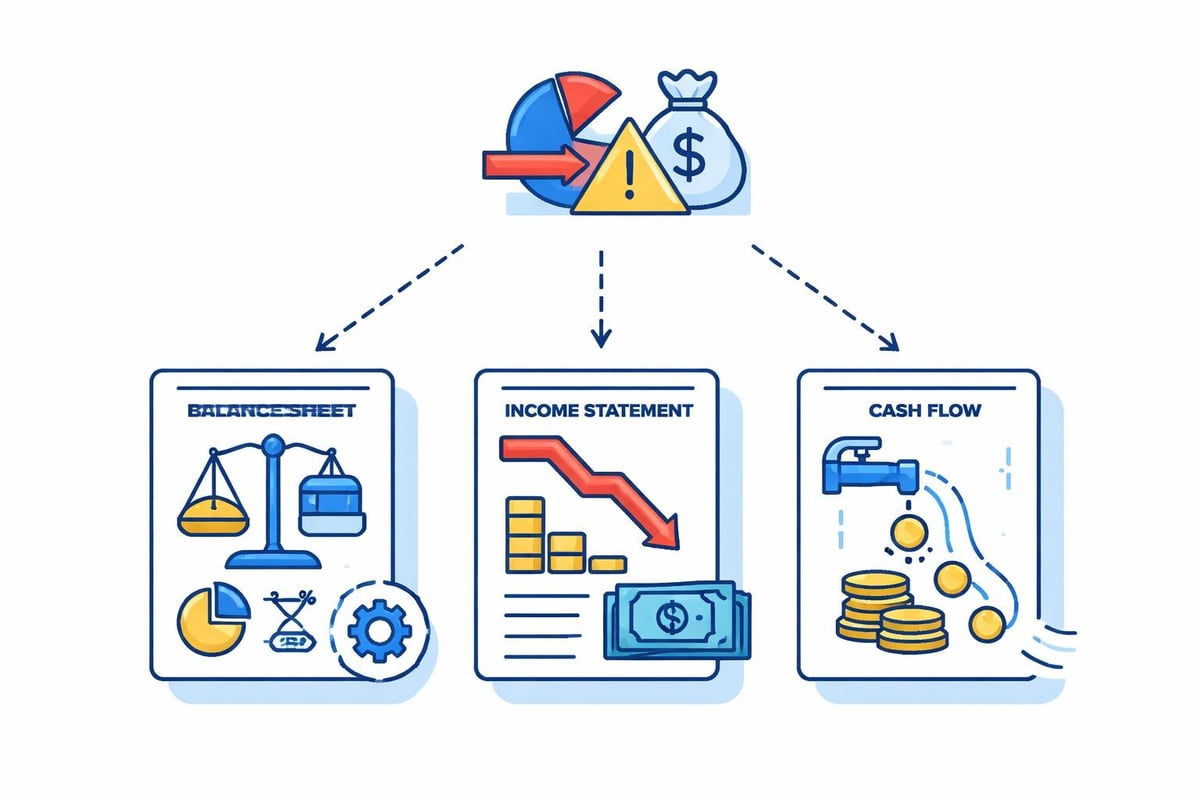
Balance Sheet Effects
Impairment immediately reduces both asset values and shareholders' equity. This deterioration affects critical financial ratios:
| Ratio | Impairment Impact | Analytical Consideration |
|---|---|---|
| Debt-to-Equity | Increases (equity declines) | Leverage appears higher; covenant violations possible |
| Book Value Per Share | Decreases | Share price to book value ratios affected |
| Return on Assets | Mixed (lower denominator, but income reduced) | Historical comparisons distorted |
| Tangible Asset Coverage | Decreases | Secured lending capacity reduced |
Companies experiencing significant impairment often face restricted access to credit markets as leverage ratios deteriorate and asset coverage declines. This secondary effect can trigger going concern questions and accelerate financial distress.
Income Statement Considerations
While impairment charges appear as losses on income statements, most companies report them as special or non-recurring items. This classification allows analysts to distinguish between operational performance and asset write-downs, though questions arise when companies repeatedly recognize "non-recurring" impairments.
The treatment affects key profitability metrics differently. EBIT and operating margins typically exclude impairment, while net income fully reflects these charges. Investors studying historical financial performance must understand which metrics include impairment to make meaningful comparisons across periods and companies.
Cash Flow Statement Neutrality
Impairment represents a non-cash charge, so companies add it back when calculating operating cash flow using the indirect method. This treatment means that while impairment reduces reported earnings, it doesn't affect actual cash generation. However, impairment often signals operational problems that will eventually impact cash flows through reduced revenue or increased restructuring costs.
Historical analysis reveals that companies recognizing major impairments frequently experience subsequent cash flow deterioration, suggesting impairment serves as a leading indicator of fundamental business challenges rather than merely an accounting adjustment.
Industry-Specific Impairment Patterns
Different industries exhibit characteristic impairment patterns reflecting their unique business models and economic exposures. Recognizing these patterns helps investors anticipate potential write-downs when analyzing historical market sectors.
Energy and Natural Resources
Oil, gas, and mining companies carry extensive property holdings valued based on commodity price assumptions. When prices collapse, as occurred in 1986, 1998, and 2014-2016, these companies recognize massive impairment charges as reserve values decline below carrying amounts.
The energy sector's capital-intensive nature means capital expenditure decisions made during high-price periods create impairment exposure when markets weaken. Companies that aggressively expanded during boom periods consistently report larger subsequent impairments than conservative operators.
Technology and Telecommunications
Rapid innovation drives technological obsolescence, creating continuous impairment pressure on equipment and intellectual property. The telecommunications sector experienced this acutely following deregulation and the fiber optic buildout of the late 1990s, when overcapacity triggered billions in network asset impairments.
Software and technology companies face goodwill impairment risks from acquisitions, particularly when purchasing early-stage companies at premium valuations based on growth projections that fail to materialize. Historical analysis shows that technology sector acquisition premiums correlate strongly with subsequent impairment frequency.
Retail and Consumer Goods
The retail sector's impairment patterns shifted dramatically with e-commerce disruption. Traditional retailers recognized increasing fixed asset impairment on store locations as consumer behavior changed. Department stores and shopping mall operators faced systematic impairment pressures beginning in the mid-2010s, with accelerating write-downs through 2020.
Consumer goods companies experience impairment primarily through goodwill and brand intangibles when acquired businesses underperform. The industry's brand-focused business model creates substantial intangible assets vulnerable to consumer preference shifts and competitive disruption.
Financial Services
Banks and financial institutions face unique impairment considerations around loan portfolios and investment securities. Regulatory frameworks govern impairment recognition timing and measurement, with standards evolving substantially since the 2008 crisis.
The Current Expected Credit Loss (CECL) model implemented in 2020 fundamentally changed how banks recognize loan impairment, requiring earlier loss recognition based on expected rather than incurred losses. This shift aimed to prevent delayed impairment recognition that characterized the 2008 crisis.
Regulatory and Legal Aspects of Impairment
Beyond accounting standards, various regulatory and legal frameworks govern impairment recognition and disclosure. Understanding these requirements provides context for historical corporate behavior and market reactions.
Securities and Exchange Commission Oversight
The SEC scrutinizes impairment decisions for potential manipulation or delayed recognition. Companies face enforcement action when impairment timing appears designed to manage earnings or avoid covenant violations. Historical SEC enforcement cases reveal patterns where companies:
- Delayed recognizing obvious impairment to meet earnings targets
- Bundled multiple impairments in single periods to clear balance sheets
- Manipulated valuation assumptions to minimize required write-downs
- Failed to disclose impairment risks in risk factor discussions
These enforcement actions demonstrate regulatory commitment to transparent impairment reporting, though concerns persist about management discretion in timing and measurement.
Tax Implications
Tax treatment of impairment often differs from financial reporting, creating deferred tax considerations. While companies recognize impairment immediately for financial reporting, tax authorities may not allow corresponding deductions until assets are sold or abandoned. This timing difference generates deferred tax assets that themselves require evaluation for potential impairment.
Historical tax law changes affecting impairment deductibility have influenced corporate restructuring decisions. Companies sometimes accelerate asset dispositions to realize tax benefits from write-downs, particularly when tax rates are changing.
International Variations
While U.S. GAAP and IFRS converge on many impairment principles, significant differences remain. IFRS permits impairment reversal under certain circumstances, while U.S. GAAP prohibits reversing most impairment charges. This divergence affects international companies and creates comparability challenges for investors analyzing global markets.
Historical analysis of multinational corporations reveals how companies sometimes structure transactions to take advantage of favorable impairment treatment under specific jurisdictions' accounting rules, though convergence efforts continue reducing these opportunities.
Impairment as an Economic Indicator
Aggregate impairment data provides valuable insights into economic conditions and market sentiment. Tracking impairment trends across sectors reveals emerging problems before they fully manifest in stock prices or economic statistics.
Leading vs. Lagging Characteristics
Impairment exhibits both leading and lagging indicator properties. It lags the underlying economic deterioration causing value declines, as companies test and recognize impairment after problems emerge. However, impairment leads stock market recognition of problems in some cases, particularly when management possesses information not yet incorporated into market prices.
Historical analysis shows impairment clusters preceding broader market corrections in certain circumstances. The telecommunications sector's escalating impairments in 2001-2002 signaled deeper industry problems than market participants initially recognized, with stock prices continuing to decline as the full scale of overcapacity became apparent.
Sector Rotation and Impairment Patterns
Systematic impairment patterns across industries suggest economic transitions worth monitoring. When specific sectors begin reporting widespread impairment, it often signals structural rather than cyclical challenges requiring portfolio repositioning.
The manufacturing sector's impairment wave during the early 1980s reflected fundamental shifts toward service-based economies in developed markets. Investors who recognized these patterns as permanent transitions rather than temporary downturns adjusted portfolios accordingly, avoiding prolonged underperformance in declining industries.
Understanding impairment provides essential context for interpreting corporate financial health and identifying market turning points throughout history. By examining how companies recognize and report asset write-downs across different economic cycles, investors gain insights into management quality, industry dynamics, and systemic risks that influence long-term returns. Historic Financial News helps investors explore these patterns through interactive historical market data and AI-powered analysis, enabling deeper understanding of how impairment and other financial concepts shaped market events and continue influencing investment decisions today.