
LIFO Guide: Mastering Last-In First-Out in 2026
Unlock the power of smarter inventory management and financial strategy as you prepare for 2026. The lifo method can be your key to maximizing profit, optimizing tax outcomes, and gaining a competitive edge.
This guide demystifies lifo, giving you the actionable knowledge needed for confident accounting, informed tax planning, and strategic business decisions.
Explore the essentials: master lifo fundamentals, apply step-by-step techniques, review real-world examples, compare lifo vs. fifo, and stay current with regulatory updates and best practices. Take control of your inventory and financial results with up-to-date, expert guidance.
Understanding LIFO: The Fundamentals
Unlocking the essentials of lifo is crucial for any business leader or accountant aiming to optimize inventory management and financial reporting. This section provides a comprehensive look into what lifo is, why companies choose it, how the landscape is evolving, and the key terminology every professional should know.

What is LIFO?
LIFO, or Last-In First-Out, is an inventory valuation method where the most recently purchased goods are expensed first when calculating cost of goods sold. This approach means that the latest inventory costs flow through to the income statement before older costs do. Historically, lifo gained traction in the United States during periods of inflation, as it allowed companies to match current costs against current revenues.
Unlike FIFO (First-In First-Out), which assumes the oldest inventory is sold first, lifo focuses on expensing the latest acquisitions. The average cost method, by contrast, spreads costs evenly across all inventory units. Industries like manufacturing, retail, and distribution commonly use lifo, especially when prices are rising and inventory turnover is high.
For a practical illustration, consider a retailer who purchases inventory in batches at different prices. Using lifo, the cost attributed to sales reflects the newest batch prices. In fact, lifo remains prevalent in U.S. companies, with around 15 to 20 percent of large firms still relying on it. For more on how lifo affects inventory on financial statements, see this Inventory on the Balance Sheet resource.
Why Businesses Choose LIFO
Businesses select lifo primarily to minimize taxable income during inflationary times. When costs are climbing, lifo increases the cost of goods sold, which reduces reported net income and thus lowers income taxes. This tax advantage is a main driver for lifo adoption.
LIFO also impacts how inventory is valued on the balance sheet. The remaining inventory reflects older, often lower, costs, which can understate asset values compared to FIFO. While lifo does not always align with the physical flow of goods, it offers flexibility for certain industries dealing with fluctuating prices.
Manufacturing and retail sectors often see the greatest benefit, especially when raw materials or merchandise prices are volatile. According to industry reports, lifo adoption is more common among larger organizations that prioritize tax strategy and financial reporting flexibility.
LIFO in the Modern Business Landscape
As we approach 2026, lifo usage continues to evolve. Global supply chain disruptions and persistent inflation have renewed interest in lifo for its tax and cash flow benefits. At the same time, advances in digital inventory management systems make tracking lifo layers more efficient and accurate.
Regulatory environments are also shaping lifo adoption. While U.S. GAAP permits lifo, international standards like IFRS prohibit it. This has led some multinational firms to reconsider their inventory strategies. Post-pandemic shifts have highlighted the importance of resilient inventory practices, with recent accounting surveys showing a modest uptick in lifo interest among sectors facing cost volatility.
Key Terms and Concepts
To master lifo, it is essential to understand several foundational terms:
- Cost of Goods Sold (COGS): The direct costs attributed to goods sold using the lifo method.
- Inventory Layers: Separate batches of inventory recorded at their historical costs.
- LIFO Reserve: The difference between lifo and FIFO inventory valuations, disclosed in financial statements.
- LIFO Liquidation: Occurs when older inventory layers are drawn down, often leading to higher taxable income.
- LIFO Conformity Rule: Requires businesses using lifo for tax to also use it for financial reporting.
- GAAP vs. IFRS: LIFO is allowed under GAAP but prohibited under IFRS.
For example, a lifo reserve is calculated by subtracting lifo inventory from the FIFO value, providing transparency for analysts and regulators. According to recent surveys, these terms are commonly referenced in accounting resources like Wikipedia and CFI, underscoring their importance for anyone working with lifo.
Step-by-Step: How to Apply LIFO in 2026
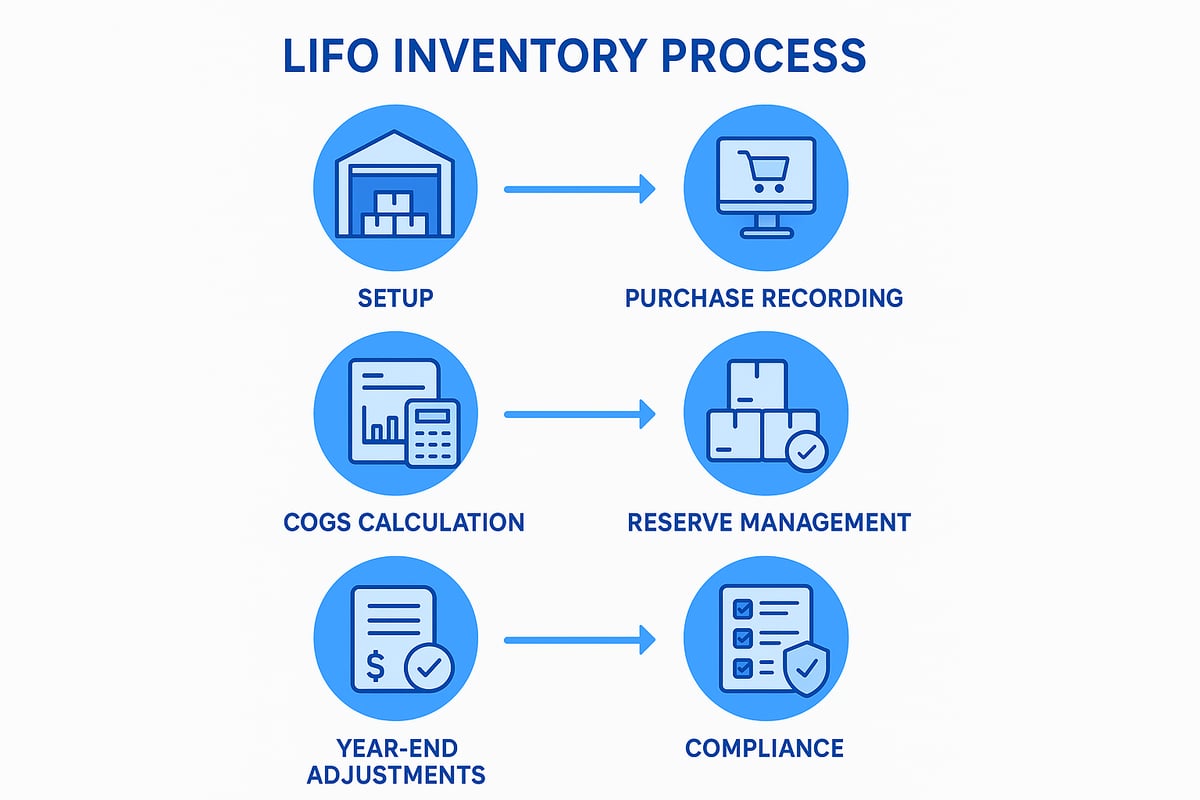
Applying the lifo method in 2026 involves a structured process, from setup to compliance. Each step is crucial for accurate inventory valuation, tax efficiency, and regulatory alignment. Let’s break down the key phases to ensure your business leverages lifo effectively.
1. Setting Up for LIFO
Begin by evaluating if lifo aligns with your business model. Consider if your inventory costs fluctuate and if minimizing taxable income during inflation is a priority.
You will need accounting systems that support lifo, such as ERP or specialized inventory management software. Ensure these platforms can track inventory layers and provide detailed audit trails.
Document your inventory processes thoroughly. Accurate tracking of purchase dates and costs is vital. Meet regulatory prerequisites, particularly GAAP compliance, as lifo is not permitted under IFRS.
For example, many cloud-based accounting solutions now offer lifo modules, making setup more accessible for businesses of various sizes. Small and mid-sized firms are increasingly adopting lifo as digital tools simplify compliance.
2. Recording Inventory Purchases
In lifo, every inventory purchase is recorded as a separate layer, with its own cost and acquisition date. This chronological layering is essential for accurate cost flow.
For each purchase, note the quantity, unit cost, and total amount. Adjust these records for any returns or discounts to maintain precise data.
A typical purchase journal entry in a lifo system might look like this:
Inventory (Product X)    $5,000
   Accounts Payable         $5,000
Purchase entries can occur daily or weekly, depending on your transaction volume. Consistent recording ensures lifo calculations remain reliable and audit-ready.
3. Determining COGS with LIFO
When you sell inventory, lifo requires you to expense the most recently acquired goods first. This means your cost of goods sold (COGS) reflects the latest purchase prices, which can affect reported profit during inflation.
To calculate COGS for each sale, remove quantities from the newest inventory layers first. If a sale depletes only part of a layer, adjust the remaining quantity and cost accordingly. For detailed examples and further explanation of COGS calculations under lifo, refer to this Cost of Goods Sold overview.
Accurate lifo COGS calculations are critical, as they directly impact your gross profit and taxable income.
4. Managing LIFO Reserves and Liquidations
The lifo reserve represents the difference between inventory valued under lifo and under FIFO or average cost. Calculate and report this reserve annually, as it affects your financial disclosures.
LIFO liquidation occurs when inventory levels fall below previous years, causing older, lower-cost layers to be recognized as COGS. This can temporarily boost net income and increase tax liabilities.
For example, a retailer reducing inventory during a slow season may trigger lifo liquidation, requiring a note in the financial statements. Recent industry reports show lifo liquidations have become more common during supply chain disruptions.
5. Year-End Adjustments and Reporting
At year-end, conduct a physical inventory count and reconcile records with your lifo layers. Adjust for shrinkage, spoilage, or write-downs as needed.
Update your inventory layers to reflect actual quantities and costs. Report lifo values on your balance sheet and income statement, ensuring all disclosures are complete.
A typical year-end adjustment entry might look like:
Loss on Inventory Write-Down    $1,200
   Inventory (LIFO)                 $1,200
Common errors include miscounting layers or omitting adjustments, which can lead to audit findings.
6. Compliance and Documentation Best Practices
Maintaining comprehensive documentation is essential for lifo compliance. Keep audit trails for all calculations, including purchase records, COGS computations, and reserve adjustments.
Meet all regulatory and tax authority requirements by updating your internal controls regularly. Use checklists to ensure every lifo process is documented and verifiable.
For example, a lifo documentation checklist should include inventory purchase logs, layer tracking sheets, reserve calculations, and copies of year-end disclosures. Audit statistics indicate that well-documented lifo procedures significantly reduce the risk of errors and penalties.
LIFO in Action: Real-World Examples and Case Studies
Unlocking the strategic edge of lifo is best understood through real-world applications. From manufacturing plants to bustling retail chains, lifo shapes both financial outcomes and operational decisions. Let’s explore how lifo operates in practice, highlighting sector-specific scenarios, liquidation events, and critical lessons for 2026.

Manufacturing Sector
Manufacturers often rely on lifo to manage the impact of rising raw material costs. For example, an automotive company purchasing steel at fluctuating prices may use lifo to ensure recent, higher-cost inventory is expensed first. This approach reduces taxable income during inflationary cycles and presents a more conservative profit figure.
A real-world study on lifo distortions in the manufacturing industry reveals that lifo can distort reported income and liquidity ratios, especially when material prices surge. Key factors include:
- Frequent changes in input costs
- Need for accurate inventory layer tracking
- Impact on gross margin volatility
By applying lifo, manufacturers can better align cost of goods sold with current market conditions, but must remain vigilant about potential reporting complexities.
Retail and Wholesale
In retail and wholesale, lifo is particularly valuable during inflation. Large supermarket chains, for instance, may choose lifo to match recent purchase costs with current sales, protecting margins as supplier prices climb.
Consider a retailer comparing lifo and FIFO. Under lifo, the cost of goods sold increases, reducing net income but also lowering tax liabilities. This method supports aggressive pricing strategies and improved cash flow management. Retailers benefit from:
- Enhanced inventory turnover insights
- Flexibility in managing inventory layers
- Mitigation of taxable income spikes
However, lifo may not reflect the actual physical flow of goods, which is important for accurate financial disclosures.
LIFO Liquidation Scenarios
A lifo liquidation happens when current sales outpace new inventory purchases, forcing a company to dip into older, lower-cost inventory layers. This often occurs during supply chain disruptions or when firms intentionally reduce stock levels to free up cash.
For example, a retailer who reduces inventory below historical levels triggers a lifo liquidation, resulting in older, cheaper inventory being recognized as cost of goods sold. This can artificially boost reported profits and increase tax obligations for the year. Key triggers include:
- Inventory sell-downs during economic downturns
- Supply shortages impacting restocking
- Strategic inventory management to manage cash flow
Recognizing and disclosing lifo liquidation events is essential for transparent financial reporting.
Common Mistakes and Lessons Learned
Implementing lifo comes with challenges. Common mistakes include miscalculating inventory layers, failing to maintain a proper lifo reserve, and overlooking required disclosures. Regulatory penalties can arise if lifo calculations are not properly documented or if companies violate the lifo conformity rule.
A recent audit found that failure to reconcile lifo layers resulted in material misstatements, leading to fines and reputational damage. To avoid these pitfalls in 2026, organizations should:
- Regularly review inventory records for accuracy
- Train accounting teams on lifo best practices
- Use automated systems to track lifo layers
By learning from past errors, businesses can harness the full benefits of lifo while maintaining compliance.
LIFO vs. FIFO: A Comparative Analysis for 2026
Choosing the right inventory method can shape your company’s financial story. As businesses enter 2026, understanding the lifo and FIFO methods is more important than ever. Each approach impacts costs, profits, and balance sheets differently, influencing both day-to-day operations and long-term strategy.

Core Differences and Impact
LIFO, or Last-In First-Out, means the most recently acquired inventory is recognized as sold first. In contrast, FIFO, or First-In First-Out, assigns the oldest inventory to cost of goods sold. This fundamental difference leads to distinct financial outcomes.
For example, during periods of rising prices, lifo typically results in higher COGS and lower ending inventory values. FIFO, on the other hand, reports lower COGS and higher inventory values. This directly affects gross profit and net income. The Financial Statement fundamentals page offers a deeper look at how these methods shape financial disclosures. Here’s a quick comparison:
| Aspect | LIFO | FIFO |
|---|---|---|
| Expense Recognition | Newest inventory expensed | Oldest inventory expensed |
| Inventory Value | Lower in inflation | Higher in inflation |
| Net Income | Lower in inflation | Higher in inflation |
| Gross Profit | Lower | Higher |
The choice between lifo and FIFO directly influences key metrics and business perception.
Tax Implications and Financial Reporting
Tax strategy is a major driver in the lifo versus FIFO debate. In inflationary times, lifo usually produces higher COGS, reducing taxable income and offering potential tax savings. FIFO, conversely, may generate higher taxable income when prices are rising.
Under U.S. GAAP, companies using lifo must also comply with the lifo conformity rule, which means using lifo for both tax and financial reporting. For example, if a company’s COGS under lifo is $300,000 compared to $250,000 under FIFO, the $50,000 difference lowers reported profits and, consequently, tax liability. Businesses must report these differences clearly in their financial statements, ensuring transparency for stakeholders.
Strategic Considerations for Business Decision-Making
Choosing between lifo and FIFO is not just an accounting decision—it’s a strategic one. Industries facing frequent price increases, like manufacturing and retail, may benefit from lifo because it aligns reported costs with current market realities. However, FIFO can appeal to companies wanting to show stronger profits and higher asset values to investors.
Peer benchmarks and industry trends play a role. For example, a retailer might select lifo to manage tax exposure during inflation, while a manufacturer with stable input costs might favor FIFO. Understanding your sector’s common practices and the potential impact on financial ratios is critical for informed decision-making.
International Perspectives: IFRS vs. GAAP
LIFO is allowed under U.S. GAAP but is prohibited by IFRS. This divergence creates challenges for multinational firms. Companies with global operations may need to use FIFO or weighted average cost for international reporting, while maintaining lifo records for U.S. tax purposes.
A U.S. subsidiary of a European parent, for example, might report under lifo locally but must convert to FIFO for consolidated IFRS statements. In 2026, about 15% of large U.S. companies are affected by this dual reporting requirement, making compliance and consistency key priorities.
Pros and Cons Summary Table
To help decision-makers in 2026, here’s a quick reference table summarizing the pros and cons of each method:
| Factor | LIFO - Pros | LIFO - Cons | FIFO - Pros | FIFO - Cons |
|---|---|---|---|---|
| Tax Efficiency | Reduces taxes in inflation | Complexity, not IFRS | Simpler, IFRS compliant | Higher taxes in inflation |
| Financial Reporting | Lower profits, lower assets | Lower reported earnings | Higher profits, assets | Overstates profits in inflation |
| Compliance | GAAP only | Not accepted by IFRS | GAAP and IFRS | Less tax benefit |
| Complexity | More complex | Risk of errors | Easier to manage | Less flexible |
Both lifo and FIFO have unique advantages and drawbacks. The best choice depends on your business environment, goals, and regulatory context.
Regulatory, Tax, and Accounting Updates for 2026
Staying current with regulatory and tax changes is essential for any business using the lifo method. As we approach 2026, new standards and evolving technologies are shaping how companies manage inventory and report financials. Understanding these updates will help you safeguard compliance and optimize your accounting strategy.
Recent and Upcoming Regulatory Changes
In 2026, several important updates to U.S. GAAP and IRS rules are influencing lifo accounting. The Financial Accounting Standards Board (FASB) has issued clarifications on inventory disclosures, emphasizing transparency in lifo reserve reporting and reconciliation. State-level tax rules are also evolving, with a few states introducing stricter reporting deadlines for lifo users.
Key regulatory highlights for 2026:
- Enhanced disclosure requirements for lifo reserve adjustments
- Revised IRS guidance on lifo conformity and documentation
- New compliance deadlines in certain states
For a detailed historical perspective on these regulatory shifts, LIFO's Rise and Decline provides valuable context on how lifo regulation has evolved.
LIFO and Tax Reform: What to Watch
Tax reform discussions continue to impact lifo users, especially as policymakers debate changes to inventory valuation rules. In 2026, proposed legislation may affect how inflation adjustments are calculated, potentially altering the tax benefits associated with lifo. Businesses should monitor IRS updates closely, as new rules could change the treatment of lifo reserves or introduce new tax credits.
Scenario planning is vital. For example, a hypothetical tax reform could limit the deductibility of lifo reserves, directly impacting net income and cash flow. Current IRS guidance highlights the importance of accurate lifo recordkeeping to withstand audits and ensure compliance.
Staying proactive with tax advisors will help you adapt quickly as lifo tax rules evolve in 2026.
Technology and Automation in LIFO Accounting
Modern accounting software is transforming how companies apply lifo. In 2026, automation tools streamline lifo calculations, reduce manual errors, and simplify compliance. Leading platforms offer features like real-time inventory tracking, automated layer management, and integration with ERP systems.
Key benefits of lifo automation:
- Faster, more accurate lifo calculations
- Improved audit trails and documentation
- Seamless reporting for GAAP compliance
Adoption rates for automated lifo solutions are rising, especially among mid-sized and large enterprises. Evaluating new software capabilities should be a priority for businesses aiming to future-proof their lifo processes.
Industry-Specific Guidance for 2026
Each sector faces unique lifo challenges and opportunities. Manufacturers benefit from tailored lifo best practices, such as periodic inventory reviews and proactive reserve management. Retailers and distributors should prioritize digital inventory controls and frequent reconciliations.
Peer benchmarks show that industries with volatile input costs are most likely to maintain lifo adoption. For a deeper dive into how lifo and other inventory valuation methods affect financial metrics across different sectors, consult Inventory Valuation Methods Across Industries.
Industry leaders recommend regular training, scenario planning, and leveraging technology to stay ahead of regulatory and market changes impacting lifo in 2026.
Mastering LIFO: Best Practices and Expert Tips
Unlocking the full potential of lifo in 2026 requires more than just understanding the fundamentals. Implementing proven best practices and expert strategies can transform lifo from a compliance necessity into a tool for competitive advantage. Explore these actionable tips to ensure your lifo approach is robust, compliant, and future-ready.
Maximizing Tax Efficiency with LIFO
Leveraging lifo for tax efficiency is a powerful strategy, especially during inflationary cycles. By expensing the most recently acquired inventory first, businesses can report higher cost of goods sold, which often reduces taxable income. This approach is particularly effective when prices are rising, as it aligns reported expenses with current market realities.
Consider the following best practices:
- Regularly review inventory purchase patterns to optimize lifo benefits.
- Plan for potential lifo liquidation events to manage unexpected tax impacts.
- Coordinate with tax professionals to align lifo with broader financial goals.
For a deeper look at real-world tax impacts, review the Impact of LIFO in Fortune 500, which analyzes how major companies have used lifo to their financial advantage.
Strengthening Inventory Controls and Accuracy
Accurate inventory management is essential for lifo success. Implement robust controls to ensure inventory layers are tracked precisely, minimizing costly errors. Effective inventory controls safeguard against shrinkage and misstatements, protecting both profits and compliance.
Key steps include:
- Conducting regular physical inventory counts.
- Utilizing barcode systems or RFID technology for real-time tracking.
- Reconciling inventory records with accounting software frequently.
Explore how lifo fits into broader inventory strategies by reading about Working Capital and Inventory, which highlights the importance of efficient inventory turnover and cash flow management.
Navigating LIFO Liquidations and Financial Disclosures
Lifo liquidations can occur when inventory levels drop below previous years, releasing older, lower-cost layers. This can lead to a spike in taxable income, affecting financial statements and tax liabilities. Transparent disclosure is crucial for maintaining stakeholder trust and regulatory compliance.
To navigate these scenarios:
- Monitor inventory levels to anticipate potential lifo liquidation events.
- Prepare clear, concise disclosure notes for financial statements.
- Communicate proactively with auditors and investors about significant changes.
Properly managing lifo liquidations ensures companies avoid surprises at year-end and maintain credibility with stakeholders.
Training and Team Readiness
A well-trained team is the backbone of effective lifo implementation. Ongoing education helps staff stay current with evolving regulations, system updates, and best practices. Investing in professional development reduces errors and streamlines lifo processes.
Consider these training elements:
- Provide regular workshops on lifo calculations and compliance.
- Offer access to online courses and certifications.
- Develop internal resources, such as manuals and checklists, for reference.
Survey data consistently shows that organizations with robust lifo training programs experience fewer audit issues and more confident reporting.
Avoiding Common Pitfalls in LIFO Application
Applying lifo incorrectly can result in compliance risks, audit findings, and financial restatements. Common mistakes include inaccurate tracking of inventory layers, miscalculation of lifo reserves, and incomplete documentation.
To prevent these problems:
- Establish internal controls specifically for lifo processes.
- Perform periodic self-audits to catch errors early.
- Maintain detailed documentation for all lifo calculations and adjustments.
Learning from real-world audit cases demonstrates the value of vigilance and proactive error prevention in lifo management.
Future-Proofing Your LIFO Strategy for 2026 and Beyond
As regulations, technology, and supply chains evolve, so must your lifo strategy. Scenario planning and technology adoption can help businesses stay ahead of changes and minimize risk.
Best practices for future-proofing include:
- Embracing automation in lifo calculations and reporting.
- Staying informed about regulatory updates and industry trends.
- Developing contingency plans for supply chain disruptions.
By adopting a forward-looking approach, companies can ensure lifo remains a valuable asset in their financial toolkit, ready to meet the challenges of 2026 and beyond.
As you’ve discovered in this comprehensive LIFO guide, understanding how Last In First Out works can truly transform your approach to inventory management, financial reporting, and tax strategy for 2026. If you’re eager to see how historical market data and financial insights come together to empower smarter decisions, I encourage you to explore the unique tools and features we’re developing at Historic Financial News. By joining as a beta user, you’ll get hands on access to interactive charts, AI powered summaries, and in depth news coverage—all designed to deepen your understanding of financial history and trends.
Join as a Beta User