
Guarantee Guide: Everything You Need to Know in 2026
In 2026, a guarantee is more than just a buzzword—it is a vital part of everyday purchases, major business deals, and personal security. Yet, many people remain unsure about what a guarantee truly means in our modern world.
This guide is designed to clear up confusion by breaking down the guarantee concept, from its definitions and the different forms it takes, to the laws that protect you and the smartest ways to use one.
You will discover how guarantees differ from similar terms, the types you will encounter, your rights, and the steps to make every guarantee work for you. Let us separate fact from fiction and help you navigate guarantees with confidence.
What Is a Guarantee? Definitions and Core Concepts
Understanding a guarantee in 2026 means more than recalling a simple promise. Today, the guarantee has grown into a key concept across business, consumer rights, and digital services. Let’s break down what a guarantee truly represents, how its definition has evolved, and why it matters for trust and protection.

The Evolving Definition of Guarantee
A guarantee is best described as a formal assurance that certain requirements or standards will be met. In most cases, this means a written statement, but guarantees may also be verbal, especially in informal settings.
When we use guarantee as a noun, we refer to the promise itself, such as “This appliance comes with a three-year guarantee.” As a verb, it means to provide that assurance: “We guarantee your satisfaction.”
Let’s compare how two major dictionaries define guarantee in 2026:
| Source | Definition |
|---|---|
| Cambridge | “A formal promise, often in writing, that specific conditions will be met.” |
| Collins | “An assurance given by one party that another’s obligations will be fulfilled, especially in legal or commercial contexts.” |
The guarantee has expanded in recent years. It now covers not only physical products but also digital services, online subscriptions, and even performance outcomes. For example, digital platforms may offer “guaranteed results” or “buffer-free streaming.”
Common examples of a guarantee include:
- Money-back guarantees on products
- Service quality assurances (“Satisfaction guaranteed”)
- Repair or replacement promises
Synonyms and related terms help clarify the concept:
- Assurance
- Bond
- Pledge
- Undertaking
This broader meaning helps build trust between parties. Businesses rely on the guarantee to reassure consumers, while buyers use it as a measure of reliability and recourse. If you want to explore how regulations now shape the definition of guarantee, see the EU Consumer Law Update on Guarantees, which details the latest harmonized legal requirements in Europe.
Key Characteristics of Guarantees
Not all guarantees are created equal. Written guarantees carry more legal weight than verbal ones, especially when disputes arise. In most cases, only written guarantees are enforceable by law.
A guarantee is almost always time-bound. Common durations include 12 months, two years, or even a lifetime. You’ll often see phrases like “Guaranteed for three years” or “No guarantee of job placement.” These statements signal both the scope and the limits of the guarantee.
Most guarantees come with conditions and exclusions. For instance, you might need proof of purchase or must use the product as intended. Some guarantees do not cover commercial use or accidental damage.
Here’s how a guarantee stands apart from other commitments:
- A simple promise may lack legal force.
- Warranties are a type of guarantee but usually focus on repair or replacement.
- Guarantees often require specific actions to claim, such as registration or following set procedures.
In summary, the guarantee in 2026 is a formal, often written commitment that sets clear expectations and recourse for both parties. Its characteristics—time limits, conditions, and legal enforceability—distinguish it from ordinary promises or warranties.
Types of Guarantees in 2026
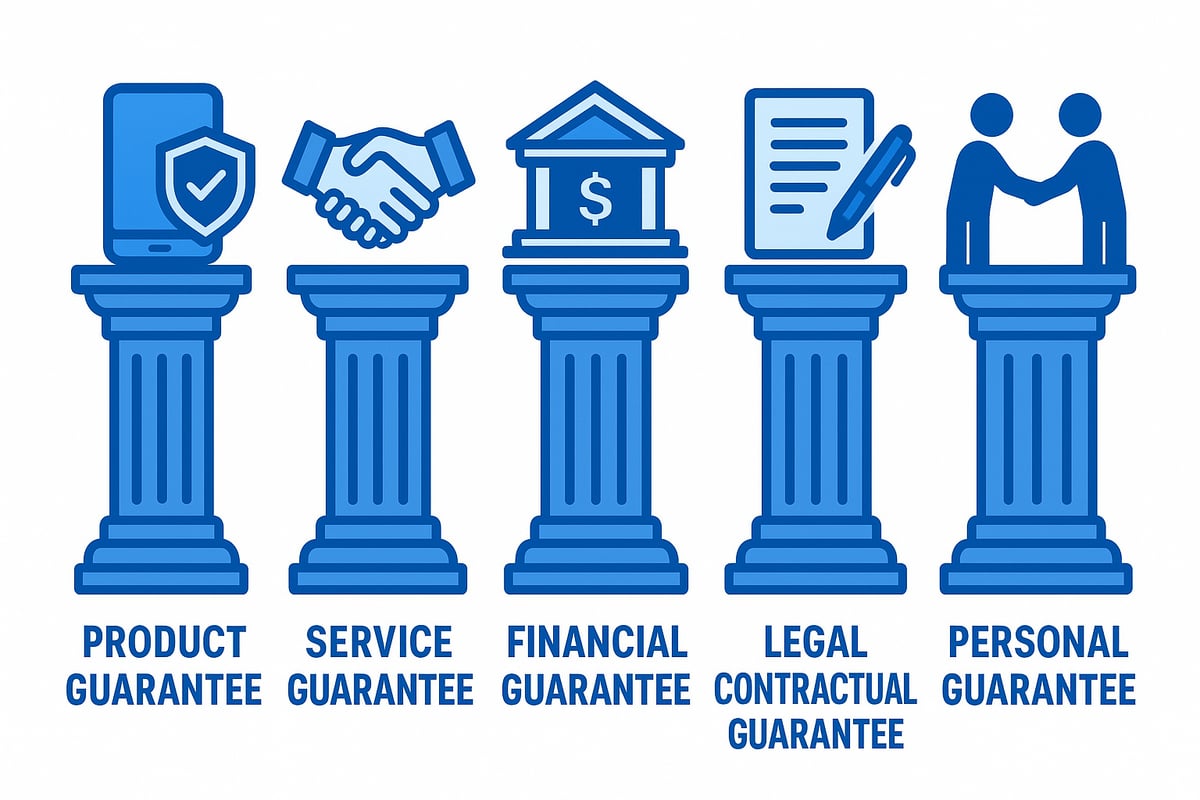
In 2026, the landscape of guarantees is more diverse and specialized than ever before. Understanding the main types of guarantee can help both consumers and businesses make informed decisions, reduce risk, and build trust in transactions.
Product Guarantees
A product guarantee is a formal commitment from the manufacturer or seller to repair, replace, or refund faulty goods within a specified time. These are especially common in electronics, appliances, and vehicles.
For example, a television might come with a "two-year guarantee," while some tool brands offer a "lifetime guarantee" for non-commercial use. To benefit from a product guarantee, you typically need proof of purchase and compliance with usage terms.
Recent data shows that over 80% of consumer electronics sold in 2026 include some form of guarantee, reflecting both consumer demand and competitive pressure.
Typical conditions may include:
- Registration of the product.
- Use under normal, intended conditions.
- Exclusion of damage from misuse or unauthorized repairs.
Service Guarantees
A service guarantee is a promise from a provider that a specific quality or result will be delivered. If standards are not met, the customer may be entitled to compensation, a redo, or a refund.
Common examples include "satisfaction guaranteed," or "on-time delivery or your money back." Service guarantees have expanded rapidly in digital sectors, such as SaaS platforms and streaming services.
One notable case is a major streaming platform's "buffer-free guarantee," offering subscribers a month of free service if buffering occurs more than once per week. This type of guarantee sets clear expectations and encourages providers to maintain high standards.
Financial Guarantees
Financial guarantees play a crucial role in banking, insurance, and investment. These guarantees are formal commitments to ensure payment or performance in financial transactions.
Examples include loan guarantees, performance bonds, and insurance guarantees. After the economic shifts of the 2020s, demand for robust financial guarantee products soared, providing lenders and investors with greater confidence.
For a deeper understanding of how financial guarantees underpin complex financial instruments, see Understanding Financial Guarantees.
Statistics from recent years indicate an uptick in the use of financial guarantees, especially in asset-backed securities and cross-border lending.
Legal and Contractual Guarantees
A legal or contractual guarantee is a binding assurance written into a contract, requiring one party to fulfill specific obligations. These guarantees are vital for large projects, employment agreements, and international trade.
For instance, a construction contract may include a guarantee that the building will meet safety standards for a set period. Governments often issue guarantees to support major infrastructure projects or export deals.
Legal guarantees are strictly regulated, with clear terms regarding the scope, duration, and remedies available if obligations are not met. This type of guarantee provides an extra layer of security for all parties involved.
Personal and Informal Guarantees
Personal guarantees occur when individuals, rather than companies, agree to back another party's obligations. This is common in rental agreements, co-signed loans, or small business financing.
For example, a parent might guarantee a student loan, making them legally responsible if the borrower defaults. While these guarantees can help secure opportunities, they also carry significant risks for the guarantor.
Unlike formal business guarantees, personal guarantees often rely on trust and may not always be documented with the same legal rigor. However, the consequences of default can be severe, so understanding the exact terms of any guarantee is essential.
| Type | Who Provides | Common Example | Typical Duration |
|---|---|---|---|
| Product Guarantee | Manufacturer/Seller | Electronics, Tools | 1-5 years or lifetime |
| Service Guarantee | Service Provider | Streaming, SaaS | Ongoing/As stated |
| Financial Guarantee | Bank/Insurer | Loans, Bonds | Loan or contract term |
| Legal/Contractual | Any party in contract | Construction, Employment | Custom/Project-based |
| Personal Guarantee | Individual | Co-signed loan | Loan or lease term |
Guarantees vs. Warranties, Promises, and Other Assurances
Understanding the difference between a guarantee, a warranty, a promise, and other assurances is essential for consumers and businesses in 2026. Each term carries its own legal weight and practical implications, even though they are often used interchangeably in everyday conversation.

Guarantee vs. Warranty
A guarantee is a formal pledge that specific conditions will be met, often promising repair, replacement, or refund if a product or service fails to meet stated standards. In contrast, a warranty is typically a type of guarantee focused on covering defects or malfunctions for a set period.
The main differences in 2026 involve legal coverage, duration, and transferability. For example, a "limited warranty" on a smartphone might only cover manufacturing defects for one year, while a "full guarantee" could offer broader protection, including accidental damage or satisfaction guarantees.
| Aspect | Guarantee | Warranty |
|---|---|---|
| Coverage | Broad, can cover many issues | Usually defects only |
| Duration | Varies, sometimes lifetime | Fixed period (e.g., 1 year) |
| Transferability | Sometimes transferable | Often not transferable |
Both guarantee and warranty provide consumer confidence, but understanding their scope helps you choose the right protection for your needs.
Guarantee vs. Promise, Assurance, and Pledge
A guarantee stands out because it is legally enforceable and comes with specific obligations. A promise, in contrast, is a general commitment that is often informal and may not be legally binding. Assurance expresses confidence or certainty but usually lacks legal force unless stated in a contract.
A pledge is a formal declaration, often public, to do or support something, but it does not always offer the same level of protection as a guarantee. For example, a service provider might pledge to improve service quality, but only a written guarantee ensures you have recourse if standards are not met.
In practice, a guarantee gives you the right to seek remedy, while a promise or assurance may only offer moral support. Knowing these distinctions can help you navigate agreements and protect your interests.
Common Misconceptions
Many people mistakenly assume every guarantee is legally binding or that all guarantees are the same. In reality, not every guarantee is enforceable—some are marketing statements with little legal weight. For example, "guaranteed results" in advertising may sound reassuring, but the fine print can limit your rights.
Misleading guarantees often hide exclusions or conditions, leading to disputes. Always read the terms carefully and check for vague language or hidden limitations. The FTC Guidelines on Advertising Warranties offer valuable advice on understanding how guarantees and warranties are presented in marketing, helping you spot genuine protections versus empty promises.
Clarifying what a guarantee truly covers is the first step to making informed decisions and avoiding disappointment.
Legal Aspects and Consumer Rights in 2026
Understanding the legal framework behind a guarantee is essential for both consumers and businesses in 2026. Laws have evolved to address digital transactions, cross-border purchases, and emerging service models. Knowing your rights and the legal processes can help you make the most of any guarantee, avoid disputes, and take informed action.

The Law Behind Guarantees
Consumer protection laws in 2026 ensure that every guarantee offered meets certain standards. These laws require clear disclosures, such as the duration, terms, and any exclusions that apply. For example, the European Union mandates statutory guarantees for digital goods, ensuring buyers have recourse if products do not perform as promised.
Legislation has adapted since 2020, with updates focusing on digital rights and transparency for cross-border purchases. In the United States, some states have introduced new rules for service contracts and protection product guarantees, like those outlined in the Washington State Service Contracts Regulation. These requirements help consumers understand the financial responsibility of providers and the scope of their guarantee coverage.
Enforcing a Guarantee
If a guarantee is not honored, knowing the correct steps to enforce your rights is key. Start by gathering all required documentation, such as receipts, guarantee certificates, and communication with the seller. Contact the provider directly and submit your claim following their process.
If the provider does not respond or denies your claim, escalate the issue to consumer protection agencies or ombudsmen. In 2025, a well-known case involved a consumer who successfully enforced a guarantee on a defective smartphone by presenting all necessary evidence and working with a national consumer agency.
- Keep copies of all correspondence.
- Follow up regularly on your claim.
- Use mediation services if needed.
By following these steps, you greatly improve your chances of resolving guarantee disputes.
Limitations and Exclusions
Most guarantees come with limitations and exclusions. Common exclusions include misuse, unauthorized repairs, and normal wear and tear. Some products are sold as is, meaning the guarantee may not apply at all.
Here is a summary of typical exclusions:
| Exclusion Type | Description |
|---|---|
| Misuse | Damage from improper use or handling |
| Unauthorized Repairs | Repairs not done by approved technicians |
| Normal Wear and Tear | Expected deterioration from regular use |
| As Is Sales | No guarantee coverage offered |
Many disputes arise from unclear or hidden exclusions, so always review the guarantee terms carefully before making a purchase.
International Guarantees
Global e-commerce has made international guarantees more common, but also more complex. When you buy products online from another country, the guarantee may not be easy to enforce due to jurisdictional differences.
For example, claiming a guarantee on electronics bought overseas often requires contacting the manufacturer’s regional office and may involve additional shipping costs. Enforcement can be challenging if local consumer protection laws differ from those in your home country.
- Check if the guarantee is valid internationally.
- Review the claim process for cross-border purchases.
- Understand who covers shipping and repair costs.
Being aware of these challenges will help you navigate international guarantee claims with greater confidence.
Your Rights as a Consumer
As a consumer in 2026, you have the right to repair, replacement, or refund if a product or service fails to meet the guarantee terms. Most laws set reasonable timeframes for making claims, which vary by region and product type.
Keep these tips in mind:
- Act quickly when you discover a problem.
- Gather all documentation before submitting a claim.
- Seek legal assistance or mediation services if disputes cannot be resolved directly.
Consumer resources, such as national helplines and online mediation platforms, are available to support you. Understanding your guarantee rights empowers you to make informed decisions and ensures you receive the protection you deserve.
How to Evaluate and Use Guarantees Effectively
Understanding how to evaluate and use a guarantee can save you time, money, and stress. Whether you are a consumer or a business, knowing exactly what your guarantee covers and how to claim it is crucial in 2026. Let’s break down the process into practical steps so you can make the most of every guarantee you encounter.
Reading and Understanding Guarantee Terms
Before relying on any guarantee, take time to read the terms carefully. Start by identifying the coverage duration, what is included, and any exclusions that might apply. Many guarantee certificates will outline the claim process step by step.
Here are the most important clauses to review:
- Duration: How long does the guarantee last?
- Coverage: What specific items or services are protected?
- Exclusions: Are there conditions that void the guarantee, such as misuse?
- Claim Process: What steps must you follow to make a claim?
Be alert for red flags such as vague language, excessive limitations, or requirements that are difficult to meet. For example, a guarantee that says "lifetime" but is limited to five years in the fine print is misleading.
Table: Typical Guarantee Certificate Breakdown
| Clause | What to Look For |
|---|---|
| Duration | Clear start and end dates |
| Coverage | Detailed description of items included |
| Exclusions | List of scenarios not covered |
| Claims | Contact info and required documentation |
Always compare the guarantee terms with your expectations before making a purchase.
Steps to Make a Claim
If you need to use a guarantee, follow a clear process to improve your chances of a successful claim. Begin by identifying the problem and reviewing your guarantee certificate for coverage.
Here is a typical claim process:
- Gather your proof of purchase, guarantee certificate, and any relevant receipts.
- Contact the provider or manufacturer, describing the issue in detail.
- Submit the required documentation as outlined in the guarantee terms.
- Follow up in writing and keep copies of all correspondence.
- If your claim is denied, escalate by requesting a supervisor or using consumer protection channels.
For example, if your laptop fails within the guarantee period, you would start by checking the terms, then contact customer service with your documentation. If the initial response is unsatisfactory, escalate your claim and seek mediation if needed. Keeping detailed records will always strengthen your position.
Maximizing Guarantee Value
To get the most from every guarantee, register your products or services promptly. Some companies offer extended coverage or bonus support for registered users. Use your guarantee as leverage in negotiations, especially for high-value purchases.
Combining a guarantee with insurance can offer full protection, especially for items like electronics or vehicles. If you are acting as a guarantor or co-signer for someone else, it is vital to understand your responsibilities and risks. For more details on the role of a guarantor in financial and personal agreements, see What is a Guarantor?.
When making a major purchase, do not hesitate to negotiate for a better guarantee. Some sellers may offer extended terms or extra benefits if you ask.
Avoiding Common Pitfalls
Many guarantee claims are denied due to misunderstandings about coverage or missing deadlines. Always read the terms fully and act quickly when an issue arises.
Common pitfalls to avoid:
- Assuming everything is covered without checking exclusions.
- Failing to keep receipts and documentation.
- Waiting too long to submit a claim.
- Giving up after an initial denial instead of escalating.
Dealing with unresponsive companies can be frustrating, but persistence and documentation are your best tools. If you run into problems, seek help from consumer protection agencies or legal advisors to enforce your guarantee rights.
The Future of Guarantees: Trends and Innovations
The landscape of the guarantee is transforming rapidly. In 2026, innovations are reshaping how companies offer and manage guarantees, with technology, ethics, and personalization at the forefront. Let us explore the key trends and what they mean for businesses and consumers.
Digital and Automated Guarantees
Digital transformation is bringing a new era for the guarantee. Blockchain technology is making digital guarantees more transparent and tamper-proof. Smart contracts can automate the entire guarantee claim process, reducing paperwork and delays. In fact, 40% of new consumer contracts in 2026 utilize digital guarantee systems, making claims and verifications seamless.
Automated claim approvals, real-time tracking, and instant payouts are now possible. For deeper insight into how blockchain and secure digital signatures are revolutionizing this space, see Blockchain and Quantum-Secure Signatures. As digital infrastructure matures, consumers can expect a guarantee to be easier to access and harder to dispute.
Eco-Friendly and Ethical Guarantees
Sustainability is now a competitive advantage, and the guarantee is evolving to reflect ethical priorities. Green guarantees cover products with eco-friendly claims, such as recyclable materials or energy efficiency. Ethical guarantees focus on fair labor, responsible sourcing, and transparent business practices.
- Lifetime ethical guarantees on clothing
- Repair or replacement for sustainable gadgets
- Certifications for fair trade products
Brands are using the guarantee not just as a promise of quality, but as a commitment to values that resonate with today's conscious consumers.
Personalized and Flexible Guarantees
One-size-fits-all guarantees are fading. In 2026, companies use data to personalize the guarantee for each customer. Purchase history, usage patterns, and preferences help tailor coverage, duration, and terms. Subscription services often provide rolling guarantees that adapt as your needs change.
For example, car subscription models offer a guarantee that evolves with your driving habits. This flexibility ensures the guarantee remains relevant, providing protection that grows with you.
The Role of AI in Guarantee Management
Artificial intelligence is transforming how the guarantee is managed across industries. AI systems monitor compliance, detect fraud, and predict when issues might arise before a claim is even filed. Predictive analytics help businesses offer proactive guarantee extensions or upgrades to high-risk users.
AI also speeds up claim processing. Instead of waiting days for a decision, many customers now receive instant responses. This efficiency makes the guarantee more reliable and appealing for everyone involved.
Challenges and Opportunities Ahead
As guarantees become more advanced, new challenges emerge. Companies must balance consumer protection with sustainability and avoid overwhelming customers with too many options or confusing terms. Regulatory bodies are stepping in to address potential guarantee fatigue and ensure transparency.
Looking ahead, the guarantee will continue to shape trust between buyers and sellers. By 2030, expect guarantees to be even more integrated into digital life, supporting both peace of mind and innovation.
As you’ve seen, understanding guarantees in 2026 is more essential than ever—whether you’re navigating product purchases, service agreements, or financial commitments. The right knowledge empowers you to protect your interests, make informed decisions, and spot patterns that others might miss. If you’re curious to see how historical market events shaped today’s guarantee landscape, and want to deepen your understanding of finance through interactive tools and original insights, I invite you to Join Our Beta. Together, we can unlock the stories behind the headlines and help you stay one step ahead.