
Fixed Income Guide: Strategies and Insights for 2026
In an unpredictable post-pandemic world, investors are increasingly searching for stability as global markets shift rapidly toward 2026. Economic volatility and policy changes have made traditional approaches less reliable, demanding new strategies and a deeper understanding of available options.
This guide is designed to help you master fixed income investing, offering clear strategies, fresh insights, and practical tips for navigating the evolving financial landscape. Whether you are focused on income, safety, or portfolio diversification, understanding how to position yourself is more important than ever.
You will discover the essential concepts behind fixed income, the market outlook for 2026, emerging risks, portfolio strategies, product innovations, and the latest regulatory updates. Get ready to take action and optimize your approach for resilient, stable returns.
Understanding Fixed Income: Core Concepts and Market Fundamentals
Fixed income plays a pivotal role in today's investment landscape, offering stability and predictability for investors seeking steady cash flow. Understanding the fundamentals of fixed income is essential for building a resilient portfolio, especially as global markets evolve.

What is Fixed Income?
Fixed income refers to a category of investment instruments that provide investors with regular, predetermined payments over a specified period. Common examples include government bonds, Treasury bills, and corporate bonds. These securities are issued by entities such as governments, corporations, and municipalities to raise capital.
The defining features of fixed income instruments are coupon payments, maturity, credit quality, and principal repayment. Coupon payments are periodic interest payments made to the investor. The principal, or face value, is returned at maturity, which is the date when the debt obligation ends. For a deeper understanding of how the maturity date affects your investment, see The role of maturity date.
Unlike equities, fixed income securities offer legal protections for investors. In the event of issuer bankruptcy, bondholders are paid before shareholders, reflecting their senior position in the capital structure. The risk and return profile of fixed income is typically more conservative than stocks, providing a buffer against market volatility.
Let's look at a simple example:
Bond Example:
- Face value: $10,000
- Coupon rate: 4%
- Maturity: 10 years
- Annual interest: $400
- Principal repaid at end of 10 years
Globally, the fixed income market exceeds $130 trillion as of 2023, highlighting its scale and importance. These assets serve multiple roles in portfolios, including income generation, capital preservation, and diversification.
Issuers of fixed income securities range from sovereign governments and corporations to municipalities and supranational organizations. Trading occurs on both public exchanges and over-the-counter (OTC) markets, offering flexibility and access for a wide array of investors.
Types of Fixed Income Securities
The fixed income universe is broad, with a variety of instruments catering to different risk and return profiles. The main categories include:
- Government bonds: Issued by national governments, such as U.S. Treasuries or sovereign debt from other countries.
- Corporate bonds: Offered by companies, with investment grade and high-yield (junk) subcategories.
- Municipal bonds: Issued by local governments or agencies, often with tax advantages.
- Agency securities and mortgage-backed securities: Backed by government-related entities or pools of mortgages.
- Inflation-linked bonds: Such as TIPS, which adjust payments based on inflation rates.
- Certificates of deposit (CDs) and commercial paper: Short-term debt instruments for liquidity and cash management.
- Structured products and hybrid securities: Including asset-backed securities, convertible bonds, and floating-rate notes.
Here's a summary table of key fixed income sectors:
| Security Type | Typical Issuer | Risk Level | Liquidity | Tax Treatment |
|---|---|---|---|---|
| Government Bonds | Sovereign | Low | High | Taxable/Tax-exempt |
| Corporate Bonds | Corporations | Medium-High | High | Taxable |
| Municipal Bonds | Local Gov't | Low-Medium | Medium | Often Tax-exempt |
| MBS & Agency | Agencies/Private | Medium | Medium | Taxable |
| Inflation-linked | Governments | Low-Medium | High | Taxable |
| CDs/Commercial Paper | Banks/Corporates | Low | High | Taxable |
| Structured/Hybrid | Various | Varies | Varies | Varies |
Each fixed income security type has unique characteristics, offering investors options to tailor portfolios for yield, risk, and diversification. Understanding these differences is key to successful fixed income investing.
Fixed Income Market Outlook for 2026: Trends and Economic Drivers
Fixed income markets are entering 2026 at a pivotal moment. Investors face a landscape shaped by shifting economic cycles, persistent inflation pressures, and rapid innovation. Understanding the forces at play will help you position your fixed income portfolio for both resilience and opportunity.

Macroeconomic Environment
The global macroeconomic backdrop is a key driver for fixed income in 2026. Central banks, including the Federal Reserve, are anticipated to maintain a careful stance as they navigate between supporting growth and controlling inflation. According to expert analysis on navigating neutral Fed policy in 2026, policy rates are expected to settle near neutral levels, creating a more stable path for fixed income yields.
Inflation remains a central concern. While price gains have moderated from their pandemic peaks, many economies still face above-target inflation, which erodes real returns for fixed income investors. This environment requires a focus on securities that can outpace inflation or offer inflation protection.
Economic growth forecasts for 2026 are mixed. Developed markets are expected to see steady but subdued expansion, while emerging economies may offer stronger growth, albeit with higher volatility. Geopolitical risks, such as regional conflicts and trade tensions, add further uncertainty, potentially impacting fixed income spreads and capital flows.
Key Market Drivers
Several underlying trends are reshaping the fixed income landscape. Demographic changes, especially aging populations in developed countries, are increasing demand for reliable income sources. As more retirees seek predictable cash flows, fixed income allocations are set to rise.
Environmental, social, and governance (ESG) factors are now at the forefront of investment decision making. The surge in green and sustainable bonds is attracting both institutional and retail interest. These products offer fixed income exposure while aligning with broader sustainability goals.
Technological innovation is another powerful driver. The adoption of blockchain and digital platforms is streamlining bond issuance and settlement processes, making fixed income markets more accessible and efficient. Liquidity conditions are also evolving, with fixed income ETFs growing in popularity and providing investors with greater flexibility and transparency.
Regional Insights
Regional dynamics play a significant role in shaping fixed income opportunities. In the US, Treasury supply and demand remain robust, while municipal bonds continue to attract investors seeking tax-advantaged income. The Federal Reserve’s policy stance will influence both short and long-term yields.
Europe faces a unique set of challenges. Negative interest rates persist in some areas, and European Central Bank (ECB) policies are closely watched for signs of normalization. Sovereign risk remains a consideration, particularly in southern European countries.
Emerging markets present a mix of risk and reward. Local currency bonds can offer higher yields, but also expose investors to currency volatility and political risk. Asia-Pacific, led by China’s expanding bond market and regional integration efforts, is becoming increasingly important for global fixed income investors.
Statistical Highlights
Data trends underscore the evolving nature of fixed income markets. Between 2023 and 2025, global fixed income ETF assets surpassed $2 trillion, reflecting the shift toward passive and liquid investment vehicles. This growth makes ETFs an essential tool for both retail and institutional portfolios.
Green bond issuance reached $500 billion in 2023, highlighting the rapid adoption of ESG principles across the fixed income universe. These figures demonstrate how investor priorities are changing, with a clear tilt toward sustainability and transparency.
The fixed income sector’s size and diversity continue to expand, creating new opportunities and challenges. Staying informed about these statistics is crucial for anyone seeking to optimize their fixed income strategy in the next market cycle.
Risks and Challenges in Fixed Income Investing
Navigating the fixed income landscape requires a clear understanding of the diverse risks that can impact returns and capital preservation. As we look toward 2026, investors must be equipped to address evolving challenges in both traditional and alternative fixed income markets.

Credit Risk
Credit risk refers to the possibility that a bond issuer will fail to meet its debt obligations, resulting in losses for fixed income investors. Corporate defaults and municipal bankruptcies are common examples. Credit ratings, assigned by agencies like S&P, Moody’s, and Fitch, help investors gauge the likelihood of default.
Investment grade bonds typically offer lower risk, while high-yield or junk bonds present higher default rates but potentially greater returns. Assessing credit risk is essential for building a resilient fixed income portfolio.
Interest Rate Risk
Interest rate risk is a fundamental challenge in fixed income investing. Bond prices move inversely to interest rates, so when rates rise, bond values generally fall. The duration of a bond measures its sensitivity to rate changes, with longer maturities being more affected.
During periods of anticipated rate hikes or cuts, such as those discussed in the Federal Reserve to cut rates in 2026 report, fixed income investors must actively manage their exposure to avoid significant capital erosion. Understanding this risk is vital for portfolio stability.
Inflation Risk
Inflation risk arises when rising prices erode the purchasing power of fixed income payments. Fixed coupons become less valuable in real terms during high inflation periods. Historically, sustained inflation has resulted in negative real returns for many bondholders.
To counter this, investors can consider inflation-linked securities, which adjust payouts based on inflation indices. Properly hedging inflation risk is key to preserving the real value of fixed income investments.
Market and Liquidity Risk
Market and liquidity risk impact the ease with which fixed income securities can be bought or sold at fair prices. Price volatility can lead to mark-to-market losses, especially during periods of market stress. Thinly traded bonds may suffer from wide bid-ask spreads, increasing transaction costs.
The 2020 COVID-19 crisis highlighted how quickly liquidity can evaporate, causing sharp price swings even in high-quality fixed income assets. Managing liquidity risk is crucial for investors who may need to sell bonds before maturity.
Other Risks
Other risks in fixed income investing include reinvestment risk, where falling rates make it harder to replace maturing bonds with equally attractive yields. Currency risk comes into play with international bonds, as foreign exchange fluctuations can impact returns. Regulatory and political risk, such as sudden policy changes, can also alter bond market dynamics.
Comprehensive risk assessment and diversification remain the most effective defenses for fixed income investors facing an increasingly complex environment.
Building a Fixed Income Portfolio: Strategies for 2026
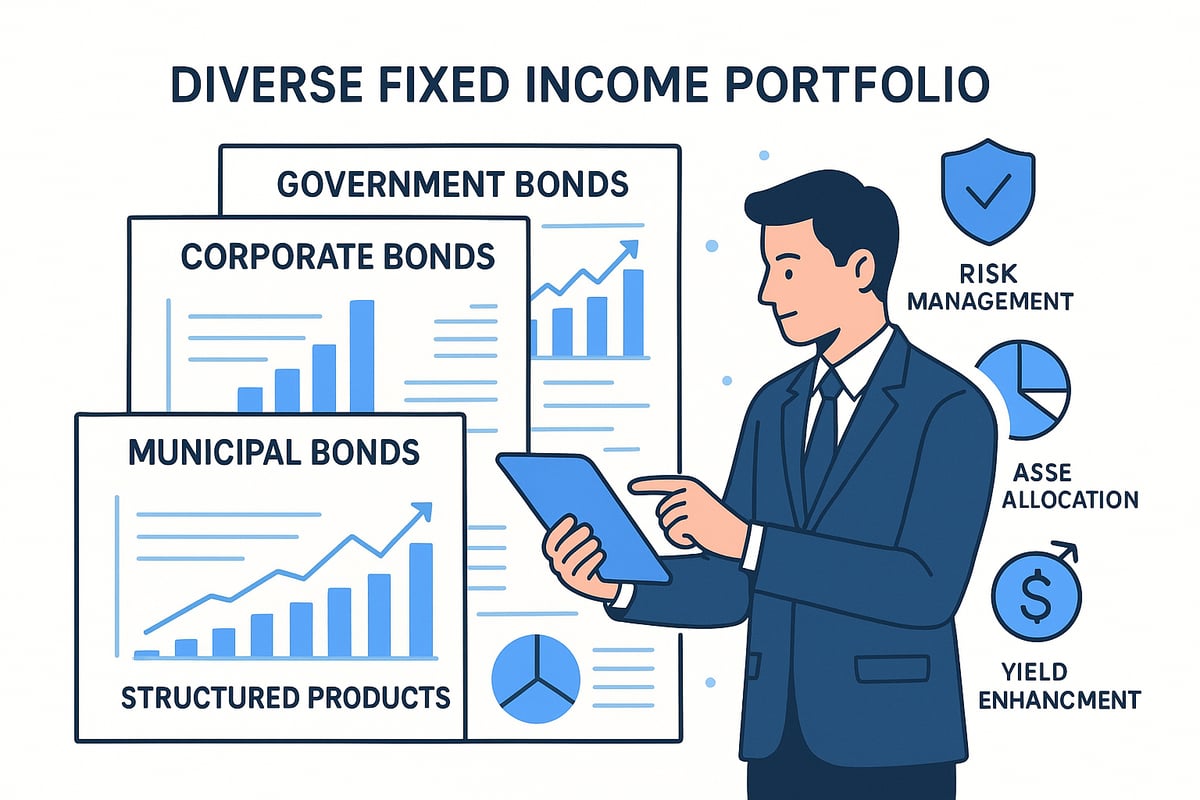
Building a robust fixed income portfolio in 2026 requires a strategic approach tailored to your financial goals and the evolving market landscape. Let’s break down the essential steps for creating a fixed income allocation that delivers yield, safety, and diversification.
Setting Investment Goals and Risk Tolerance
Every fixed income portfolio begins with clear objectives. Are you seeking steady income, capital preservation, or a balance between the two? Assess your time horizon and liquidity needs, as these will shape your allocation.
Younger investors may prioritize growth, allocating less to fixed income, while retirees often seek stability and regular cash flow. Align your risk tolerance with the types of bonds and maturities you select. Remember, the fixed income market offers options for both conservative and aggressive investors.
Diversification Approaches
Diversification is vital in fixed income investing. Spread your holdings across different issuers, such as governments, corporations, and municipalities, to reduce credit risk. Geographic diversification can also buffer your portfolio from regional economic shocks.
Consider diversifying across maturities using laddering, barbell, or bullet strategies. Mix investment grade and high-yield bonds to balance risk and return. This multi-layered approach helps fixed income investors manage volatility and seize opportunities in various market segments.
- Issuer: Government, corporate, municipal
- Geography: Domestic, international
- Maturity: Short, intermediate, long-term
- Credit quality: Investment grade, high-yield
Yield Enhancement Techniques
To boost returns, fixed income investors can explore several yield enhancement strategies. Taking on selective credit risk through wider credit spreads can increase income, though it comes with higher default risk.
Emerging market bonds offer higher yields but introduce currency and political risks. Structured products, like callable or convertible bonds, provide unique risk-return profiles. For more on these hybrids, see What is a convertible bond.
Yield enhancement in fixed income requires careful analysis, as higher returns often mean greater risk.
Managing Interest Rate and Inflation Risk
Interest rate changes directly impact fixed income prices. Shorter-duration bonds are less sensitive to rate hikes, while longer-term bonds face more pronounced price swings. Managing duration is essential for portfolio stability.
Inflation erodes the real value of fixed payments. Inflation-protected securities, such as TIPS, can safeguard purchasing power. Floating-rate notes are another tool, as their coupons adjust with prevailing rates. To better understand these instruments, review Understanding floating-rate instruments.
A fixed income portfolio that actively addresses these risks is better positioned for resilient performance.
Tactical and Strategic Asset Allocation
A disciplined allocation process supports long-term fixed income success. The core-satellite approach places the bulk of assets in high-quality securities, with smaller allocations to opportunistic sectors.
Rebalance your portfolio regularly to maintain your desired risk profile. Use scenario analysis to stress-test your fixed income holdings against rate shocks or credit events. Strategic allocation helps you stay on course, even as markets evolve.
Example Portfolios
Here are sample fixed income portfolio structures for varying risk appetites:
| Portfolio Type | Government/Agency | Investment Grade | High-Yield | International | Emerging Markets |
|---|---|---|---|---|---|
| Conservative | 80% | 20% | 0% | 0% | 0% |
| Balanced | 50% | 30% | 10% | 10% | 0% |
| Aggressive Income | 0% | 30% | 40% | 0% | 30% |
Choose the fixed income mix that aligns with your goals, risk tolerance, and market outlook. Adjust allocations as your needs or market conditions change.
Performance Measurement and Benchmarking
Measuring success in fixed income is more than just tracking yield. Calculate yield to maturity (YTM), current yield, and total return for a comprehensive view.
Compare your portfolio’s results against benchmarks like the Bloomberg Barclays Aggregate Bond Index or the ICE BofA ML Index. Regular performance reviews help identify strengths and areas for improvement, ensuring your fixed income strategy remains effective.
Innovations and Product Developments in Fixed Income
The fixed income landscape is transforming rapidly as investors seek new ways to generate yield, manage risk, and access diverse markets. Modern innovations are reshaping how fixed income products are structured, traded, and analyzed. Understanding these changes is essential for anyone looking to optimize their fixed income strategy in 2026.
Fixed Income ETFs and Mutual Funds
Fixed income ETFs and mutual funds have surged in popularity, making it easier for investors to access broad bond markets with efficiency and transparency. Fixed income ETFs, in particular, offer real-time pricing, liquidity, and lower costs compared to traditional mutual funds.
In 2023, global assets under management in fixed income ETFs surpassed $2 trillion, reflecting strong demand for passive investing. These vehicles allow investors to gain exposure to government, corporate, and emerging market bonds, all within a single trade.
Passive strategies are on the rise, but active management remains important in fixed income, especially in less liquid or more complex sectors. The choice between active and passive funds depends on investor goals and market outlook.
Digital and Tokenized Bonds
Technology is revolutionizing fixed income markets through digital and tokenized bonds. Blockchain-based issuance streamlines settlement, reduces costs, and enhances transparency. Institutions like the World Bank and European Investment Bank have already completed digital bond issuances, proving the viability of this approach.
Tokenization allows for fractional ownership, potentially opening fixed income markets to a broader range of investors. Settlement times can be reduced from days to minutes, improving market efficiency. These advances may democratize access, especially for retail participants.
As digital infrastructure matures, expect further growth in tokenized fixed income products, with regulators working to ensure safety and investor protection.
ESG and Green Bonds
Investor interest in ESG and green bonds is accelerating, making sustainability a core pillar of fixed income innovation. In 2023, global green bond issuance topped $500 billion, supporting projects from renewable energy to climate adaptation.
ESG integration in fixed income portfolios is now mainstream, with dedicated funds and indices tracking environmental and social impact. Standards such as ICMA's Green Bond Principles and the EU taxonomy provide frameworks for transparency and reporting.
Social and sustainability-linked bonds are also gaining traction, giving investors more options to align their fixed income holdings with their values. This trend is expected to expand as regulatory requirements for ESG disclosures become stricter.
Alternative Fixed Income Products
Alternative fixed income products are attracting attention as investors search for yield beyond traditional bonds. Private credit and direct lending offer exposure to non-public loans, often with higher yields but less liquidity.
Structured credit products, including CLOs, ABS, and MBS, allow investors to access pools of loans or receivables with varying risk-return profiles. For a detailed explanation of asset-backed securities, see Asset-backed securities explained.
Hybrid securities, such as preferred shares and contingent convertibles (CoCos), combine features of debt and equity, offering unique risk and return characteristics. These alternatives can enhance portfolio diversification within fixed income allocations.
Technology and Analytics
Technology is playing a pivotal role in fixed income investing. AI-driven credit analysis enables managers to process vast amounts of data, identify risks, and uncover opportunities faster than ever.
Big data tools support scenario analysis, market forecasting, and portfolio construction, helping investors make informed decisions. Robo-advisors and digital platforms are democratizing access to fixed income strategies, providing personalized recommendations based on individual goals.
As these technologies evolve, they are expected to enhance efficiency, transparency, and performance measurement across the fixed income universe.
Regulatory Landscape and Tax Considerations for 2026
Navigating the regulatory landscape is essential for any fixed income investor in 2026. As global policies evolve, understanding new rules and tax implications can help protect returns and avoid costly mistakes. Let’s examine the most important developments shaping the fixed income environment.
Regulatory Developments
In 2026, regulatory changes continue to reshape the fixed income market. Basel IV requirements are pushing banks to hold more capital against their bond holdings, affecting liquidity and pricing. The SEC and MiFID II have introduced stricter transparency and best execution standards, increasing reporting obligations for both issuers and investors.
ESG disclosure rules are now more stringent, particularly for green and sustainable bonds. Investors must pay close attention to documentation and third-party verification when evaluating these products. These regulatory shifts are not occurring in a vacuum. For more on how structural changes, such as new regulations and technology, are influencing the fixed income landscape, see Structural shifts create strategic opportunities.
Taxation of Fixed Income Investments
Tax treatment remains a critical factor for fixed income returns. Interest income from most bonds is typically taxed at ordinary income rates, which can vary significantly by jurisdiction. Municipal bonds, however, often provide federal and sometimes state tax exemptions, making them especially attractive for high-income investors.
| Security Type | Federal Tax | State Tax | Typical Use Case |
|---|---|---|---|
| US Treasury Bonds | Yes | No* | Safe haven, core holding |
| Municipal Bonds | No** | Sometimes | Tax-efficient income |
| Corporate Bonds | Yes | Yes | Yield enhancement |
*Most states exempt Treasuries.
**Subject to Alternative Minimum Tax in some cases.
Tax-loss harvesting can also be a valuable tool for managing fixed income portfolios. By strategically selling bonds at a loss, investors can offset gains elsewhere and improve after-tax returns.
Cross-Border Investing and Withholding Taxes
Global fixed income investing introduces another layer of complexity: cross-border taxation. Interest income from foreign bonds may be subject to withholding taxes, which can erode overall yield. Double taxation treaties between countries can help investors reclaim some of these taxes, but the process often requires detailed documentation and timely filings.
When evaluating international fixed income opportunities, investors should assess not only currency and credit risk but also the net-of-tax return. Understanding the tax rules in both the issuer’s and the investor’s home country is essential for optimizing after-tax results.
Reporting and Compliance
Compliance standards for fixed income investing are becoming more rigorous in 2026. Know Your Customer (KYC) and Anti-Money Laundering (AML) rules require investors to verify identity and source of funds before trading. Large positions or transactions may trigger regulatory reporting under SEC, MiFID II, or other regional frameworks.
Key compliance steps for fixed income investors:
- Complete KYC/AML documentation with all brokers.
- Monitor position sizes to avoid reporting thresholds.
- Stay updated on new ESG disclosure requirements for green bonds.
Proper compliance not only reduces legal risk but also ensures continued access to global fixed income markets.
Future Outlook: Key Insights and Strategic Takeaways for Fixed Income Investors
Looking ahead to 2026, the fixed income landscape is changing rapidly as markets respond to shifting interest rates, evolving inflation pressures, and new technologies. Investors face a complex environment, but there are clear trends to watch. Staying proactive is essential for those seeking to optimize their fixed income strategies.
Major trends shaping fixed income in 2026:
- Interest rate volatility and central bank policy shifts
- Persistent inflation concerns
- Accelerated adoption of technology, including digital bonds
- Growing demand for ESG and green bonds
- Increasing global debt levels and climate-related risks
To navigate these shifts, investors should prioritize diversification, robust risk management, and openness to innovation. Advanced portfolio strategies, such as those discussed in Portfolio optimization with physical decision variables, can help address new challenges and unlock opportunities in fixed income markets.
Ongoing education and regular market monitoring are crucial to long-term success. As policy uncertainty and global risks remain high, building a resilient fixed income portfolio requires vigilance, adaptability, and a willingness to embrace new tools and ideas. Focus on these core principles to achieve stability and growth in the evolving fixed income environment.
As you reflect on the strategies and insights we've explored for fixed income investing in 2026, remember that understanding historical context can give you a critical edge. By learning from past market shifts, innovations, and regulatory changes, you can approach your portfolio with greater confidence and clarity. That's exactly what we're building at Historic Financial News—a platform designed to empower you with interactive tools and deep historical analysis. If you're ready to discover how the past shapes the future of fixed income, I invite you to Join Our Beta and help us bring this vision to life.