
Understanding the Derivatives Market Through History
The derivatives market represents one of the most sophisticated and influential segments of global finance, with a history stretching back centuries. These financial instruments, whose value derives from underlying assets such as stocks, bonds, commodities, or currencies, have evolved from simple agricultural contracts to complex products that underpin modern risk management strategies. Understanding the historical development and structural transformation of this market provides crucial insights for investors, analysts, and anyone seeking to comprehend the forces that have shaped financial systems worldwide.
The Historical Foundation of Derivatives Trading
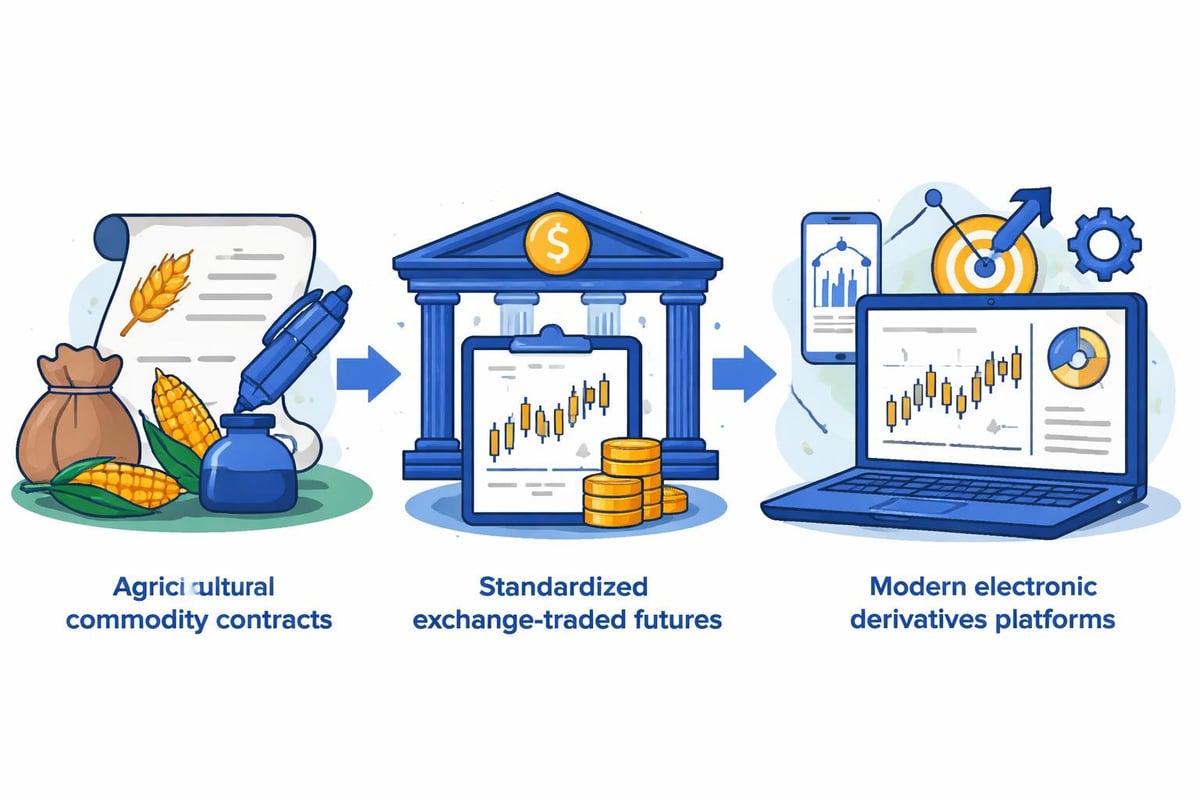
The concept of derivatives trading predates modern financial markets by hundreds of years. Early forms of forward contracts emerged in medieval Europe, where merchants sought to lock in future prices for goods. The Dojima Rice Exchange in Japan, established in 1730, created standardized futures contracts that allowed samurai and merchants to hedge against rice price fluctuations.
By the mid-19th century, organized derivatives exchanges appeared in the United States. The Chicago Board of Trade, founded in 1848, revolutionized agricultural commodity trading by introducing standardized futures contracts. This innovation addressed a critical problem: farmers needed price certainty before harvest, while buyers wanted to secure supplies at predictable costs.
The Modern Derivatives Market Takes Shape
The 1970s marked a watershed moment for the derivatives market. The collapse of the Bretton Woods system in 1971 introduced currency volatility that created demand for foreign exchange hedging tools. The Chicago Mercantile Exchange launched financial futures contracts, beginning with currency futures in 1972.
The Black-Scholes-Merton options pricing model, published in 1973, provided a mathematical framework for valuing options contracts. This breakthrough coincided with the Chicago Board Options Exchange opening that same year. These developments transformed derivatives from niche instruments into essential components of portfolio management and corporate finance.
Interest rate derivatives emerged as inflation volatility increased throughout the 1970s and early 1980s. Treasury bond futures, Eurodollar futures, and interest rate swaps became critical tools for banks, corporations, and institutional investors managing exposure to changing borrowing costs.
Key Instruments Within the Derivatives Market
The derivatives market encompasses several primary instrument categories, each serving distinct purposes and risk profiles. Understanding these categories reveals how the market has evolved to meet diverse hedging and speculation needs.
Futures and Forward Contracts
Futures contracts obligate buyers and sellers to transact an underlying asset at a predetermined price on a specific future date. Unlike forward contracts, futures trade on organized exchanges with standardized terms and daily settlement through margin accounts.
| Feature | Futures Contracts | Forward Contracts |
|---|---|---|
| Trading Venue | Organized exchanges | Over-the-counter markets |
| Standardization | Fully standardized | Customizable terms |
| Counterparty Risk | Cleared through exchange | Direct bilateral exposure |
| Settlement | Daily mark-to-market | Single settlement at maturity |
Forward contracts offer customization advantages for corporate hedgers with specific exposure periods or amounts. However, the lack of standardization and exchange clearing creates counterparty risk that became painfully evident during the 2008 financial crisis.
Options Contracts
Options provide the right, but not the obligation, to buy (call options) or sell (put options) an underlying asset at a specified price. This asymmetric payoff structure distinguishes options from futures, creating unique risk management and strategic possibilities.
Historical volatility in equity markets during the 1987 crash demonstrated both the value and complexity of options. Portfolio insurance strategies using put options contributed to the severity of the October 1987 decline, as dynamic hedging amplified selling pressure. This episode highlighted how derivatives themselves could influence underlying market dynamics.
Swaps and Structured Products
Interest rate swaps and currency swaps grew exponentially from the 1980s onward. These over-the-counter instruments allowed parties to exchange cash flows based on different interest rates or currencies, enabling precise customization of financial exposures.
The Bank for International Settlements tracks derivatives market size and structure, revealing that interest rate derivatives constitute the largest segment by notional value. Credit default swaps, introduced in the 1990s, enabled trading of credit risk separately from bond ownership, fundamentally changing how institutions managed lending exposures.
Regulatory Evolution and Market Structure
The derivatives market has undergone dramatic regulatory transformation, particularly following major financial disruptions. The 1990s witnessed several high-profile derivatives losses, including Orange County's bankruptcy in 1994 and the collapse of Long-Term Capital Management in 1998.
Pre-Crisis Regulatory Framework
Before 2008, much of the derivatives market operated with minimal oversight. The Commodity Futures Modernization Act of 2000 explicitly exempted many over-the-counter derivatives from regulation, based on the assumption that sophisticated counterparties could manage their own risks.
The National Futures Association oversees compliance in exchange-traded derivatives, but had limited authority over the burgeoning OTC market. This regulatory gap allowed notional derivatives values to reach hundreds of trillions of dollars with inadequate capital requirements or transparency.
Post-Crisis Reforms
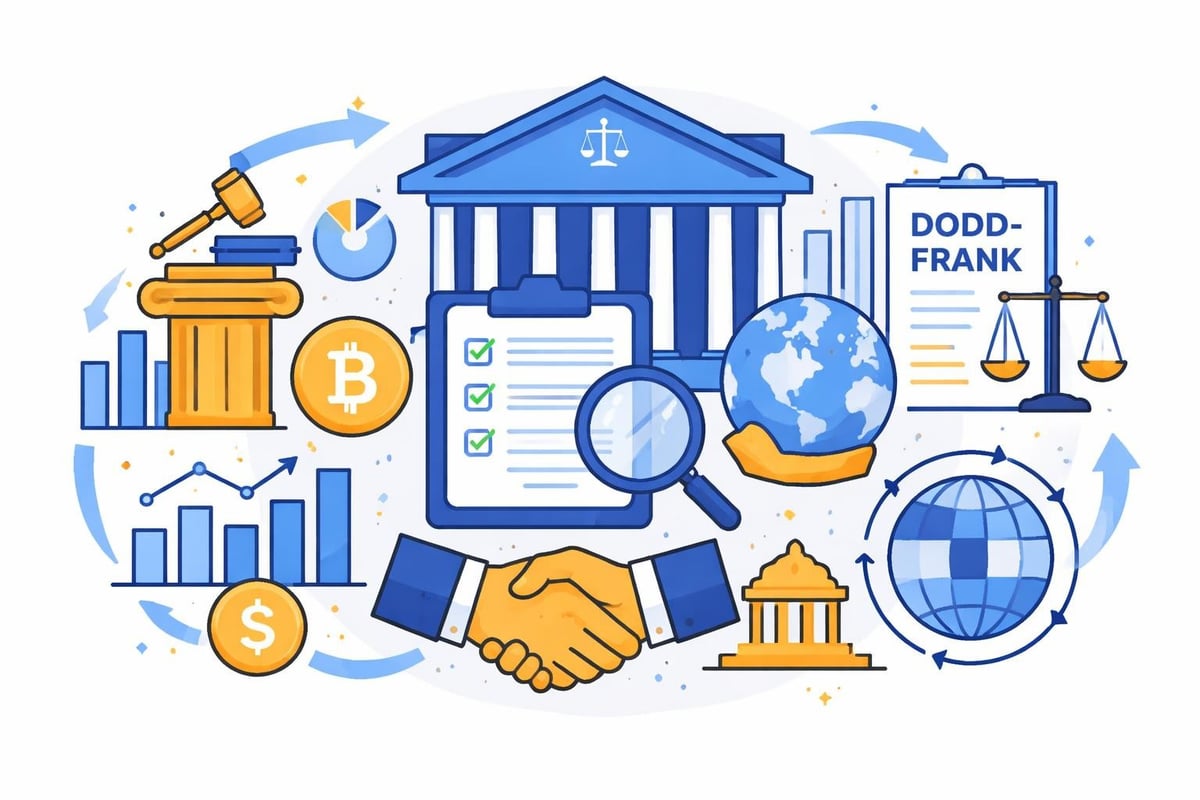
The 2008 financial crisis exposed how interconnected derivatives exposures, particularly credit default swaps, could threaten systemic stability. The Dodd-Frank Act of 2010 mandated central clearing for standardized derivatives, imposed margin requirements, and required trade reporting to approved repositories.
Key Dodd-Frank provisions affecting the derivatives market:
- Mandatory clearing of standardized swaps through central counterparties
- Margin requirements for non-cleared derivatives
- Trade reporting to swap data repositories
- Business conduct standards for swap dealers
- Position limits on commodity derivatives
European regulations through EMIR (European Market Infrastructure Regulation) implemented similar reforms, creating a globally coordinated approach to derivatives oversight. The Futures Industry Association reports that these regulatory changes fundamentally reshaped market structure, driving consolidation among dealers and changing how institutions access derivatives markets.
Historical Crisis Moments and Market Impact
Examining specific historical episodes reveals how the derivatives market has both contributed to financial instability and evolved in response to crises. These lessons remain relevant for understanding contemporary market dynamics.
The 1998 LTCM Collapse
Long-Term Capital Management's near-failure demonstrated how leverage in derivatives positions could threaten major financial institutions. The hedge fund had amassed derivatives positions with notional values exceeding $1 trillion, supported by only $4 billion in capital.
When Russian bond defaults triggered market disruptions in August 1998, LTCM faced margin calls it couldn't meet. The Federal Reserve orchestrated a private-sector bailout, recognizing that LTCM's forced liquidation of derivatives positions could destabilize multiple markets. This episode foreshadowed the "too interconnected to fail" problems that would resurface in 2008.
The 2008 Financial Crisis
The derivatives market played a central role in the 2008 crisis through credit default swaps and asset-backed securities. AIG's Financial Products division sold credit protection on mortgage-backed securities without adequate collateral, requiring a government rescue exceeding $180 billion when housing values collapsed.
The crisis revealed how bilateral OTC derivatives created a complex web of exposures that obscured systemic risk. Major institutions didn't know their indirect counterparty exposures, as derivatives contracts linked parties through multiple intermediaries.
| Crisis Event | Primary Derivatives Involved | Key Lessons |
|---|---|---|
| 1987 Stock Crash | Portfolio insurance using index options | Dynamic hedging can amplify volatility |
| 1998 LTCM | Fixed income derivatives, equity derivatives | Extreme leverage creates systemic risk |
| 2008 Financial Crisis | Credit default swaps, mortgage derivatives | OTC opacity masks interconnectedness |
| 2011 MF Global | Commodity futures, sovereign debt | Segregation of customer funds requires strict oversight |
Reference Rate Transitions
The LIBOR scandal revealed how manipulation of reference rates could distort trillions of dollars in derivatives contracts. The transition away from LIBOR to alternative reference rates like SOFR required coordinated industry efforts to modify existing contracts. The Alternative Reference Rates Committee published guidance for derivatives fallback formulas, addressing one of the most complex operational challenges in derivatives market history.
Technology and Market Evolution
Technological innovation has continuously reshaped the derivatives market, from open outcry trading pits to sophisticated electronic platforms. The transition from floor-based trading to electronic execution accelerated in the 1990s and 2000s, fundamentally changing market microstructure.
Electronic Trading Platforms
Electronic trading increased speed, transparency, and accessibility in derivatives markets. The Chicago Mercantile Exchange transitioned from floor trading to the Globex electronic platform, enabling 24-hour trading across time zones. This shift democratized access, allowing smaller institutions and proprietary trading firms to compete with traditional market makers.
Advantages of electronic derivatives trading:
- Reduced transaction costs through narrower bid-ask spreads
- Increased price transparency and market depth visibility
- Faster execution and order routing
- Global access regardless of physical location
- Automated trading strategies and algorithmic execution
However, electronic trading also introduced new risks, including flash crashes and technological failures. The May 2010 flash crash, though centered in equity markets, demonstrated how algorithmic trading across interconnected markets could generate extreme volatility within minutes.
Algorithmic and Quantitative Strategies
The derivatives market became a laboratory for quantitative finance innovations. Volatility arbitrage, statistical arbitrage, and market-making strategies employed sophisticated mathematical models to identify pricing discrepancies across related instruments.
Recent advances in artificial intelligence are creating new possibilities for derivatives analysis. Research into sentiment analysis for derivatives hedging strategies demonstrates how machine learning can process news flow and market data to inform dynamic hedging decisions. These techniques build on decades of quantitative research while leveraging modern computational power.

Contemporary Market Landscape
As of 2026, the derivatives market reflects the cumulative impact of regulatory reforms, technological advancement, and evolving risk management practices. The US derivatives market continues adapting to changing geopolitical conditions, technology disruption, and shifting investor behavior.
Market Size and Composition
The notional value of outstanding derivatives contracts exceeds $600 trillion globally, though notional amounts overstate actual risk exposure. Most interest rate and currency derivatives trade at values close to par, meaning small percentage movements create the actual profit and loss exposures.
Exchange-traded derivatives have grown significantly since 2008, driven by clearing mandates and investor preference for transparent pricing. However, customized OTC derivatives remain essential for corporations with specific hedging requirements that standardized contracts cannot address.
Emerging Trends and Innovations
Several developments are shaping the contemporary derivatives market:
- Environmental derivatives: Carbon credit futures and weather derivatives address climate-related risks
- Cryptocurrency derivatives: Bitcoin and Ethereum futures provide regulated exposure to digital assets
- Machine-readable regulation: Automated compliance checking for complex derivatives rules
- Distributed ledger technology: Blockchain applications for derivatives settlement and record-keeping
The derivatives industry focuses on operational efficiency as firms seek to reduce costs while maintaining compliance with extensive regulatory requirements. Consolidation among clearing members and infrastructure providers reflects economies of scale in post-trade processing.
Cross-Border Considerations
International derivatives transactions create complex regulatory and operational challenges. The Federal Reserve's analysis of cross-border derivatives highlights how global financial integration requires coordinated oversight across jurisdictions.
Different regulatory regimes can create arbitrage opportunities or compliance burdens depending on where transactions are booked and cleared. The derivatives market's global nature means that regulatory fragmentation imposes real costs on market participants operating across borders.
Risk Management and Market Discipline
The derivatives market serves critical risk management functions when used appropriately, but also creates potential for excessive leverage and hidden exposures. Historical experience demonstrates the importance of robust risk management frameworks.
Understanding cash flow implications of derivatives positions remains essential, as mark-to-market losses can create unexpected funding needs even when positions are economically hedging other exposures. The distinction between economic risk and cash flow timing has challenged many sophisticated institutions throughout derivatives market history.
Essential risk management practices:
- Comprehensive stress testing of derivatives portfolios
- Independent valuation and model validation
- Collateral management and margin monitoring
- Counterparty credit assessment and limits
- Regulatory capital allocation for derivatives exposures
The Bank for International Settlements' recommendations for public disclosures of trading and derivatives activities emphasize transparency as a market discipline mechanism. When institutions clearly communicate their derivatives exposures, market participants can better assess risks and adjust their interactions accordingly.
The derivatives market's evolution from simple agricultural futures to sophisticated financial instruments reflects centuries of innovation in risk management and price discovery. By studying historical crises, regulatory responses, and technological transformations, market participants can better understand the patterns that continue shaping derivatives trading today. Historic Financial News provides the tools and context to explore these market movements through interactive historical data, helping you identify patterns and learn from past successes and mistakes that defined modern derivatives markets.