
Chinese Wall: Financial Ethics and Market Integrity
The chinese wall represents one of the most critical yet often misunderstood concepts in modern financial services. This metaphorical barrier within organizations serves as an essential safeguard against conflicts of interest, insider trading, and the misuse of confidential information. For those studying historical market movements and regulatory evolution, understanding the chinese wall concept provides valuable insight into how financial markets have developed stronger ethical frameworks over time. The term has become synonymous with information control and corporate governance, shaping how financial institutions operate in an increasingly complex regulatory environment.
Origins and Definition of the Chinese Wall
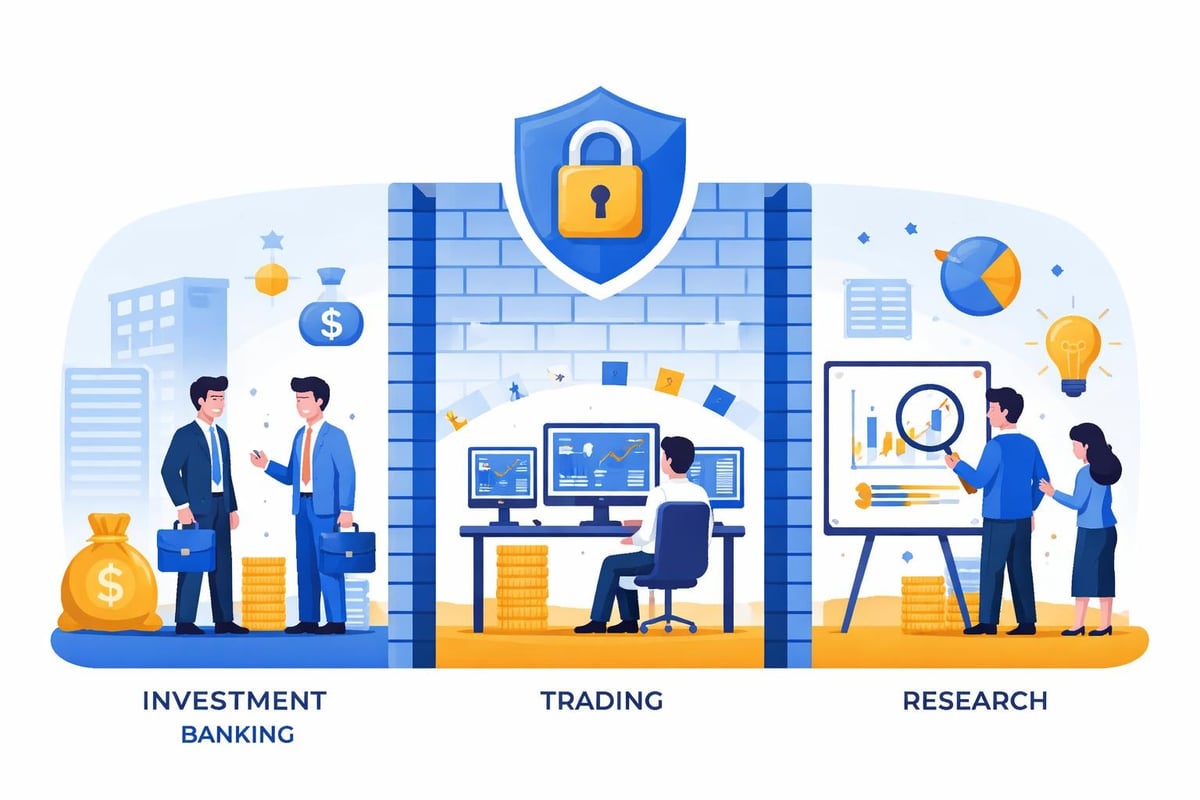
The chinese wall emerged as a response to growing concerns about information flow within financial institutions during the mid-20th century. This internal barrier creates strict separation between different departments or divisions within the same organization, particularly when those divisions might have conflicting interests or access to sensitive information.
The primary functions include:
- Preventing the flow of material nonpublic information between divisions
- Protecting client confidentiality across separate business units
- Maintaining independence in research and advisory functions
- Ensuring compliance with securities laws and regulations
The legal definition emphasizes these barriers as information-blocking mechanisms designed to prevent conflicts of interest. In practice, this means establishing both physical and procedural separations between departments that might otherwise share information inappropriately.
Historical Development in Financial Markets
The chinese wall concept gained prominence following several market scandals in the 1960s and 1970s. Investment banks faced increasing scrutiny over potential conflicts between their advisory services and trading operations. Regulators recognized that firms simultaneously serving as advisors and traders created inherent conflicts that could undermine market integrity.
During the 1980s, the transformation into good business practice accelerated as securities firms formalized these barriers into compliance procedures. This evolution reflected broader changes in how markets approached ethical standards and investor protection.
Implementation Across Financial Institutions
Modern financial institutions implement chinese wall policies through multiple layers of controls and procedures. These mechanisms work together to create effective separation while allowing the organization to operate efficiently across diverse business lines.
Physical and Digital Barriers
Investment banks and brokerage firms often physically separate departments handling sensitive information. Different floors, buildings, or secure areas prevent casual interaction between employees who should not share certain information. Digital systems reinforce these barriers through access controls, restricted databases, and monitored communications.
| Barrier Type | Implementation Method | Primary Purpose |
|---|---|---|
| Physical | Separate offices, restricted access areas | Prevent informal information sharing |
| Digital | Firewall systems, restricted databases | Control electronic data access |
| Procedural | Watch lists, restricted lists, compliance reviews | Monitor and enforce policies |
| Personnel | Training programs, confidentiality agreements | Build awareness and accountability |
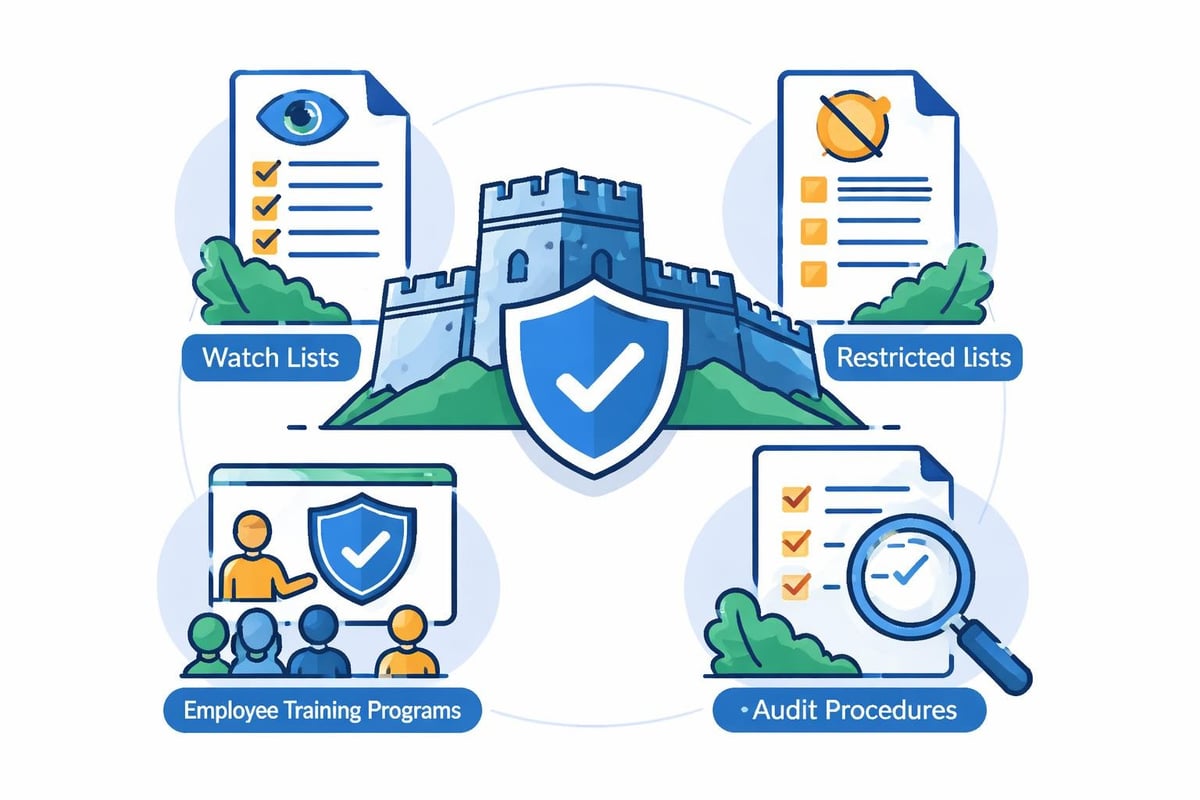
Organizations maintain watch lists identifying securities where the firm possesses material nonpublic information. Employees outside the informed departments cannot trade these securities or provide related advice. Restricted lists go further by prohibiting certain activities entirely across the firm.
Departmental Separation Strategies
The chinese wall typically separates investment banking from research departments, preventing analysts from being influenced by the firm's deal-making activities. Similarly, barriers exist between proprietary trading desks and client advisory services to prevent front-running or other manipulative practices.
Research analysts must operate independently from investment bankers courting the same companies. This separation helps ensure that published research reflects genuine analytical judgment rather than the firm's business interests. The importance in banks extends to protecting client confidentiality when serving competing companies in different capacities.
Regulatory Framework and Compliance Requirements
Securities regulators worldwide have established frameworks requiring chinese wall policies as part of comprehensive compliance programs. These regulations recognize that information barriers serve as essential tools for maintaining market integrity and investor confidence.
Key regulatory expectations include:
- Written policies documenting chinese wall procedures
- Regular training for all employees on information barriers
- Monitoring systems to detect potential breaches
- Clear escalation procedures for conflicts of interest
- Periodic audits assessing policy effectiveness
The Securities and Exchange Commission and Financial Industry Regulatory Authority maintain strict oversight of these policies in the United States. Firms must demonstrate not only that policies exist but that they function effectively in practice. Understanding these finance terms and regulatory requirements helps illuminate historical market reforms.
Enforcement and Penalties
Violations of chinese wall policies can trigger severe consequences. Regulatory agencies may impose substantial fines, require remedial actions, or pursue criminal charges in egregious cases. Beyond official penalties, reputational damage from breaches can devastate client relationships and market standing.
Historical enforcement actions reveal the serious nature of these violations. Cases involving leaked merger information, biased research reports, or front-running have resulted in multi-million dollar settlements and industry-wide policy changes. These precedents reinforce the critical importance of maintaining effective barriers.
Real-World Applications and Case Studies
Examining historical examples illustrates how chinese wall policies function in practice and what happens when they fail. These cases provide valuable lessons for understanding market evolution and regulatory development.
Investment Banking and Research Separation
During the dot-com boom of the late 1990s, conflicts between investment banking and research became particularly acute. Analysts faced pressure to issue favorable ratings on companies that generated lucrative underwriting fees. This compromised research integrity and misled investors about technology stock valuations.
The resulting reforms strengthened chinese wall requirements between banking and research. Firms restructured compensation systems, physically separated departments, and implemented stricter oversight. These changes represent a watershed moment in how the industry approaches conflicts of interest, similar to reforms following other major market disruptions explored through historical market analysis.
Mergers and Acquisitions Advisory
When advising on potential mergers, investment banks access highly confidential information about companies, deal structures, and strategic plans. The chinese wall prevents this information from reaching trading desks that might exploit it for profit or inadvertently tip off competitors.
A bank might simultaneously advise Company A on acquiring Company B while providing unrelated services to Company B. Effective barriers ensure neither side learns about the other's relationship with the firm. This delicate balance allows financial institutions to serve multiple clients while maintaining confidentiality and avoiding conflicts.
Challenges and Limitations
Despite their importance, chinese wall policies face inherent limitations and practical challenges. Understanding these constraints helps set realistic expectations about what information barriers can achieve.
Information Leakage Risks
Even with robust policies, information can leak through informal channels. Employees might inadvertently share details in casual conversations, through observable trading patterns, or via personal relationships. The increasing mobility of professionals between firms also creates potential information transfer risks.
Common vulnerability points include:
- Social interactions between employees from different departments
- Shared support services like IT, legal, or compliance
- Industry conferences and networking events
- Alumni networks and professional associations
- Electronic communications despite monitoring systems
Organizations must continuously adapt their chinese wall policies to address evolving risks. This includes updating technology controls, refining procedures, and reinforcing the culture of confidentiality throughout the organization.
Balancing Efficiency and Separation
Excessive barriers can hinder legitimate business operations and client service. Firms must strike a balance between information control and operational efficiency. Too rigid a chinese wall might prevent beneficial collaboration or delay time-sensitive transactions.
This tension creates ongoing challenges for compliance teams. They must design policies flexible enough to support business needs while maintaining sufficient separation to satisfy regulatory requirements. The optimal approach varies by organization size, business mix, and corporate culture.
Modern Evolution and Technology Impact
The chinese wall concept continues evolving alongside technological advancement and changing market structures. Digital communication, remote work, and algorithmic trading present new challenges for maintaining effective information barriers.
Digital Age Adaptations
Modern financial institutions deploy sophisticated technology to monitor communications, track information access, and identify potential breaches. These systems analyze email patterns, instant messages, phone calls, and database queries for suspicious activity.
| Technology Solution | Application | Benefit |
|---|---|---|
| Email surveillance | Keyword scanning, pattern analysis | Early detection of information sharing |
| Access logging | Database and file access tracking | Audit trail creation |
| Trading surveillance | Pattern recognition, anomaly detection | Identify potential insider trading |
| Compliance automation | Workflow management, approvals | Standardize barrier enforcement |
Artificial intelligence and machine learning enhance these capabilities by identifying subtle patterns that might escape human oversight. However, technology alone cannot replace strong policies, clear procedures, and ethical culture as foundations for effective chinese wall implementation.

Globalization Considerations
As financial institutions operate across borders, chinese wall policies must account for different regulatory regimes, cultural norms, and legal frameworks. What constitutes material nonpublic information may vary by jurisdiction, creating complexity for global organizations.
Multinational firms establish enterprise-wide policies while allowing regional adaptations to meet local requirements. This approach requires coordination between compliance teams across geographies and careful documentation of how policies apply in different contexts. Understanding concepts like efficient market hypothesis helps frame how information impacts markets globally.
Industry-Specific Applications
While most commonly associated with investment banking, the chinese wall principle extends across various industries facing similar conflicts of interest. Each sector adapts the core concept to its specific circumstances and regulatory environment.
Law Firms and Legal Practice
Law firms implement chinese wall procedures when representing clients with potentially conflicting interests. These ethical walls prevent attorneys working on one matter from accessing information about another client that might create conflicts.
Legal practice rules recognize that large firms may represent competing companies in unrelated matters provided adequate barriers exist. The firm must demonstrate that confidential information remains protected and that no attorney works for both clients simultaneously on conflicting issues.
Accounting and Consulting Firms
Accounting firms separate audit teams from consulting divisions to maintain independence and objectivity. Auditors must provide unbiased assessments of financial statements without influence from consultants seeking to sell additional services to the same client.
Regulations like the Sarbanes-Oxley Act explicitly restrict certain consulting services to audit clients, recognizing that some conflicts cannot be managed through barriers alone. These rules reflect lessons learned from accounting scandals where inadequate separation compromised audit independence.
Media and Publishing Organizations
News organizations employ chinese wall policies to separate editorial content from advertising and business operations. This separation helps ensure that journalistic integrity remains uncompromised by commercial interests or advertiser pressure.
Major publications maintain strict policies preventing business-side employees from influencing editorial decisions or accessing stories before publication. These barriers protect credibility and reader trust, similar to how financial underwriters maintain separation between deal teams and trading operations.
Best Practices for Effective Implementation
Organizations seeking to establish or strengthen chinese wall policies can learn from industry experience and regulatory guidance. Certain practices consistently distinguish effective programs from merely compliant ones.
Essential elements include:
- Senior management commitment - Leadership must champion the chinese wall as core to organizational culture
- Clear written policies - Documentation should specify exact procedures, responsibilities, and escalation paths
- Comprehensive training - All employees need regular education on policies and their importance
- Robust monitoring - Technology and human oversight must work together to detect potential breaches
- Consequences for violations - Enforcement mechanisms must be clear and consistently applied
Beyond these fundamentals, successful organizations regularly test their chinese wall effectiveness through simulations, audits, and third-party assessments. They view compliance not as a checkbox exercise but as ongoing risk management requiring constant attention.
Cultural Reinforcement
The most sophisticated policies fail without supporting organizational culture. Employees must understand why chinese wall policies matter and feel empowered to raise concerns about potential breaches. This requires creating safe channels for reporting issues and demonstrating that compliance concerns receive serious attention.
Compensation structures should align with chinese wall objectives rather than creating incentives to circumvent barriers. When employees benefit from sharing information inappropriately, even strong policies may prove ineffective. Organizations must examine how performance metrics, bonuses, and promotion decisions either support or undermine information barriers.
Historical Lessons and Future Directions
Studying the evolution of chinese wall policies reveals important lessons about financial market development and regulatory adaptation. Each major market event that exposed conflicts of interest led to strengthened barriers and enhanced oversight.
The 1929 crash, insider trading scandals of the 1980s, dot-com era conflicts, and 2008 financial crisis each contributed to current chinese wall frameworks. These experiences demonstrate that information barriers must evolve alongside market complexity and technological change. Exploring similar patterns through platforms offering historical market context helps investors and analysts understand regulatory development.
Looking forward, several trends will likely shape chinese wall policies in coming years. Increased use of artificial intelligence in trading and advisory services creates new information flow challenges. Remote work environments require rethinking physical separation strategies. Growing emphasis on environmental, social, and governance factors introduces additional conflict of interest scenarios requiring management.
The fundamental principle underlying the chinese wall remains constant even as implementation details evolve. Financial markets depend on trust, integrity, and fair dealing. Information barriers serve these objectives by preventing those with privileged access from exploiting it at others' expense. As markets continue developing, the chinese wall concept will remain essential to maintaining confidence and protecting investors.
Understanding the chinese wall concept provides crucial context for analyzing historical market events and regulatory evolution. By examining how information barriers developed in response to conflicts of interest, market participants gain insight into the ethical frameworks supporting modern finance. Historic Financial News empowers investors, students, and analysts to explore these patterns through interactive charts and AI-powered summaries, helping you learn from past market experiences and make more informed decisions today.