
Capital Markets Guide: Insights and Trends for 2026
Imagine stepping into the world of capital markets in 2026, where technology and global forces are rapidly changing the rules. The landscape is more dynamic than ever, presenting both opportunities and challenges for investors, professionals, and students.
This guide delivers expert insights into capital markets, highlighting the trends that matter most for the coming years. You will gain a clear understanding of what capital markets are, how their structure is evolving, and what regulatory changes to expect.
Discover the strategies you need to succeed, supported by real-world examples and the latest data. Ready to thrive in the capital markets of tomorrow? Use this guide as your trusted roadmap for the future.
Understanding Capital Markets: Foundations and Functions
Capital markets are the backbone of modern finance, connecting those who have capital with those who need it to grow and innovate. Their structure and participants have evolved, but their essential role remains: facilitating long-term funding, investment, and economic progress. In this section, we’ll break down what capital markets are, how they function, and why they matter in today’s fast-changing world.

What Are Capital Markets?
Capital markets are financial platforms where individuals, companies, and governments buy and sell long-term debt and equity securities. Unlike money markets, which focus on short-term instruments, capital markets support investments lasting years or even decades. Key participants include investors seeking returns, companies raising funds, governments financing projects, and intermediaries facilitating transactions. Notable examples are stock exchanges like the NYSE and NASDAQ, as well as global bond markets. With over $100 trillion in assets worldwide, capital markets drive economic growth by channeling funds into entrepreneurial ventures, infrastructure, and innovation.
Types of Capital Markets and Instruments
There are two main types of capital markets: primary and secondary. In primary markets, new securities are issued, such as when a company launches an IPO. In secondary markets, existing securities are traded among investors, providing liquidity. Capital markets offer a variety of instruments:
| Instrument | Description | Example |
|---|---|---|
| Equity | Ownership in a firm (stocks) | Tesla stock split |
| Debt | Loans to issuers (bonds, notes) | Apple bond issue |
| Private Equity | Non-public investments | Venture capital |
Public markets include exchanges, while private markets involve direct investments like private equity. Mutual funds and ETFs also play a vital role in broadening access to capital markets for everyday investors.
Core Functions and Economic Impact
Capital markets perform several core functions. They allocate capital to its most productive uses, enabling businesses and governments to fund projects that drive growth and job creation. Price discovery helps determine fair values for assets, while risk management tools allow investors to diversify and protect their portfolios. Liquidity ensures assets can be bought and sold efficiently, supporting market stability. For a deeper understanding of how market prices reflect all available information, explore the Efficient Market Hypothesis Explained. Ultimately, capital markets are critical for financing infrastructure, fostering innovation, and supporting sustainable economic development.
How Capital Markets Work: Step-by-Step
The journey through capital markets starts when a company or government decides to raise funds. First, they issue securities such as stocks via an IPO or bonds to attract investors. Investors then evaluate these offerings, choosing to buy based on risk and return. Once issued, securities enter secondary markets, where they can be traded freely, providing liquidity. Ongoing trading drives price discovery and allows risk transfer. For example, a small business like John’s healthy ice cream shop might use capital markets to secure funding, expand operations, and support future growth.
Key Players and Stakeholders
Many stakeholders shape capital markets. Issuers include corporations, governments, and municipalities seeking capital. Investors span from individuals to institutions such as pension funds and sovereign wealth funds. Intermediaries like investment banks, brokers, and exchanges facilitate deals and ensure smooth market functioning. Regulators such as the SEC and FINRA maintain market integrity, while technology providers build trading platforms and fintech solutions. For instance, BlackRock, a major institutional investor, influences capital markets through its vast asset management activities and investment decisions.
Major Trends Shaping Capital Markets in 2026
The next era of capital markets is defined by rapid innovation and evolving global dynamics. Investors and organizations must adapt to a landscape where technology, sustainability, and access are transforming how capital flows across the world. Let us explore the most influential trends shaping capital markets in 2026.

Digital Transformation and Technology
Technology is fundamentally reshaping capital markets. Artificial intelligence and machine learning now power trading algorithms, risk models, and compliance systems. Blockchain enables asset tokenization, reducing settlement times and increasing transparency.
Algorithmic trading dominates, with over 60% of equity trades executed electronically in 2023. Hedge funds deploy AI bots for rapid market analysis and execution. According to the Investment Trends in Focus: Key Themes for 2026, the integration of AI and digital platforms is driving efficiency and altering the competitive landscape of capital markets.
These advances bring greater market efficiency but also demand new skills and oversight.
ESG and Sustainable Finance
Environmental, social, and governance (ESG) factors are now integral to capital markets. Investors increasingly seek out companies with strong sustainability credentials, influencing how capital is allocated.
Green bonds and sustainability-linked securities are on the rise, and regulatory bodies mandate ESG disclosures. The EU’s SFDR has set the pace for global reporting standards. By 2025, global ESG assets are projected to surpass $50 trillion, reflecting a major shift in investor priorities within capital markets.
Sustainable finance is no longer a niche, it is a core investment consideration.
Globalization and Market Access
Cross-border capital flows are expanding, opening new opportunities and risks in capital markets. Emerging economies like India and Brazil are seeing rapid growth in their financial markets, attracting global investors.
Liberalized foreign investment rules and inclusion of new regions in global indices, such as China’s bond markets, are increasing access. In 2023, emerging markets accounted for 35% of global IPOs, highlighting their rising influence in capital markets.
Global diversification is more achievable, but it also requires careful risk assessment.
Regulatory Evolution and Compliance
Regulation continues to evolve in response to the complexities of modern capital markets. Post-pandemic, authorities are tightening rules on anti-money laundering, know-your-customer, and digital asset oversight.
The SEC, for example, is increasing scrutiny of crypto assets, shaping how innovation unfolds. In 2022, regulatory fines exceeded $10 billion worldwide, underscoring the high stakes of compliance in capital markets.
Balancing innovation with market stability is a central challenge for both regulators and participants.
Rise of Private Markets and Alternative Assets
Private equity, venture capital, and direct lending are growing rapidly within capital markets. More companies are choosing to remain private longer, and alternative assets such as real estate, infrastructure, and crypto are attracting significant capital.
In 2023, private market fundraising topped $1.2 trillion, signaling a shift in how capital is being deployed. Unicorn startups often delay IPOs, changing the dynamics between public and private capital markets.
Retail investors are also seeking access to these alternative opportunities, driving further innovation.
Retail Investor Empowerment and Fintech
Retail investors are a powerful force in capital markets, empowered by commission-free trading platforms and social trading communities. The rise of meme stocks and retail-driven volatility, such as the GameStop and AMC surges, demonstrate this new influence.
In 2023, retail investors made up 25% of US equity trading volume. This democratization of capital markets brings both opportunities and challenges, including the need for better education and risk management.
Fintech innovation is making markets more accessible, but maintaining integrity and transparency is more important than ever.
Navigating the New Capital Markets: Strategies for Investors and Businesses
Capital markets are entering a new era, demanding that investors and businesses rethink how they approach risk, growth, and opportunity. To thrive in this environment, you need a toolkit of forward-looking strategies tailored to the evolving landscape. This section explores actionable approaches to help you succeed in capital markets through 2026.
Building a Future-Proof Investment Strategy
To stay resilient in capital markets, diversification is essential. Spread investments across asset classes like equities, bonds, and alternatives to manage risk. Consider adding exposure to global markets, as international diversification can buffer against regional volatility.
Incorporating environmental, social, and governance (ESG) criteria also helps align portfolios with emerging investor preferences. Use technology, such as AI-powered research tools, to analyze trends and execute trades efficiently. Regularly monitor macroeconomic and geopolitical developments to identify risks and opportunities early.
A balanced approach, using historical data and predictive analytics, has shown that diversified portfolios in capital markets tend to outperform those concentrated in a single sector or geography.
Capital Raising in 2026: Opportunities and Challenges
Raising capital in today’s markets requires a strategic choice between public offerings and private funding. Companies must weigh the benefits of an initial public offering (IPO) against the flexibility of private equity or venture capital.
Navigating regulatory requirements is more complex, so partnering with experienced intermediaries is vital. For example, understanding the Role of Underwriters in Markets is key, as they guide issuers through compliance, pricing, and investor outreach.
Digital platforms now offer new avenues for capital raising, such as crowdfunding and security token offerings. Businesses should evaluate the timing, valuation, and investor relations aspects to maximize success in capital markets.
Risk Management in a Volatile Environment
Managing risk in capital markets begins with identifying key threats, including market, credit, and operational risks. Use tools like derivatives for hedging, which can protect portfolios from adverse price movements.
Scenario analysis and stress testing are crucial for anticipating how portfolios might react to economic shocks. Agile risk frameworks help businesses adapt to sudden market changes, ensuring they remain resilient.
Post-2020, the adoption of advanced risk management tools has surged, showing the importance of proactive strategies in volatile capital markets.
The Role of Data, Analytics, and Historical Context
Harnessing big data and predictive analytics has become a game changer in capital markets. Firms can now analyze vast datasets to uncover trends, assess risks, and make informed decisions faster than ever before.
Learning from past market cycles, such as the 2008 financial crisis or the COVID-19 response, provides valuable context for current strategies. Companies using advanced analytics report higher returns and greater agility.
A strong grasp of historical events enables investors and businesses to anticipate future shifts, making data-driven decisions a cornerstone of success in capital markets.
Leveraging Historical Insights: The Value of Contextual Market Analysis
Understanding how previous events shape today’s capital markets is crucial for building a competitive edge. Platforms like Historic Financial News offer interactive historical data, AI-driven summaries, and curated news archives, empowering users to spot patterns and avoid past mistakes.
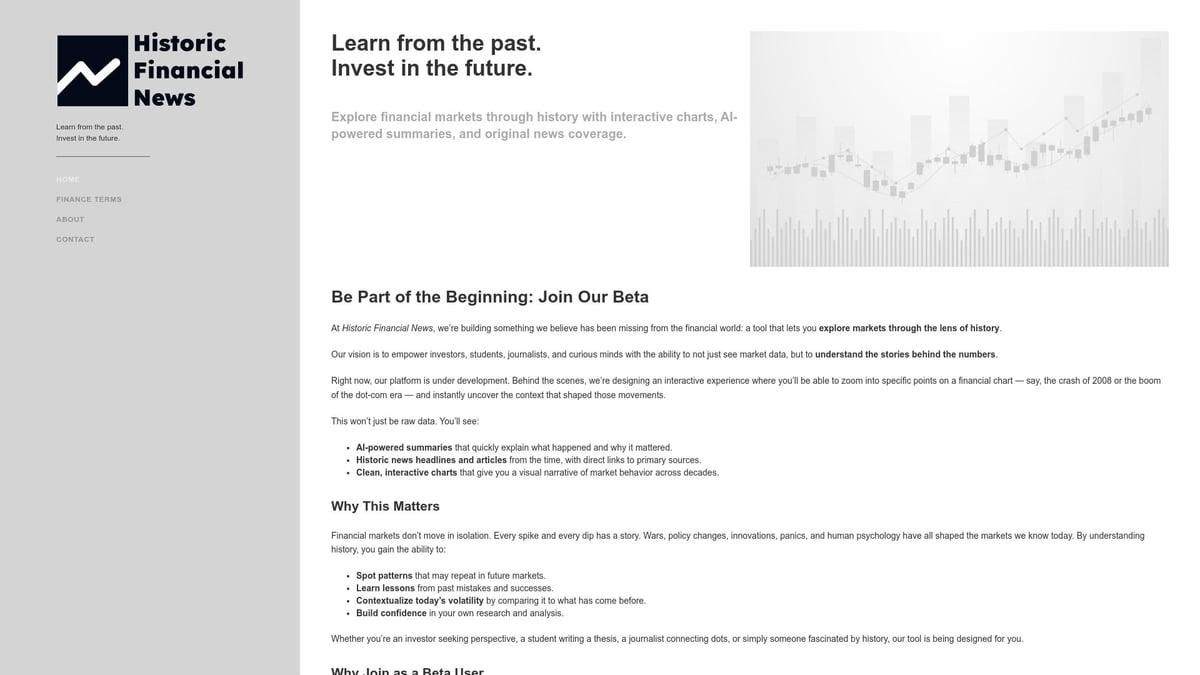
By integrating historical context into their analysis, investors, students, and professionals can enhance decision-making and risk assessment. For instance, reviewing the effects of regulatory changes or technological disruptions helps market participants prepare for similar shifts.
Ultimately, leveraging historical insights provides deeper market understanding and supports better outcomes in capital markets.
Regulatory Landscape: What to Expect by 2026
The regulatory landscape for capital markets is undergoing rapid transformation, influenced by global economic shifts, technological innovation, and evolving investor expectations. As we approach 2026, understanding these regulatory dynamics is essential for all market participants. Each regulatory development brings new challenges and opportunities for capital markets, shaping how capital is raised, traded, and safeguarded.

Evolving Global Regulatory Frameworks
Global regulators are increasingly harmonizing financial rules to foster transparency and stability in capital markets. Initiatives like Basel III and IFRS adoption are streamlining standards worldwide, making it easier for cross-border transactions. For example, coordinated efforts between the EU and US aim to align regulatory approaches, reducing fragmentation. Over 80 countries are projected to adopt Basel III by 2025, signaling a more unified approach to risk management. This harmonization helps market participants navigate multiple jurisdictions, although compliance costs may rise. As capital markets become more interconnected, global regulatory alignment will remain a central focus for policymakers and institutions.
Crypto Assets and Digital Securities Regulation
The rise of crypto assets has prompted regulators to craft new frameworks for digital securities within capital markets. Comprehensive regulations such as MiCA in the EU and US stablecoin bills are shaping the classification and supervision of digital assets. The debate continues over whether tokens are securities, commodities, or currencies, directly impacting how they are traded and reported. For instance, the SEC’s evolving stance on crypto ETFs and DeFi platforms is influencing product development and investor access. With the crypto market capitalization surpassing $2 trillion in 2023, regulators face the challenge of balancing innovation, investor protection, and market integrity in capital markets.
ESG Reporting and Disclosure Requirements
Environmental, Social, and Governance (ESG) factors are now integral to capital markets regulation. Standardized ESG reporting frameworks like SASB and TCFD are becoming mandatory in many jurisdictions. Regulators are enforcing climate risk disclosures, compelling companies to provide transparent, comparable data for investors. The SEC’s proposed climate risk rules exemplify this shift. In 2023, 90% of S&P 500 companies published ESG reports, highlighting the growing importance of sustainability. These requirements influence corporate governance and investor relations, ensuring capital markets reflect broader societal values and risks. As ESG becomes mainstream, compliance will be critical for maintaining market access and reputation.
Market Integrity, Transparency, and Surveillance
Ensuring market integrity is a top priority for regulators overseeing capital markets. Enhanced surveillance systems are being deployed to detect manipulation and insider trading, leveraging AI-powered compliance tools for real-time monitoring. High-frequency trading platforms are subject to advanced oversight to maintain fairness. The regulatory technology (RegTech) market is expanding at a 20% CAGR, providing innovative solutions for compliance challenges. These advances bolster investor confidence and foster efficient, transparent capital markets. Real-time data analysis and robust enforcement mechanisms are essential for preventing abuses and supporting sustainable market growth.
Impact of Regulatory Changes on Market Participants
Regulatory changes are reshaping the structure and operations of capital markets. Issuers and intermediaries face increased compliance costs as rules evolve, while shifts such as the rise of dark pools and alternative trading systems present both opportunities and challenges. The fintech and RegTech sectors are capitalizing on this environment, driving innovation in compliance and execution. For example, broker-dealers are adapting to new best execution regulations as they seek to maintain competitiveness. Compliance spending reached $270 billion globally in 2023, underlining the scale of adaptation required. For more on how these trends shape long-term returns and risk, see the 2026 Long-Term Capital Market Assumptions. Staying agile and proactive is essential for navigating the evolving regulatory landscape of capital markets.
The Future of Capital Markets: Predictions and Scenarios for 2026
The future of capital markets is unfolding through a series of transformative scenarios, each reshaping how investors, businesses, and regulators operate. As we look toward 2026, understanding these scenarios is crucial for anyone seeking an edge in the evolving financial landscape.
Scenario 1: Hyper-Digital Markets and Tokenization
By 2026, digital transformation will reach new heights in capital markets. Tokenized securities are expected to become mainstream, enabling the rapid trading of assets like real estate and fine art on secure digital platforms. Settlement times could shrink to near real-time, increasing liquidity and efficiency. In 2023, over 5 billion dollars in tokenized assets were already traded, setting the stage for exponential growth. This shift will require updated regulatory frameworks, as traditional and digital assets increasingly converge within capital markets.
Scenario 2: ESG as the New Standard
Sustainability will become a core pillar in capital markets, with ESG factors fully integrated into investment decisions. Universal adoption of sustainability metrics and reporting standards will drive transparency and accountability. Pension funds and institutional investors are likely to divest from companies failing to meet ESG criteria. Data shows ESG funds are outperforming traditional peers in many regions, influencing capital flows and reshaping corporate behavior. By 2026, ESG compliance could be as fundamental as financial reporting in capital markets.
Scenario 3: The Rise of Retail Power and Decentralized Finance (DeFi)
Retail investors will wield unprecedented influence over capital markets, leveraging social platforms and commission-free apps to drive market trends. Decentralized finance will further democratize access, with peer-to-peer trading and decentralized exchanges gaining traction. The DeFi market's total value locked reached 100 billion dollars in 2023, highlighting its disruptive potential. However, increased volatility and evolving regulatory gaps will challenge both investors and authorities, making risk management a top priority in capital markets.
Scenario 4: Geopolitical Shifts and Fragmentation
Geopolitical tensions and regionalization will reshape capital markets, with new financial hubs emerging in Asia and the Middle East. Asia-Pacific's share of global IPOs is projected to reach 40 percent by 2025. Initiatives like China's Belt and Road are influencing capital flows, while regulatory fragmentation may reduce global coordination. For a comprehensive view of how these dynamics are impacting investor confidence and sector momentum, explore the 2026 Global Investor Outlook. Navigating these shifts will require agility and a global perspective in capital markets.
Scenario 5: AI-Driven Investment and Market Surveillance
Artificial intelligence will be at the core of investment strategies and regulatory oversight in capital markets. Automated trading, portfolio management, and fraud detection are just the beginning. Robo-advisors will manage multi-billion-dollar portfolios, while AI-powered funds are already outperforming benchmarks by 2 to 3 percent. For further insights into how AI and private markets are influencing dealmaking, refer to the 2026 Global M&A Outlook. The rise of AI brings opportunities for efficiency, but also raises ethical questions about algorithmic bias in capital markets.
Strategic Takeaways for Stakeholders
To thrive in 2026’s capital markets, all stakeholders must embrace continuous learning and adaptability. Investors should diversify across digital, ESG, and global trends to enhance portfolio resilience. Issuers need to prioritize transparency and innovation in their capital raising strategies. Intermediaries must invest in talent and technology, while regulators balance market stability with innovation. The most successful firms will be those that anticipate change and act decisively, gaining a clear edge in the next era of capital markets.
As we look toward 2026, understanding capital markets means more than just following daily headlines—it’s about recognizing patterns, learning from history, and applying those insights to make smarter decisions. That’s where Historic Financial News comes in, offering you interactive tools, AI-driven analysis, and context you won’t find anywhere else. If you’re ready to deepen your knowledge, spot trends before they happen, and gain a true edge in navigating tomorrow’s markets, why not take the next step with us? You can Join Our Beta and be part of a community dedicated to turning history into your most powerful investing tool.