
Amortization Guide: Understanding the Essentials in 2026
Imagine being able to unlock the full value of your assets or loans in 2026. The secret lies in understanding amortization. Many individuals and businesses overlook its importance, missing out on critical financial insights.
As financial regulations and markets continue to evolve, knowing how amortization works is more essential than ever. Mastering this concept empowers you to make smarter decisions, optimize tax benefits, and manage both assets and debts with confidence.
This guide demystifies amortization, explaining its key principles, practical applications, calculation methods, and the impact it can have on your financial future in 2026.
What Is Amortization? The Core Concepts Explained
Understanding amortization is fundamental for anyone managing loans or assets in 2026. At its core, amortization is the systematic reduction of a debt or asset value over a set period, making complex financial obligations more manageable. This principle applies to both loans and intangible assets, but with important differences.

Defining Amortization in Modern Finance
Amortization, in modern finance, refers to spreading out payments or cost reductions over a fixed timeline. For loans, this means repaying both the principal and interest through scheduled installments. For assets, particularly intangible ones like patents or trademarks, amortization tracks the gradual reduction in value over the asset’s useful life.
The distinction between loan amortization and asset amortization is crucial. Loan amortization focuses on repayment, while asset amortization handles the allocation of costs for non-physical assets. Historically, these practices have evolved alongside financial regulations, and in 2026, understanding their nuances is more vital than ever.
Common terms include principal (the original amount), interest (the cost of borrowing), and the amortization schedule (a detailed plan showing payment breakdowns). For example, if you take a $20,000 car loan over five years, each payment reduces both the interest and the principal, following a set schedule.
When comparing amortization to similar concepts, note that depreciation relates to tangible assets and depletion applies to natural resources. For a thorough breakdown, see Depreciation vs. Amortization Explained. Data from Santander and Fidelity show that understanding amortization helps borrowers and investors manage terms and asset values more effectively.
A table can help clarify the differences:
| Concept | Applies To | Method | Example |
|---|---|---|---|
| Amortization | Loans, Intangibles | Scheduled | Car loan, patent |
| Depreciation | Tangibles | Systematic | Equipment, vehicles |
| Depletion | Natural resources | Usage-based | Oil, minerals |
Why Amortization Matters for Individuals and Businesses
Amortization impacts both personal and business finance in significant ways. For individuals, it enables effective budgeting, loan planning, and wealth building. Understanding how payments are structured allows for smarter decisions, such as choosing the optimal loan term or identifying opportunities to save on interest.
For businesses, amortization ensures accurate financial reporting and asset management. Spreading the cost of a patent over its useful life, for instance, reflects a more accurate company valuation and improves transparency. In 2026, regulatory and compliance demands have grown, making precise amortization tracking even more important.
Statistics show that businesses accurately tracking amortization often reduce tax liability and enhance cash flow. This practice supports long-term financial health and helps organizations meet compliance requirements. The key argument is clear: mastering amortization fosters transparency and positions both individuals and companies for better financial outcomes.
Key Amortization Terms and Their Meanings
To navigate amortization confidently, you need to understand essential terms:
- Principal: the initial loan or asset value.
- Interest rate: the cost of borrowing, expressed as a percentage.
- Payment period: the time over which payments are made.
- Residual value: the remaining value after amortization.
The amortization schedule is your roadmap, showing each payment’s allocation to interest and principal, and tracking the balance over time. For example, reading a mortgage amortization table reveals that early payments are interest-heavy, gradually shifting toward principal reduction.
Other important terms include balloon payment (a large final payment), negative amortization (when payments do not cover interest), and prepayment (paying off early). In 2026, expect new terminology reflecting digital tools and regulatory updates, but the core concepts remain unchanged.
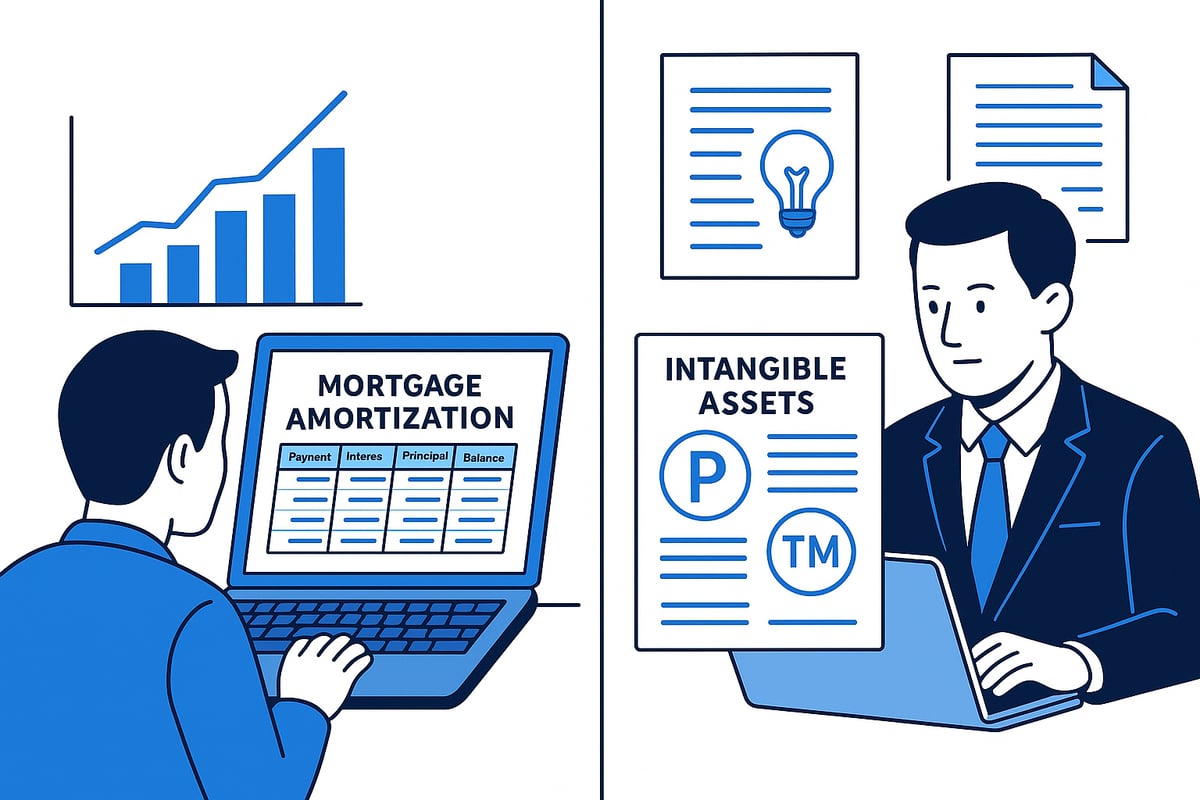
Types of Amortization: Loans vs. Intangible Assets
Understanding the types of amortization is crucial for anyone managing loans or intangible assets in 2026. Whether you are repaying a mortgage or accounting for a patent, knowing how amortization works can help you make informed decisions and optimize your finances.
Loan Amortization: Mortgages, Auto Loans, and More
Loan amortization refers to the process of gradually paying off a loan through scheduled, fixed payments over a set period. Each payment covers both interest and principal, with the proportion shifting over time—early payments are interest-heavy, while later ones reduce the principal faster.
For example, a 30-year mortgage in 2026 typically uses a fixed amortization schedule. In the first years, most of your payment goes toward interest. As time passes, more goes toward the principal, lowering your remaining balance. You can view and calculate detailed payment breakdowns using tools like the Mortgage Amortization Calculator.
Amortization differs from interest-only loans, which require only interest payments for a set period, leaving the principal untouched. Early repayments or refinancing can adjust your amortization schedule, reducing total interest paid over the loan’s life. According to Fidelity, the average U.S. mortgage term remains 30 years, making understanding amortization schedules vital for long-term planning.
Asset Amortization: Intangibles Like Patents and Trademarks
Asset amortization applies to intangible assets, such as patents, trademarks, and copyrights. Unlike physical assets, these have no tangible form but provide value over time. Amortization allocates the cost of these assets across their useful life, aligning expenses with revenue generation.
Consider a company that acquires a $10,000 patent expected to last 10 years. Using straight-line amortization, it records a $1,000 expense each year. This approach ensures financial statements reflect the asset’s declining value and supports accurate profit calculation.
Amortization of intangibles differs from depreciation, which is used for physical assets like equipment. In 2026, updated FASB and IASB standards require businesses to follow consistent methods and provide clear disclosures for asset amortization. Staying compliant with these regulations is essential for accurate reporting and valuation.
Negative Amortization and Special Cases
Negative amortization occurs when loan payments are insufficient to cover the interest due, causing the outstanding balance to increase rather than decrease. This situation can arise in certain adjustable-rate mortgages (ARMs) or specialized loan products.
For example, if an ARM allows for minimum payments that do not fully pay the interest, unpaid amounts are added to the principal. Over time, this can lead to a larger loan balance, increasing financial risk for borrowers. Lenders may offer negative amortization features to lower initial payments, but this comes with significant risks:
- Growing loan balances over time
- Higher future payments
- Potential for owing more than the asset is worth
Regulators warn consumers to be cautious with loans that allow negative amortization. In 2026, enhanced consumer protection measures aim to ensure borrowers fully understand these risks before agreeing to such terms.
Amortization in Student Loans and Business Loans
Student loan amortization often features flexible repayment options, such as income-driven plans or graduated schedules. Unlike standard mortgages, these loans may allow for adjustments based on income or career changes, affecting the amortization process.
Business loans, including SBA loans and lines of credit, use amortization to structure predictable payments and manage cash flow. For instance, a small business might amortize a $50,000 loan over five years, aligning payments with projected revenue. Flexible payment structures can offer advantages, such as reduced pressure during lean periods, but may also result in more interest paid over time.
Understanding the nuances of amortization in student and business loans enables individuals and companies to choose repayment strategies that fit their financial goals. By analyzing different amortization schedules, you can optimize your approach for debt reduction and long-term planning.
How Amortization Works: Step-by-Step Process
Understanding amortization is essential for making informed financial decisions in 2026. By breaking the process into clear steps, you can confidently manage loans and assets throughout their lifecycles.

Step 1: Understanding the Amortization Schedule
The amortization schedule is a foundational tool for anyone managing debt or assets. It lays out each payment over the life of your loan, showing exactly how much goes to principal and how much to interest.
A typical amortization schedule includes:
- Payment date
- Payment amount
- Amount applied to interest
- Amount applied to principal
- Remaining balance after each payment
For example, a $15,000 car loan over five years will have an amortization schedule that details each monthly payment and how the balance decreases over time. Understanding these schedules can also help you compare standard amortization with alternatives like balloon payment loans, which feature a large final payment instead of gradual reduction.
Reading your amortization schedule helps you anticipate costs and plan your finances with precision.
Step 2: Calculating Amortization Payments
Calculating amortization payments ensures you know exactly what to expect each month. The standard formula for a fixed-rate loan is:
A = P[r(1 + r)^n] / [(1 + r)^n - 1]
Where:
A= monthly paymentP= principal (loan amount)r= monthly interest raten= total number of payments
For instance, if you have a $200,000 mortgage at 4 percent interest for 30 years, using this formula or an online calculator will provide your exact monthly payment. Manual calculations are possible, but digital tools reduce errors and simplify the process.
Always double-check figures to avoid surprises. Amortization calculators are widely available and make it easy to model different scenarios.
Step 3: Allocating Payments—Interest vs. Principal
Each amortization payment is split between interest and principal. Early in the loan, most of your payment goes toward interest. Over time, more is applied to the principal balance.
Consider this example table for a typical loan:
| Year | Payment | Interest | Principal | Balance |
|---|---|---|---|---|
| 1 | $1,000 | $700 | $300 | $19,700 |
| 5 | $1,000 | $400 | $600 | $17,500 |
As you move through your amortization schedule, the shift becomes more pronounced. Making extra payments can accelerate principal reduction and lower total interest paid.
Understanding this allocation helps you make strategic decisions, such as when to make lump-sum payments.
Step 4: Tracking and Adjusting Your Amortization
Regularly tracking your amortization progress is vital. Monitoring your schedule lets you see how prepayments or refinancing impact your financial goals.
If you refinance a mortgage in 2026, your amortization schedule will reset based on the new loan terms. Digital tools and mobile apps now offer real-time tracking, customizable reports, and automated reminders.
Tips for effective tracking:
- Review your amortization schedule annually
- Use digital platforms to visualize progress
- Adjust for any changes, such as extra payments or refinancing
Staying proactive helps you optimize your amortization strategy and avoid costly mistakes.
Step 5: Special Considerations for 2026
In 2026, new regulations and digital innovations are shaping how amortization is managed. Financial institutions increasingly use AI-powered tools to automate schedule adjustments and alert borrowers to opportunities.
Keep an eye on regulatory updates that may affect amortization rules or reporting standards. Embracing digital solutions can streamline monitoring and support compliance.
The key to success is staying informed and adapting your strategy as the financial landscape evolves. By mastering amortization in this environment, you are well-positioned for long-term stability.
Amortization and Your Financial Health: Benefits and Pitfalls
Understanding amortization is essential for anyone looking to achieve financial stability and growth. By mastering its principles, you can unlock a range of benefits, avoid costly mistakes, and make informed choices in both personal and business finance.

Financial Benefits of Amortization
The primary advantage of amortization is the predictability it brings to your finances. With fixed payments, you can plan your monthly budget more effectively, knowing exactly how much goes toward principal and interest. Over time, this process steadily reduces your debt, helping you build equity and improve your credit score.
For example, consistently paying down a student loan through an amortization schedule can save thousands in interest and demonstrate financial responsibility to lenders. This reliability is especially valuable in 2026, as lenders and regulators place greater emphasis on transparent repayment plans.
Businesses also benefit from amortization when spreading out the costs of intangible assets, such as patents, over several years. This approach not only supports accurate financial reporting but also provides opportunities for tax deductions. If you're interested in how these deductions work, you can learn more through this guide to Tax Deductions for Amortization.
A well-structured amortization plan is a cornerstone of long-term financial health.
Common Pitfalls and How to Avoid Them
Despite its advantages, amortization can present challenges if misunderstood. One major risk is negative amortization, which occurs when your payments do not fully cover the interest. This leads to a growing loan balance instead of reduction.
Prepayment penalties are another common pitfall. Some loans impose fees for paying off debt early, which can offset the benefits of extra payments. Always review your loan agreement to identify such clauses before committing.
A frequent mistake is failing to understand how the amortization schedule works. Homeowners, for instance, may be surprised by high interest costs in the early years of a mortgage. To avoid these issues, read your schedule closely and consult with a financial advisor before making extra payments.
Amortization and Cash Flow Management
Effective amortization directly impacts your monthly cash flow. Since payments are structured and predictable, it becomes easier to allocate funds to other expenses or investments. For individuals, this stability supports better budgeting and financial planning.
Businesses can strategically align amortization expenses with revenue cycles. Spreading the cost of intangible assets across multiple periods can help smooth profits and manage tax obligations. For example, a company may amortize a software license over five years, resulting in more consistent profit margins.
By understanding amortization and integrating it into your cash flow strategy, you can make more informed decisions and improve overall financial performance.
Amortization in the Context of Rising Interest Rates (2026)
As interest rates fluctuate in 2026, the structure of your amortization schedule becomes even more significant. Rising rates can increase the cost of borrowing, especially for loans with variable terms. This makes it crucial to review your loan agreements and understand how rate changes affect your payments.
For example, an adjustable-rate mortgage may see higher payments after a rate reset, impacting your budget and long-term plans. To mitigate these challenges, consider locking in fixed rates when possible or exploring refinancing options.
Staying proactive with your amortization strategy helps you adapt to market changes and protects your financial well-being.
Tax Implications and Regulatory Considerations in 2026
Understanding amortization is crucial for navigating the evolving tax landscape in 2026. Both individuals and businesses must recognize how amortization affects their taxable income and overall financial strategy. Tax authorities allow the deduction of certain amortization expenses, particularly for intangible assets like patents or trademarks. For instance, businesses may deduct a portion of a patent's cost each year, aligning expenses with the asset's useful life. The Internal Revenue Service (IRS) periodically updates its rules, so staying informed about the latest IRS and FASB guidelines is essential. Notably, recent policy changes regarding research and development expenses have shifted how companies handle R&D amortization, as detailed in the R&D Amortization Changes analysis. Accurate amortization calculations not only optimize tax benefits but also ensure compliance and reduce audit risks.
Regulatory Changes Impacting Amortization
In 2026, regulatory changes are shaping how amortization is reported and disclosed. New financial regulations require businesses to provide more transparent and detailed amortization schedules in their financial statements. For example, updated disclosure standards now demand that companies clearly separate amortization of different asset classes and specify the methods used. Compliance is no longer optional; failing to follow these standards can result in penalties or reputational harm. The ongoing debate over cost recovery provisions, such as those discussed in the 2025 Tax Debate on Cost Recovery, may further impact how companies plan and report amortization. Staying ahead of regulatory shifts ensures that your business remains both compliant and competitive.
International Perspectives: Amortization Around the World
Amortization rules are not universal. Different countries apply unique standards for loans and intangible assets, which can affect global businesses and expatriates. For instance, mortgage amortization in the United States typically features fixed schedules, while Spain often uses variable-rate structures with different deduction rules. The table below highlights key differences:
| Country | Asset Amortization | Loan Amortization | Tax Deductibility |
|---|---|---|---|
| United States | Straight-line | Fixed/Variable | Broad, with limits |
| Spain | Declining balance | Variable, common | More restrictive |
| UK | Straight-line | Fixed/Variable | Similar to US |
With ongoing efforts to harmonize accounting standards globally, businesses are advised to monitor how local and international guidelines may evolve. This attention to international amortization trends is vital for multinational financial planning.
Planning Ahead: Leveraging Amortization for Tax Efficiency
Strategic planning around amortization can unlock significant tax savings in 2026. Timing asset purchases, selecting the optimal amortization method, and aligning schedules with revenue cycles are proven ways to maximize benefits. Consider these strategies:
- Consult a tax advisor to review your amortization schedules annually.
- Evaluate opportunities to accelerate amortization for assets that may lose value quickly.
- Monitor regulatory updates that impact allowable deductions.
For complex scenarios, especially when dealing with cross-border assets or regulatory changes, professional guidance is invaluable. Proactive management of amortization ensures you capture every available advantage and maintain a strong financial position.
Tools, Resources, and Strategies for Mastering Amortization in 2026
Mastering amortization in 2026 means having the right tools, knowledge, and strategies at your fingertips. Whether you are a homeowner, business leader, or student loan borrower, the resources you choose can make a significant difference in your financial outcomes. Let’s explore the best ways to optimize your amortization journey.
Top Amortization Calculators and Digital Tools
In 2026, digital tools are indispensable for managing amortization efficiently. Online calculators allow you to input loan amounts, interest rates, and terms to instantly generate a detailed amortization schedule.
Here’s a quick comparison of popular features:
| Tool/App | Schedule Export | Extra Payment Option | Asset Amortization Support |
|---|---|---|---|
| LoanCalc Pro | Yes | Yes | No |
| MortgageMaster | Yes | Yes | Yes |
| AssetTrack 2026 | Yes | No | Yes |
Look for tools that let you adjust for extra payments, export schedules, and track both loans and intangible assets. Many mobile apps now offer push notifications and AI-driven insights to keep your amortization on track.
Using these calculators, you can easily see how extra payments or refinancing can impact your total interest paid and loan term. Amortization tools are especially helpful when planning for large purchases or business investments.
DIY vs. Professional Guidance: When to Seek Help
While many individuals prefer to manage amortization themselves, some scenarios call for expert advice. If your finances are straightforward, DIY calculators and spreadsheets may suffice.
However, complex cases—such as business asset amortization, or when deferred revenue and amortization intersect—often benefit from a professional accountant’s guidance. Accountants can help interpret regulations, optimize tax strategies, and ensure compliance.
- Use DIY tools for personal loans and mortgages.
- Seek professional help for business assets, tax planning, or regulatory updates.
- Remember, incorrect amortization entries can lead to compliance issues or missed deductions.
Ultimately, knowing when to ask for help is key to mastering amortization and avoiding costly mistakes.
Strategies to Accelerate Loan Amortization
Accelerating amortization helps reduce interest costs and achieve financial freedom sooner. The most common strategy is making extra payments toward your principal.
- Switch to biweekly payments to make an extra payment each year.
- Refinance for a shorter loan term or lower interest rate.
- Make occasional lump-sum payments when possible.
For example, switching from monthly to biweekly payments can save thousands over the life of a mortgage. However, always check for prepayment penalties before making additional payments.
Smart acceleration strategies can significantly reduce your amortization period, helping you build equity and improve your financial flexibility.
Amortization and Financial Planning for the Future
Amortization is not just about loan payoff—it is a cornerstone of long-term financial planning. Integrating amortization schedules into your financial plan allows you to anticipate cash flow, prepare for large expenses, and align debt repayment with life goals.
Consider these steps:
- Review your amortization schedule annually.
- Adjust your strategy as your income or interest rates change.
- Use insights from your schedule to plan for retirement or major purchases.
By leveraging amortization data, you gain a clearer picture of your net worth trajectory and can make informed decisions about investments and savings.
Staying Informed: Amortization Trends and Updates for 2026
The world of amortization is evolving, especially with regulatory and tax changes on the horizon. Staying updated ensures you are not caught off guard by new rules or market shifts.
Trusted sources like Santander and Fidelity regularly publish updates on amortization trends. For example, the Impact of New Tax Bill on Valuation can affect how businesses approach amortization in 2026.
Check bank portals, government sites, and reputable financial news outlets for the latest information. Regularly reviewing your amortization schedules ensures you adapt quickly to any changes that affect your loans or assets.
Frequently Asked Questions About Amortization
Q: What happens if I pay off my loan early?
A: You reduce your total interest paid and may finish your amortization schedule ahead of time. Always check for prepayment penalties.
Q: Can I change my amortization schedule after signing?
A: In some cases, yes—such as through refinancing or renegotiating loan terms.
Q: How does amortization differ for fixed vs. variable rate loans?
A: Fixed loans have predictable payments, while variable rates can alter your schedule and total interest.
Real-life examples from Santander and Fidelity show that proactive amortization management leads to better financial outcomes and fewer surprises.
As you’ve seen, understanding amortization in 2026 isn’t just about crunching numbers—it’s about making smarter choices for your financial future. By learning how amortization works with loans and assets, you’re already a step ahead of most investors and business owners. If you want to keep building these insights and see how market history can help you spot trends and avoid common pitfalls, why not get involved? We’re developing an interactive platform designed to put financial context at your fingertips. If you’re ready to see how the past can shape your next big move, Join Our Beta.